Sunday, May 31, 2020

David Law on 'One Country, One Systems' (Verfassungsblog Podcast)

Podcast: "Corona Constitutional #30: One Country, One System"
Verfassungsblog: On Matters Constitutional
27 May 2020
Description: For a quarter of a century, Hong Kong has been a liberal, constitutional island in an authoritarian state. The Chinese government is now planning a new security law that may not leave much of liberalism and fundamental rights protection. In a podcast interview with Max Steinbeis, DAVID LAW from the University of Hong Kong examines the constitutional background of this potentially oppressive development and addresses the urgent question: What options and responsibilities do scholars have when the going gets tough in the struggle for freedom?

Johannes Chan Comments on the National Security Law (RTHK English News)

'Naive to think new law will target a small group'
28 May 2020
Legal scholar Johannes Chan said on Thursday that it is naive to think the national security law that Beijing is planning to impose in Hong Kong will affect only a small group of people, saying what constitutes 'national security' has never been defined.
     “In China they never really define what exactly is 'national security'. So the law could change according to political expediency or political necessity,” he said.
     "We don't know if it will be more clearly defined in the coming law but in accordance with their tradition and the current scope, it could be exceedingly wide," Chan said, adding it is naive to think the law will only apply to only a small group of people.
     The legal scholar also said he doubts if the central government will accept unfavourable rulings by Hong Kong courts linked to the new security law.
     “If some of the law's scope is too wide and the Hong Kong courts said it is in violation of the Basic Law, human rights protection, or the Bill of Rights and strike it down, and if that happens what will the central government do? Will they just clap their hands and say ‘well done’ or are they going to interfere?” he asked.
     Chan said the plan to impose national security legislation will put Hong Kong's courts in a difficult position.
     He said he fears the scope of jurisdiction will be substantially limited by the laws to be drafted by the National People's Congress Standing Committee, as it has the ultimate power to interpret them.

Thursday, May 28, 2020

Syren Johnstone on Fintech Regulation in Asia (new book chapter)

"Fintech regulation in Asia"
in Cian, M. and Sandei, C (eds),  Dritto del Fintech (Kluwer, 2020) Part IV, pp. 699-714
Introduction: All major jurisdictions within the Asia region, as with other regions globally, have recognized the importance of Fintech to the development of its financial markets. Earlier chapters of this book have well recited the advantages of Fintech, and the associated risks, and these are also common to the Asian context and need not be repeated here. The approach to regulation in Asia has been diverse owing to different political, legal and cultural considerations in each jurisdiction. By way of broad characterization, while the efficiencies that Fintech solutions bring to traditional financial services have been a primary objective of regulatory facilitation throughout Asia, the emergence of digital assets and the primary and secondary markets that have evolved around them has been an object of concern and caution. Accordingly, the region has been active in developing specific laws and regulations related to e-money payment systems and financial services, while adopting a conservative risk-based approach to financing activities that tap the public capital market via digital assets. As to the latter, the larger capital markets of North Asia have been of interest to watch as developments have ranged from more permissive industry-regulator partnering to develop more granular regulation (Japan), to cautious approaches that tend to follow the United States model of openly permitting industry development while applying existing laws where possible (Hong Kong), to banning specific classes of activity while also promoting technology including blockchain (Mainland China).

Wednesday, May 27, 2020

Brian Tang on Independent AI Ethics Committees and ESG Corporate Reporting on AI (new book chapter)

"Independent AI Ethics Committees and ESG Corporate Reporting on AI as Emerging Corporate and AI Governance Trends"
in Suanne Chishti, Ivana Bartoletti, Anne Leslie & Shân M. Millie (eds), The AI Book: The Artificial Intelligence Handbook for Investors, Entrepreneurs and FinTech Visionaries (1st Edition), (Wiley & Sons Limited, 2020), pp.180-185.
Introduction: This chapter explores two emerging trends relating to artificial intelligence (AI) governance of listed public companies that create and use AI in their services and products.
    First, the chapter explores independent AI ethics committees, which emerged from academic independent human research review committees, as corporate governance tools that can provide fascinating opportunities (Axon) as well as challenges (Google). 
    Second, the chapter expands upon environmental, social and governance (ESG) corporate and regulatory reporting relating to AI as a way forward for better explainability and accountability to investors, users and regulators alike regarding many of the AI “black boxes” being introduced... 

Tuesday, May 26, 2020

Zixin Jiang on Unifying and Defining ‘Dishonesty’ in the Law of Trusts (Trusts & Trustees)

"Unifying and defining ‘dishonesty’ in the law of trusts"
Zixin Jiang (JD 2018)
Published in May 2020
Abstract: In this article, I argue that ‘dishonesty’ should be unified and defined in the law of trusts. I argue: (1) the UK Supreme Court in Ivey v Genting Casinos was correct to reject the Ghosh test for dishonesty and to endorse the Royal Brunei test for all legal contexts; (2) the present law on trustee exemption clauses is inconsistent with Ivey, and Walker v Stones must accordingly be overruled; (3) the subjective factors relevant to dishonesty are reducible to a person’s intentions and beliefs; and (4) ‘dishonest’ assistance of a breach of trust should be defined more precisely in terms of what knowledge is required to hold a defendant liable.

Monday, May 25, 2020

Johannes Chan Comments on the DSE History Exam Question Fiasco (Ming Pao)

"A Regrettable Decision"
Professor Johannes Chan
19 May 2020
In an unprecedented move, the Education Bureau of the HKSAR requested the Hong Kong Examinations and Assessment Authority to set aside a question in the History paper of the Hong Kong Diploma of Secondary Education (HKDSE) on the ground that the question was biased, misleading and seriously hurting the feeling and dignity of the Chinese people. The question was, “Japan did more good than harm to China in the period 1900 to 1945. Do you agree?“ Students are asked to refer to two provided sources and any other known sources in their answers.
     In coming to this hasty decision, it appears that the Education Bureau has not consulted the Hong Kong Examinations and Assessment Authority or its experts. Nor does it appear that the Bureau has considered the impact that would have on tens of thousands of candidates having taken this examination. It shows no respect for the system of public examinations and does not seem to have considered for a second the adverse impact that would possibly be inflicted on the reputation and international recognition of HKDSE. The examination was introduced only in 2012 as a result of secondary school reform in Hong Kong and replaced the former A-level examination. It took a while before overseas universities are prepared to accept the HKDSE as the equivalent of the well-established and accepted A-level examinations. Many students in Hong Kong rely on the HKDSE results to apply for overseas universities. If an examination question of the HKDSE could be arbitrarily set aside on political grounds, how could overseas universities continue to have confidence in the quality and standards of the HKDSE? The decision of the Education Bureau is arbitrary and unprofessional. It has failed to observe proper procedural fairness, and failed to take into account the very likely negative impact on both the candidates and the integrity and reputation of Hong Kong’s public examination system. In short, it is a classic example of putting politics before professionalism.
     The Education Bureau considered that there is no room for discussion in this question as there could only be one possible answer. Even if this were the case, is this a sufficient reason to set aside the question? Many questions in mathematics have only one answer, but there could be many different ways to arrive at the same answer. The purpose of education is not just to mandate a correct answer, if there is one, but how to derive and arrive at the answer, which is far more important. A historical event could be analysed from many perspectives - political, economic, social, moral, and cultural. It is also possible to approach the question by exploring the different facets of changes and development in the 45 years between 1900 and 1945. A student may decide to focus on the political perspective and consider whether Japan has done more good than harm to the fall of the Kuomintang and the rise of the Communist Party during this period, or discuss the period between 1900 and 1915 when exchanges and interactions between the two countries have stepped up after the Meiji Reforms in Japan, and compare them with the period after 1915 when Japan imposed upon China the infamous 21 Covenants in 1915 and the rise of militarism in Japan leading to a tense Sino-Japanese relationship and the eventual Japanese invasion of China. Would there be “no room for discussion”?
     History is never black and white. In reconstructing historical events we have to rely on historical materials, evidence and documentation. How to handle such historical sources is the prime training that one must acquire in the study of history. The question provided two sources, and the critics lamented that these sources are misleading. But let’s take a closer look at these two sources, which were respectively written in 1905 and 1912. The first piece is a letter written by the President of Japan University of Law and Politics. At the request of the government of the Qing dynasty, the President agreed to cut short the study of law and politics from 4 to 5 years to 1 year for Chinese students. Yet in just a few years’ time, the Qing government was overthrown. It is doubtful whether this generous act of the Japanese university President had any lasting impact on China. The other source is a letter written by a senior member of the then newly established Republic of Chinato a Japanese politician, asking for his help to facilitate a loan from a Japanese enterprise to support the Chinese government in case a war was to be waged by the powerful warlord General Yuan Shikai. It was far from clear that the loan was a support for the revolution. The Republic of China has already been established by that time, and it is more likely that the loan was intended to set up a good relationship with the new government. Nor has the loan been effective in preventing the ambitious General Yuan from claiming to be the Emperor later. From a commercial perspective, a major quarry mine was provided as security for repayment. The exchange rate was to be decided by the Japanese, and the annual interest rate was 7%. The terms were pretty favourable to the Japanese side. In handling historical sources, it is crucial to consider issues such as who wrote the documents, when they were written, and what the background and purposes of the documents were. These questions are crucial in determining the reliability and the weight to be given to the sources. Students are expected to know how to analyse historical sources. In this question, the sources only cover a short period out of the 45-year period that the students were asked to address. The way they handle these historical sources as well as other materials and evidence they may decide to put forward to substantiate their arguments would determine and distinguish the analytical ability of different students in the examination. The critics did not pay any attention to the details of the sources and have probably failed to appreciate the purposes of such materials in the question.
     The question also asked the students to use and rely on other sources that are known to them. Some critics said that the students were unable to do so. I believe this has significantly under-estimated the ability of our students. If they have studied history for three years and have chosen history as the subject for the HKDSE, it is almost impossible that they would not have known what happened between China and Japan between 1937 and 1945. A secondary school headmaster said that this question would prejudice students in the coming years as they would study the examination question and prepare to argue for the good that the Japanese has done to China, thereby undermining, if not glorifying, the Japanese invasion of China. Such an argument is just a non-starter. If this situation is to happen, the problem lies in the education system itself. If the education system focuses on rôte learning instead of intellectual analysis; and aims to produce only compliant instead of critical minds, it is a failure of the education system, and the blame should not be put on the examination question. The purpose of an examination is to test students’ analytical abilities, not to ask them to state their political beliefs. In this regard, the question has nothing to do with the so-called “seriously hurting the feelings and dignity of the Chinese people“. Those who said that the provided sources glorify Japanese invasion of China have probably not even read the sources, let alone intellectual analysis. If the Education Bureau is to approach educational issues with such political yardsticks, it had better rename itself the Bureau for Political Propaganda.  The Chinese version of this article was published in Ming Pao, 18 May 2020, and is reproduced below.

<<痛心疾首>>
陳文敏
香港大學法律學院公法講座教授
Professor Johannes Chan

教育局以中學文憑試歷史科一條題目偏頗為理由,罕有地要求考評局取消該條題目,這個倉促的決定,事前似乎沒有徵詢考評局及專家的意見,亦沒有考慮取消試題對學生的影響,也不尊重公開考試的機制及對文憑試的國際認可和聲譽的打擊。不少學生依靠文憑試的成績報考海外大學,以政治理由隨隨便便取消文憑試的試題,海外大學如何再相信這個文憑試?教育局這種草率和毫不專業的決定,程序不公,考慮不周,以政治凌駕専業,實在令人驚訝。
     教育局認為這條題目沒有爭辯的空間,答案只有一個。即使如此,這是否足夠的理由去取消該題目?不少數學的題目答案也只有一個,但可能有不同的方法達致同一個答案,教育的目的並不單要求準確的答案,更重要的是如何達致答案的理據。歷史從來是可以從多角度去探討,如何界定利弊,可以從政治、經濟、文化、道德、社會發展等不同角度和不同時段作探討,如果同學選擇該段時期日本對中國國民黨的衰退和共產黨的興起是否利多於弊,或選擇分開不同時段作分析,如在1900-1915年間中日民間仍有不少往來,不少中國人有感日本明治維新的成功而希望學習日本的經驗來救亡積弱的中國,及1915年發生「二十一條」後日本軍國主義抬頭,引致日後的侵華等,分階段就不同變化作出論述,又是否完全沒有討論的空間?
     歷史從來不是非黑即白,重組歷史時我們需要倚賴歷史文獻和資料,如何處理這些文獻和資料便是修讀歷史科一個重大課題。該題目提供兩份資料,不少論者便以此認為題目偏頗,但這兩份資料分別寫於1905年和1912年,一份是由日本人撰寫,紀錄日本政法大學校長應晚清政府要求將政法科的修習時間由四至五年縮短至一年,但清政府幾年後便被推翻,這決定對培養中國政法人才的影響微乎其微。另一份文件是由國民黨中人撰寫,向日本人借貸作為應對與袁世凱一旦開戰的資金,當時國民政府剛剛成立,借貸一事恐怕出於拉攏新政府為目的,借貸資金亦未能阻止袁世凱的野心和日後的復辟;在商言商,借貸以大冶鐵鑛作抵押,匯率由日方決定,年息七厘,是一椿對日本人相當有利的買賣 。資料由誰人撰寫?在什麼時候撰寫?撰寫時的背景和目的為何?這都是考慮資料的可信性及其份量的因素,讀歷史的同學必須懂得如何分析這些資料。同學如何處理這些資料及選取什麼其他史實或角度來論證,便是考核和分辨同學的分析能力,但批評者似乎完全忽略了這一點 。
     該題目要求同學從這些資料及他們的認知作出分析, 一些論者認為同學沒有這個能力,這是低估了我們中學同學的分析能力;如果讀了幾年歷史並考歷史這一科,而不知道1937至1945年間中日之間的關係,這恐怕不是學生的錯,而是老師的錯。有校長說這條題目會影響到以後的學生存在錯誤的觀念,這種論點更是匪夷所思。出現這個情況,問題是在教育制度本身,如果教育制度只要求學生背誦,囫圇吞棗,不假分析,不敢對命題提出不同的觀點,這是教育的失敗,請不要將責任推到試卷身上。考試是測驗同學的分析能力,和什麼損害中國人民的感情根本扯不上關係。硬説這些資料美化日本侵華,恐怕是沒有看過資料,亦不懂何謂資料分析的人云亦云之說。如果教育局憑這樣的準則去處理教育問題,那乾脆將教育局改名為政治宣傳局便算了。  (原文刋登於《明報》,2020年5月18日)

Sunday, May 24, 2020

New Book: Water Services Disputes in International Arbitration (Xu Qian)

"Water Services Disputes in International Arbitration"
Xu Qian
2020, Wolters Kluwer
Book description: 
Water Services Disputes in International Arbitration is a well-timed book which focuses on an economic area of substantial importance for the society as a whole—governance of water. Water is not only a vital human need but also extremely precious and valuable. It is a finite resource having “economic value,” facing tremendously increasing demands and challenges, and considerable legal issues (at both theoretical and empirical levels). The legal consequences of the multifaceted nature of water and sanitation services are investigated in this book. In this respect, it concentrates on an analysis of the international law (law in norms in the form of international treaties and their interpretation by international arbitral tribunals that have developed a case law over the years) which applies to cross-border (or foreign) investment made in water and sanitation services.

What’s in this book:
Being the first of its kind, this book aims to fill a significant gap in the existing literature and dwells on how to harmonize the economic and fundamental human interests arising from investment in water and sanitation services under the international investment regime. Among the many key issues, the author highlights the importance of the following:
  • legitimacy of a State’s alleged regulatory objectives, the suitability of the measures undertaken to achieve the objective, and whether there are less-restrictive means available;
  • legal framework and stability of the State;
  • applicable law, changes in law, and emergency circumstances;
  • economic issues such as water pricing;
  • profit-driven private companies’ reluctance to serve the poor;
  • investment tribunals’ generation of a “regulatory and jurisprudential regime” on water and sanitation services; and
  • determination of liability in relation to expropriation, fair and equitable treatment, and necessity.
     The author, a leading expert in the intersection between international economic law and human rights, offers viable, sustainable, and reasonable legal solutions to the increasing number of investment disputes with water services. A detailed annex also presents cases decided before a variety of arbitral tribunals, as well as relevant World Trade Organization and International Court of Justice cases, and reviews critical literature in the field.

How this will help you:
This book, an in-depth and unique analysis, will be welcomed by not only the scholarly and student community but also trade and investment officials, policy makers, diplomats, economists, lawyers, think tanks, and business leaders interested in the subject areas of water governance and regulation, water economy, economic policy reforms and the evolution of the new types of regional trade agreements. It also suggests ways to enable States to better manage vital water services, even after privatization to foreign companies.

Saturday, May 23, 2020

HKU Law Students Win Inaugural Iron Tech Lawyer Invitational @ Georgetown Law (HK Lawyer)

Four students from the University of Hong Kong won the inaugural Iron Tech Lawyer Invitational organised by Georgetown Law with an AI-powered casebank to assist injured workers to get the compensation they deserve.
     The Iron Tech Lawyer Competition has been held for Georgetown Law students for 10 semesters by Georgetown Law Institute for Technology Law and Policy. In 2020, for the first time, Georgetown Law created an Invitational for students from other law schools around the world who participated in academic courses or supervised independent study to incorporate technology for access to justice (A2J) projects with non-governmental organisations (NGOs).
     Originally, the student teams from around the world were scheduled to attend the finals in Washington DC. Alas, with the COVID-19 pandemic and suspension of travel and universities, the initial preliminary round, finals, and subsequent faculty workshop on teaching A2J technology, were held virtually across 5 time zones via Zoom.
     The HKU team won first prize on April 17 by overcoming rigorous competition from 10 different student teams around the world. Many of the participating teams qualified for the Invitational only after being selected over competing teams in their own schools. All told, over 100 students participated in creating projects for the Invitational, producing over 25 different projects for non-profit organizations. ...
     Competition judge Miguel Willis said: “I was very impressed with the winner of this year’s Iron Tech Lawyer Invitational – The University of Hong Kong team’s EC Casebank solution takes a novel and highly sophisticated approach to enhance the legal capability of injured workers’ to receive just compensation for their claims – within a simple and easy to use interface… showing much promise to empower workers to be active participants in the resolution of their claims." ...
     The winning team comprised project leader Chloe Lok Wing Chan, UX designer and programmer Cuthbert Chow, natural language processing (NLP) and data management lead Jasmine Chi Man Poon and business management lead Iverson Chun Ming Wong. The students were part of the first cohort of students of the LITE course held at Hong Kong University, which is part of LITE Lab@HKU, a new interdisciplinary and experiential programme to foster law, innovation, technology and entrepreneurship (LITE) led by founding executive director Brian Tang... Click here to read the full text. 

Thursday, May 21, 2020

Haochen Sun on Corporate Fundamental Responsibility: What Do Technology Companies Owe the World? (U of Miami L Rev)

University of Miami Law Review
April 2020, Volume 74, Issue 3, Article 6 
Abstract: In this digital age, technology companies reign supreme. However, the power gained by these companies far exceeds the responsibilities they have assumed. The ongoing privacy protection and fake news scandals swirling around Facebook clearly demonstrate this shocking asymmetry of power and responsibility. Legal reforms taking place in the United States in the past twenty years or so have failed to correct this asymmetry. Indeed, the U.S. Congress has enacted major statutes minimizing the legal liabilities of technology companies with respect to online infringing acts, privacy protection, and payment of taxes. While these statutes have promoted innovation, they have also had the unintended effect of breeding irresponsibility among technology companies. Against this backdrop, this Article offers a new lens through which we can deal with the ethical crisis surrounding technology companies. It puts forward the concept of corporate fundamental responsibility as the ethical and legal foundation for imposing three distinct responsibilities upon technology companies: to reciprocate users’ contributions, play their role positively, and confront injustices created by technological development. The Article further considers how these responsibilities could be applied to improve protection of private data and to encourage responsible exercise of intellectual property rights by technology companies. The tripartite conception of corporate fundamental responsibility, this Article shows, is built upon the ethical theories of reciprocity, role responsibility, and social justice. Therefore, corporate fundamental responsibility paves the way for technology law to embrace ethics whole-heartedly, creating new legal and ethical guidance for the benevolent behavior of technology companies. In developing technologies, collecting data, and regulating speech, technology company leaders must act responsibly for the future of humanity. Click here to read the full paper at SSRN. 

Wednesday, May 20, 2020

Miron Mushkat & Roda Mushkat on Combatting Corruption in the “Era of Xi Jinping”: A Law and Economics Perspective (Hastings Int'l & Comp L Rev)

"Combatting Corruption in the “Era of Xi Jinping”: A Law and Economics Perspective"
Miron Mushkat & Roda Mushkat
Hastings International and Comparative Law Review
2019, Volume 43, No. 2
Abstract: Pervasive graft, widely observed throughout Chinese history but deprived of proper outlets and suppressed in the years following the Communist Revolution, resurfaced on massive scale when partial marketization of the economy was embraced in 1978 and beyond. The authorities had endeavored to alleviate the problem, but in an uneven and less than determined fashion. The battle against corruption has greatly intensified after Xi Jinping ascended to power in 2012. The multiyear antigraft campaign that has unfolded has been carried out in an iron-fisted and relentless fashion. It has yielded some tangible benefits, yet the negative side of the ledger is heavily loaded. Absent broad-based institutional reengineering, the ambitious and costly program’s long-term future may not be assured.

Tuesday, May 19, 2020

Kelvin Kwok on Hub-and-Spoke’ Bid-Rigging and Corporate Attribution under Hong Kong Competition Law (J of Antitrust Enforcement)

"Hub-and-spoke’ bid-rigging and corporate attribution under Hong Kong Competition Law"
Journal of Antitrust Enforcement
Volume 8, Issue 1, pp. 223-231, https://doi.org/10.1093/jaenfo/jnaa005
Published on 17 March 2020 
Abstract: Nutanix is the very first case brought and decided under the Hong Kong Competition Ordinance (HKCO) (Cap 619), which came into full effect back in 2015 as the first piece of cross-sector competition legislation in Hong Kong. Under the HKCO’s ‘judicial enforcement’ model, the case was brought by the Hong Kong Competition Commission (HKCC) and decided by the Hong Kong Competition Tribunal (HKCT).2 The decision addressed a number of substantive issues concerning the elements of the First Conduct Rule (FCR) in the HKCO3 (which is modelled upon Article 101(1) of the Treaty on the Functioning of the European Union (TFEU)), as well as procedural issues such as the standard...

Monday, May 18, 2020

New Book: Civil Unrest in Hong Kong : Law and Order from Historical and Cultural Perspectives (香港動盪 法與治的歷史與文化解讀)

<<香港動盪 法與治的歷史與文化解讀>>
(Civil Unrest in Hong Kong : Law and Order from Historical and Cultural Perspectives)
吳海傑、王迪安編
(Editors: Dr Michael Ng & Dr John David Wong)
HKU Press, published in May 2020
Description: By examining episodes of civil unrest and social movements in Hong Kong, this edited volume explores the notions of “the rule of law,” “law and order,” and “governance” from the historical and cultural perspectives. The volume does not regard the law as a static rulebook or system. Instead, it treats the law as a historical and cultural process whereby the different parties involved in social movements assert and justify their desired social, economic and political order over time. In addition to revisiting conventional narratives, and to a large extent turning them on their head, this volume also makes an important contribution by analysing issues of governance and law and order from interdisciplinary perspectives. Focusing on the local developments yet mindful of the international backdrop, this volume explores the imaginaries of law and order that these movements engendered, revealing a complex interplay among evolving notions of justice, governance, law and order and cultural creations throughout the under-explored history of instability in Hong Kong. Readers who have an interest in Asian studies, socio-political studies, legal studies, cultural studies and history would welcome this volume of unique interdisciplinarity.
Table of Content in Chinese: 
(導言)亂中有序:法與治的歷史與文化分析   王迪安、吳海傑 (p.1)
I. 社會運動與法律
  1. 社會運動與法律:香港的個案   陳弘毅 (p.9)
  2. 撕破英式法治在香港歷史的神話:1919年的學生雨傘運動   吳海傑 (p.32)
  3. 「我們最好的王牌」:香港的遞解出境簡史(1857–1955)   Christopher Munn (p.46)
  4. 英治時代香港「緊急狀態」法律的嬗變   王慧麟 (p.65 )
  5. 英國「空降議員」和殖民地的政治轉變:港督麥理浩任內的政治改革   呂大樂 (p.77)
  6. 從公民抗命到制度政治:2000年《公安條例》的衝突   谷淑美 (p. 95)
II. 從六七暴動到雨傘運動
  7. 時至今日:六七暴動對香港政治生態的改變及所產生的反響   張家偉 (p. 113)
  8. 獅子山下的兩場社會動盪:從六七暴動到2014年雨傘運動   王迪安 (p. 125)
  9. 公民抗命與法治   戴耀廷 (p. 140)
  10. 香港佔領中環運動的藝術作品   温文灝 (p. 161)
  11. 誰為獅子山說話?香港的粵語運動   朱耀偉 (p. 175)
作者簡介 (p. 191)
索引 (p. 194)

Friday, May 15, 2020

"The Paradox of Information Control in China" (Clement Chen Profiled in HKU's The Bulletin)

"The Paradox of Information Control in China"
The Bulletin
Published in May 2020
Chinese law allows access to information on the one hand but restricts it on the other, which has a troubling impact on everything from virus outbreak controls to the country’s new social credit system.
The COVID-19 coronavirus outbreak that started in Wuhan this past winter triggered deep questions about the flow of information in Mainland China, as officials played down the threat until it became too big to ignore. To those who experienced SARS in 2003, the situation was depressingly familiar. 
     Dr Clement Chen Yongxi of the Faculty of Law was an MPhil student during SARS. In 2002, he had witnessed the drafting of a new freedom of information regulation for Guangzhou – the first of its kind in China – and he was dismayed that it failed to make the municipal government more transparent about the SARS outbreak. 
     The situation prompted his research interest in the gap between law on paper and law in action, and to observe: “What happened with SARS is closely related to what is happening now.” 
     As in Guangzhou, the central government had ostensibly improved freedom of information with the 2007 introduction of the Regulation on Open Government Information (ROGI) which, ironically, was partly motivated by SARS and other cover-ups. But this failed to ensure prompt reporting about COVID-19. Whistleblowing doctors in Wuhan felt compelled to go to social media about the threat rather than official channels such as news agencies, and they were summoned and disciplined by the police for their efforts. 
     So why haven’t the lessons been learned? Dr Chen’s research over the past 12 years sheds light on the flaws – and progress – of information control on the Mainland.
No right to monitor government 
Dr Chen said the ROGI was initially considered a positive step because for the first time in Chinese history, citizens had the right to demand information from their government. But two critical defects have limited its impact. One is that it conflicts with other laws which restrict disclosure of information and prevail over ROGI. The other is that it contains a wide scope of exemptions, including disallowing the disclosure of information that ‘endangers social stability’, which is not defined. This gives government agencies wide discretion to interpret things as they see fit. 
     The judicial response to the government’s denial of access to information has been cautious. Courts examine closely the motive of the applicant, but subject agency claims to various degrees of scrutiny. As a result, they support information requests relating to the applicant’s personal interests, such as their property rights, but refrain from enforcing ‘watchdog requests’ concerning government accountability or the common good. 
     “Some judges have even claimed that the right to information under ROGI does not amount to the right of monitoring the government. This is a bit ironic because the nature of freedom of information laws almost around the world is as an instrument to support democracy and allow citizens to monitor government operations,” he said. “This partly explains why, after 17 years, ROGI doesn’t prevent a public emergency similar to SARS from being covered up.”  Click here to read the full text. 

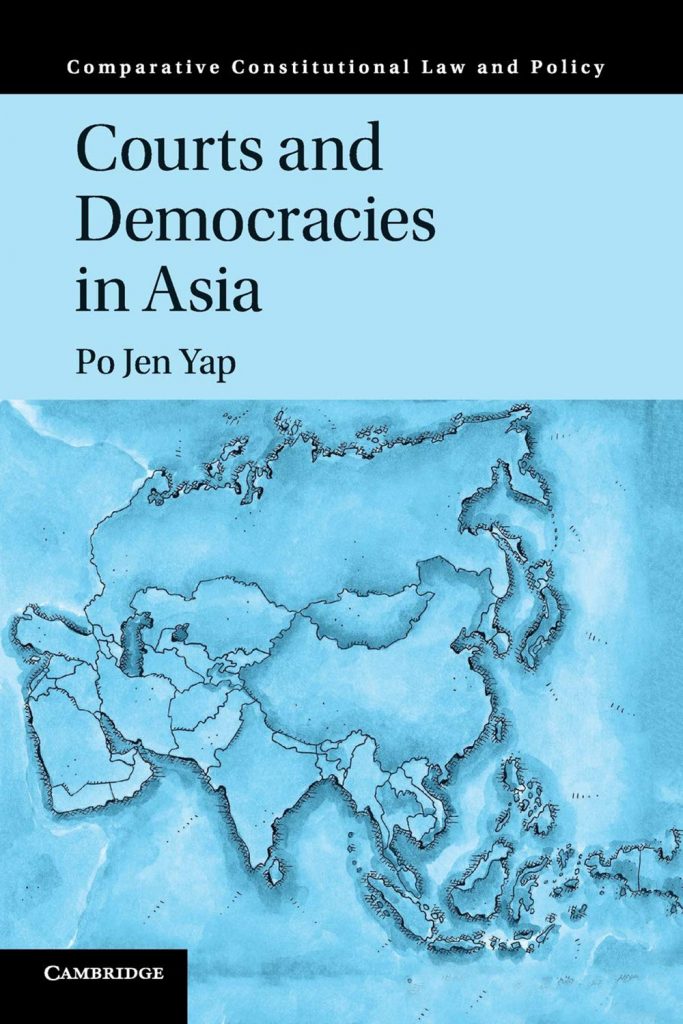
"Democracy and Judicial Behaviour in Asia" (Po Jen Yap Profiled in HKU's The Bulletin)

Book cover

"Democracy and Judicial Behaviour in Asia"
The Bulletin, May 2020
Judiciaries can shape – and are shaped by – the political systems they operate within, for better or worse. Professor Yap Po-jen of the Faculty of Law has been investigating this interplay between law and politics in Asia.
Democracies come in different forms. Some are effectively ruled by a dominant party that has muted most opposition. Some are dynamic, with two or more parties that have taken turns in power. Others are more fragile, with a strong military that may seize power if there is a vacuum. Each system shapes judicial behaviour in different ways, according to Professor Yap Po-jen.
     Professor Yap has studied the political factors that strengthen or constrain judiciaries in Asia. He has also been looking at how some of these judicial systems are converging by intentionally adopting constitutional practices from the West. 
     “Judges today no longer simply interpret the law, they also make law that binds their governments and citizens. The level of democratisation in a political system can impact judicial behaviour, and judicial behaviour can also facilitate the democratisation of a system,” he said. 
      His first major study on the topic, the monograph Courts and Democracies in Asia published in 2017, examined nine Asian democracies – three dominant-party (Hong Kong, Singapore and Malaysia), three dynamic (Taiwan, South Korea and India) and three fragile (Pakistan, Thailand and Bangladesh).

Protecting independence
The dominant democracies are practically ruled by one coalition or its proxies (in Hong Kong, the pro-Beijing forces) and their judiciaries can be easily overruled by the political branches of government. 
     Nevertheless, the courts in these places can still assert some autonomy within bounds – for instance, Hong Kong courts have ruled against the government on multiple occasions on issues relating to social welfare and gay rights. Where the courts cross the tolerance threshold of the government, they will be punished or overridden, as seen in Singapore and Malaysia.
     “All dominant parties will eventually fade away with time, even if this may take a long while. In the meantime, the role of their courts is to do what they can, while protecting their institutional independence. If they rule too aggressively, the dominant party will clip their wings,” Professor Yap said...  Click here to read the full text.

Expanding Access to Financial Protection (Shahla Ali Profiled in HKU's KE Newsletter)


"Expanding Access to Financial Protection"
KE Newsletter - Issue 18, April 2020
Justice should rely on universal participation and should be accessible to all.In a boost for investor protection, the Hong Kong Financial Dispute Resolution Centre (FDRC) adopted new rules in January 2018 that enabled consumers to claim more and benefit from a longer window for lodging claims. The new rules have led to many more consumer claims being resolved and have also strengthened the FDRC’s role by enhancing access to its services and increasing the amounts claimable. These policy changes have also enhanced Hong Kong’s reputation as a global financial centre.
    Research conducted by Professor Shahla Ali of the Department of Law directly impacted the FDRC’s ‘Proposal to Enhance the Financial Dispute Resolution Scheme’, which was launched in October 2016, and the FDRC’s consultation conclusions, which were published in August 2017. In these conclusions, the FDRC adopted three key reforms. The first was to increase the maximum claimable amount to HK$1,000,000 (up from HK$500,000 in the original rules). The second was to extend the time limit for lodging a claim to 24 months (up from 12 months) from the date of purchase or the date of first knowledge of the loss, whichever is later. Thirdly, the FDRC expanded its coverage to small and medium-sized enterprises (SMEs) that have a relationship with financial institutions.
     Professor Ali proposed six principles for reforming financial dispute resolution following the global financial crisis of 2008, which saw many investors in Hong Kong and beyond suffer significant losses, many of which were attributed to a lack of transparency in the financial system and limited protection for investors. The principles were independence, impartiality, accessibility, efficiency, fairness and equity emerging from the view that justice should rely on universal participation and should be accessible to all. 
     “In 2008, there was no systematic mechanism to handle consumer financial claims against banking institutions in many jurisdictions including Hong Kong,” said Professor Ali. “Retirees and others had to search for recourse. This was true in many other parts of the world. Why not learn from one another about the principles at play, share what is working and build stronger institutions?” ... Click here to read the full text.  

Gu Weixia on the Key Ingredients for Successful Reform of International Commercial Arbitration in the Asia (new book chapter)

"Reflections on the Key Ingredients for Successful Reform of International Commercial Arbitration in the Asia"
Gu Weixia
in Lei Chen & André Janssen (eds), Dispute Resolution in China, Europe and World (Springer 2020), pp.131-152
Abstract: Many states have recognized the economic importance of being 'arbitration-friendly', and many have naturally advertised themselves as such. Beyond the catch phrase lie these questions: What arbitration regimes are sufficiently 'arbitration-friendly'? Looking into the past, is there a standard pathway of arbitration reform in the Asia Pacific? Or are there divergent modes of development? To what degree have political, legal, social, cultural and other factors influenced a jurisdiction's ability to replicate successful reform patterns? This chapter looks into the development of arbitration regimes across the Asia Pacific, and aims to reflect on key ingredients for successful arbitration reform in the East. Among the Asia Pacific jurisdictions, some have reached greater success and have attracted many more commercial disputes within and outside the region. Others have been less successful, even with efforts to substantially reform the arbitration laws and institutions. To examine arbitration reforms and outcomes of Asia Pacific jurisdictions, this chapter relies on a hypothetical model of arbitration reform. This model is then tested again the reform pathways undertaken by 12 Asia Pacific jurisdictions for accuracy as a 'formula' for arbitration reform in the region.

Thursday, May 14, 2020

Anna Dziedzic on Foreign Judges: Pacific Practice and Global Insights (Commonwealth Judicial Journal)

2019, Volume 24, Issue 2, pp. 26-29
Abstract: The use of foreign judges is an exceptional phenomenon in world experience. That judges, particularly on a state’s highest courts, will be citizens is often taken for granted in academic and practice-oriented literature on judging. However, foreign – or non-citizen – judges sit on domestic courts in over 30 jurisdictions across the world. Given the majority of these jurisdictions are Commonwealth states in Africa, the Caribbean and the Pacific, readers of the Commonwealth Judicial Journal might be one of the rare audiences for whom the use of foreign judges is a familiar practice. The use of foreign judges is a largely under-studied phenomenon. It raises a host of practical and theoretical questions. Just how does foreign judging work in practice? How might the constitutional and judicial systems of states accommodate the use of foreign judges? To what extent, if at all, does the nationality of the judges on a domestic court matter? This short article outlines some responses to these questions, drawing on insights from the practice of foreign judging in Pacific island states.  The paper can be downloaded from SSRN.

Anna Dziedzic's Comparative Regional Report on Citizenship Law in Oceania States (GLOBALCIT)

"Comparative Regional Report on Citizenship Law: Oceania"
Anna Dziedzic
GLOBALCIT, Robert Schuman Centre for Advanced Studies, European University Institute, Comparative Report 2020/01
Published in 2020
This report compares the citizenship laws of 12 states in Oceania. It explores the history of citizenship in these countries, modes of acquisition and loss, and current debates and reform plans regarding citizenship policy. It was prepared for the Global Citizenship Observatory at the Robert Schuman Centre for Advanced Studies, European University Institute.
Introduction: The citizenship laws of Oceania reflect the complexities of colonisation, decolonisation, nation building and globalisation. In Oceania’s citizenship laws, we can see the significance of the connections between land and peoples in Indigenous custom and law; trace the movement from self-governing peoples to colonies to independent states; and discover innovative responses to the exigencies of small states in a globalised world. The region of Oceania encompasses the island states and territories situated in the South Pacific Ocean. It includes fourteen member states of the United Nations. This report compares the citizenship laws of twelve of these states: the Federated States of Micronesia (FSM), Fiji, Kiribati, Nauru, the Marshall Islands, Palau, Papua New Guinea (PNG), Samoa, Solomon Islands, Tonga, Tuvalu and Vanuatu. Australia and New Zealand, the two other United Nations member states of Oceania, have their own Country Reports in the GLOBALCIT series.1 This comparative regional report is divided into five parts. Following this Introduction, Part 2 outlines the historical and geographic features of Oceania that have informed the development of its citizenship laws. Part 3 compares the citizenship laws of the twelve states, highlighting general approaches to the acquisition and loss of citizenship, as well as significant differences between states. Part 4 discusses three current trends in the region: the increasing acceptance of dual citizenship, citizenship by investment programs, and the gradual removal of gender discrimination. Part 5 concludes with some reflections on the contribution that the study of Oceania can make to global and comparative debates on citizenship... Click here to download the full report.

Wednesday, May 13, 2020

Daisy Cheung & Eric Ip on a Public Mental Health Ethics Perspective on the Covid-19 Lockdowns (Journal of Medical Ethics blog)

Published in May 2020
The Covid-19 crisis has led to the unprecedented and widespread use of lockdown measures all over the world. With such drastic measures being imposed so widely and on such short notice, the concern is that the Covid-19 precedent, which has allowed the suspension of a wide range of human rights in a desperate attempt to curb the spread of the pandemic, is a dangerous one. Insufficient thought is being given to the effects of policies being put in place. In particular, the effects of these measures on the right to mental health are being overlooked, next to the harm done to the freedoms of movement, residence, assembly, and association.
     What is the right to mental health? Legal obligations aside, it can scarcely be disputed that governments have an obligation to advance the common good and public interest, including to eliminate grave and preventable risks not only to the physical health but also the mental health of their people. There are two important reasons for this. First, without a minimally tolerable level of mental health, citizens will be unable to meaningfully exercise civil and political rights like the freedom of speech and the right to vote. This means that the unwillingness of governments to fulfill basic mental health needs will directly impede democracy-enabling rights. Secondly, neglecting the right to mental health will in one way or another lead to neglecting the right to physical health. There is a broad consensus that mental disorders are risk factors for communicable as well as non-communicable diseases, as well as being contributory factors to accidental as well as non-accidental injuries.
     How might this right to mental health be violated by the state? What we are concerned about, in a paper we are currently developing, is the failure to take necessary and appropriate steps to protect public mental health during an emergency. In the context of Covid-19 lockdowns, the primary concern is that in implementing an ill-planned, drastic response to the emergency, the response itself may result in harms to public mental health. While we cannot be sure of the precise psychological effects of the lockdowns, past studies of quarantines provide us with useful insight into the types of effects that lockdowns may have on mental health. For example, in a review of such studies, it was found that most of these reported a series of adverse psychological effects, the impact of which was wide-ranging, substantial and in some cases, long-lasting.
     Apart from the increased mental health risk to all citizens subjected to lockdown measures, however, the more troubling aspect is perhaps the disproportionate effect that the violation of the right to mental health will have on vulnerable and disadvantaged populations. Low-income families, for example, are often confined to very small spaces for lengthy periods at a time. The psychological risks of living within tight spaces would likely be gravely exacerbated if one has no choice but to remain in that small space, often with family members, for most of the day, with no end in sight. For these families, school closures may also mean that their children are no longer receiving the school meals that they heavily depend on, likely a source of anxiety for parents and children alike. Those with pre-existing mental disorders are also particularly vulnerable in these circumstances. Fear of hospitals and clinics will likely affect the willingness to access timely mental healthcare. Individuals with mental disorders will not be able to engage in many of the usual recommendations for maintaining good mental health, such as socialisation, which will then detrimentally impact their mental state.
     There are many other similarly vulnerable and disadvantaged groups. Lockdowns have kept those with abusive family members confined in the same living space as their abusers. The elderly and the disabled may be more likely to suffer difficulties procuring essential supplies such as groceries and masks, in particular during panic-buying, due to issues with mobility. Single parents are left with very few alternatives when faced with the closure of childcare facilities and schools while continuing to work from home. These predicaments are all likely to leave these groups with a range of adverse psychological reactions: fear, anxiety, anger and frustration... Click here to view the full text. 

Calvin Ho et al on Establishing the International Genetic Discrimination Observatory (Nature Genetics)

The first article of the Universal Declaration on the Human Genome and Human Rights states: “The human genome underlies the fundamental unity of all members of the human family, as well as the recognition of their inherent dignity and diversity.” The Declaration further states, in article 6: “No one shall be subjected to discrimination based on genetic characteristics that is intended to infringe or has the effect of infringing human rights, fundamental freedoms and human dignity.” However, more than 20 years after the adoption of this Declaration, genetic discrimination remains one of the most pervasive concerns identified by the public, patients, scientists, clinicians and research participants worldwide. This discrimination hampers genomic research, precision medicine and the implementation of these technologies for the benefit of people globally. Discrimination has been defined differently in diverse contexts, such as in law or private insurance, thus potentially explaining why individuals may have different perceptions, expectations and acceptance thresholds concerning this issue. The plain meaning of genetic discrimination usually refers to treating an individual or a group unjustly or prejudicially on the basis of their genetic characteristics. The extent and incidence rate of genetic discrimination remain subjects of debate, partly because of the difficulty in rigorously assessing these aspects. Calvin Ho teams up with colleagues on an initiative to establish an international genetic discrimination observatory.  Their article is published as "Establishing the International Genetic Discrimination Observatory" (2020) 52 Nature Genetics 466-468 and the introduction is excerpted below:
Introduction: In 1997, representatives of 77 national delegations in attendance at the United Nations Educational, Scientific and Cultural Organization’s 29th session unanimously adopted the Universal Declaration on the Human Genome and Human Rights. The first article of this fundamental human rights text is probably the best known, stating: “The human genome underlies the fundamental unity of all members of the human family, as well as the recognition of their inherent dignity and diversity.” The Declaration further states, in article 6: “No one shall be subjected to discrimination based on genetic characteristics that is intended to infringe or has the effect of infringing human rights, fundamental freedoms and human dignity.” However, more than 20 years after the adoption of this Declaration, genetic discrimination remains one of the most pervasive concerns identified by the public, patients, scientists, clinicians and research participants worldwide. This discrimination hampers genomic research, precision medicine and the implementation of these technologies for the benefit of people globally...

Richard Cullen on When Universal Rights Meet a Universal Virus (Social & Legal Studies)

"When Universal Rights Meet a Universal Virus"
Richard Cullen
Social & Legal Studies & Public Jurist
Published on March 25 2020
The concept of universal human rights is a relatively new one. It is a model for mediating human interaction that is widely regarded in a positive way. It is also a concept that is deeply sourced in Europe’s past.
     Using a Chinese metric, one can credibly describe the long era of European history following the fall of the Western Roman Empire in 476 AD until 1945, as, more often than not, a “Warring States” period. Before and after that fall, powerful tribes invaded by land from the North. Vikings later did likewise by sea. Within much of Europe, numerous kingdoms were recurrently engaged in conflict with one another. Islamic invasion from the East had also begun by the 8th century leading to frequent confrontational responses, including the Crusades. Then came the Reformation in the 16th century. Christianity was split as never before. Still more savage levels of warfare followed.
     Martin Luther, the man who did most to trigger the Reformation, was deeply hostile to the Pope and the Roman Catholic Church. In due course he also became militantly anti-jewish. Here we encounter another severe Western religious divide – one which dates back over 2,000 years to the dawn of the birth of Christianity.
     In the 20th century Europe brought us World War I, from 1914-1918 – the War to End All Wars. That war did not secure this outcome. World War II followed from 1939 – 1945. 
     The most infamous aspect of World War II was the “Holocaust”, the name given to the horrific Nazi-German scheme where millions of Jews and other “undesirables” were exterminated in a series of Central European Death Camps. As it happens, Luther’s anti-jewish legacy helped lay important foundations for this genocidal project.
     The lead-up to this overwhelming terror encompassed years of fearsome Nazi attacks on Jews, which included “Kristalnacht”, in November, 1938 when hundreds of Synagogues were wrecked, thousands of jewish businesses were destroyed and some 30,000 Jews were arrested and sent to Concentration Camps.
     The extreme revulsion felt around the world – after the totality of these unspeakable Nazi projects was revealed – helped energize a powerful desire to create the United Nations. In early 1946, the first meeting of the UN General Assembly was held in London. In late 1948, the General Assembly, adopted the Universal Declaration of Human Rights (UDHR) as a pivotal part of the project to protect individual rights against horrific abuse. The UDHR was strongly shaped by the intense European Enlightenment understanding of individual autonomy. 
     This groundbreaking international instrument states in its title that it is a universal declaration. In the preamble it goes on to proclaim the essential need for “the promotion of universal respect for and observance of human rights and fundamental freedoms”... Click here to read the full text. 

Tuesday, May 12, 2020

Angela Zhang on Coronavirus-related US Lawsuits Against China - Why They Might Backfire (SCMP Opinion)

Published on May 11 2020
The passage of the Justice Against Sponsors of Terrorism Act in 2016 and its impact offer a glimpse into the possible knock-on effects of US lawsuits against China over its handling of the Covid-19 outbreak
A flurry of complaints have been filed against China in US federal courts seeking enormous damages caused by China’s mishandling of the coronavirus outbreak. These include class actions filed on behalf of individuals and businesses from at least five different states, as well as a lawsuit by the state attorney general from Missouri, while Mississippi has also said it will file a case.
     Plaintiffs from other countries are following suit. China has slammed this spontaneous order of litigations as “absurd”. Global Times, a state-run Chinese newspaper, responded by calling these litigations a political strategy to divert public anger away from the Trump administration’s ineptitude in handling the pandemic.
     As a general principle of international law, foreign governments cannot be sued except under limited circumstances. This is based on the doctrine of reciprocity. If the United States permits lawsuits against other sovereigns, this could prompt other countries to take reciprocal measures, exposing US citizens and businesses to legal risks abroad. For this reason, many legal experts expect these lawsuits to fail.
     Parallel to these lawsuits, Republicans are in the midst of proposing bills that will modify the Foreign Sovereign Immunities Act in an effort to strip China of its immunity from being challenged in US courts for Covid-19 damages. If Congress grants such a proposal, it could add new momentum to these litigations...  Click here to read the full text. 

Richard Cullen on Sovereign Supervision by Central Government's Offices in Hong Kong (China Daily)

Published on April 28 2020
The Hong Kong Special Administrative Region currently faces a constitutional crisis. The opposition camp has orchestrated a partial paralysis of the normal functioning of the Legislative Council, one of three pillars of the Hong Kong’s constitutional structure, since October. Article 17 of the Basic Law says the HKSAR is vested with legislative power to enable the normal functioning of government. The deliberate, protracted sabotaging of the election of a chairman for its House Committee would not be tolerated in any other democratic parliament.
     This wilful exploitation of procedural rules is not a one-off political stunt, but an extended, purposeful scheme to prevent LegCo from debating and voting on the National Anthem Bill, among other things, which the political opposition is unbendingly determined to oppose.
     That both the Liaison Office of the Central People’s Government (CPG) in the HKSAR and the Hong Kong Macao Affairs Office (HKMAO) have commented legitimately and critically on what has unfolded is not surprising. They have done so by exercising a sovereign right of supervision when faced with an unprecedented deterioration in the proper constitutional operation of the HKSAR... Click here to view the full text. 

Saturday, May 9, 2020

Yash Ghai on Constitutional Relations between China and Hong Kong (The Star)

"Constitutional Relations between China and Hong Kong"
Yash Ghai
The Star
April 2020
I have in the past written about the relationship between Hong Kong and China, believing that people in Kenya would find it interesting as they try to understand the nature of the new super-power that has become so prominent in African affairs. And I have written about China in Africa for a collection of writings on China and Hong Kong in the hope that this would be interesting for Hongkongers trying to make sense of their own relationship with the Leviathan of which they are now a part. 
China and Kenya again
Although most people in Kenya have been sensible enough not to blame individual Chinese (and still less anyone who just looks Chinese) for the terrible pandemic that originated in a Chinese market, there have been fresh reasons for us to be concerned about China.
     For some time African states believed that China was driven by a concern for the development and benefit of our countries. As we know, our President was enchanted by what he thought was the generosity of the Chinese President in relation to the SGR project, only for us to find that we had been severely cheated. As far as we can tell, only China has benefited from that enterprise (and perhaps some property owners in Naivasha). States and citizens of Africa more generally have of late expressed considerable suspicion of the bona fides of China in their relations with them.
     And now we find that the Chinese are apparently less tolerant towards Kenyans than Kenyans are toward them. In fact prejudice against black people in China has a very long history.
     Before I explain why China’s relationship with Hong Kong has again attracted my attention and concern at this time, may I remind you of the salient features of the constitutional relationship between them?
Hong Kong and China
Hong Kong was taken away from China by the imperialistic Britain in 1842, by force. It remained under complete British control until the early 1980s when an agreement was made that HK would be returned to China – when a 99 year lease of part of the territory expired. The Sino-British agreement provided for some role for Britain for another 50 years, even after China ceased to own Hong Kong, principally to ensure that China honoured its undertakings on Hong Kong’s autonomy. In the meantime HK people would acquire increasing degree of autonomy from the British government so that on the reversion to China, HK would enjoy a high degree of autonomy, at least until another 50 years.
     The Constitution of Hong Kong (called the Basic Law – the Chinese did not want it called a “constitution) guarantees a Hong Kong “a high degree of autonomy”. It is about not only HK’s constitution but also the relationship with China (largely to restrict its role in HK). Its executive and legislature (still called the Legislative Council as in the colonial days) must be composed of permanent residents of Hong Kong (but not necessarily citizens of China). At least 80% of them must be ethnically Chinese. The Hong Kong government must safeguard the rights and freedoms of its residents. The essential elements of the legal system (based on English law) continue. English remains the official language. 
     The legislature is elected. However, half of them are not elected by one person one vote, but from special constituencies mostly related to economic activity. So some voters have two votes: one for a geographical constituency members and one for a “functional constituency” members. The more commercially oriented of these tend to be identified as “pro-China”. Funny how the desire for stability leads the commercial sector to be pro the (nominally communist) Beijing government.
    The head of the Hong Kong government the Chief Executive (sounding rather like a corporate head) enjoys considerable powers. But he or she is not freely elected by the Hong Kong people, but by a special electoral committee, and must have must have the endorsement of the mainland government. ... Click here to read the full text.

Saturday, May 2, 2020

Congratulations to HKU Law Student Finalists in Law Reform Essay Competition 2020

Congratulations to the 7 HKU Law student finalists in this year's Law Reform Essay Competition organised by the Law Reform Commission of Hong Kong. The topic was 'Internet Intermediaries Liability in Defamation – Should the Law in Hong Kong be Reformed'?  We are very pleased to see that all the finalists this year are HKU law students.  The seven students are
  • KWOK Yu Hin (PCLL), 
  • LAM Ching Wang (Bachelor of Laws (Year 2)), 
  • LAW Kwan Pui Paul (Bachelor of Laws (Year 3)), 
  • LEE Wai Chau (Bachelor of Social Sciences (Government and Laws) and Bachelor of Laws (Year 3)), 
  • NGAN Sum Long Nicole (Bachelor of Business Administration (Law) and Bachelor of Laws (Year 5)), 
  • WAN Pui Hin (Bachelor of Arts and Bachelor of Laws (Year 5)) and 
  • YEUNG Jun Tao (Bachelor of Social Sciences (Government and Laws) and Bachelor of Laws (Year 4)). 
All of their essays can be downloaded here. The Law Reform Commission will normally hold a ceremony to honour the students later in the year.