Showing posts with label GAF. Show all posts

Wednesday, August 19, 2026

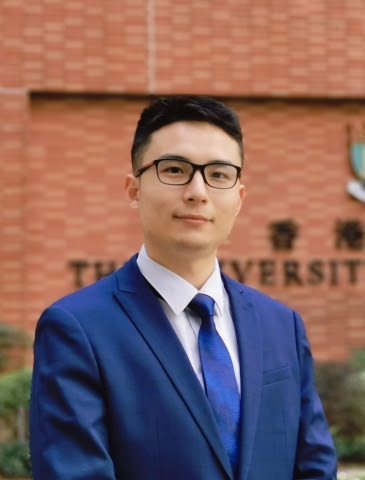
Welcome the new Global Academic Fellow Dr Xiangyi Ren!

Welcome to Dr Xiangyi Ren who joined the Faculty of Law as a Global Academic Fellow. Dr. Xiangyi (Tami) Ren is a socio-legal scholar studying legal and policy change in Mainland China. Her research examines how legal knowledge is produced, circulated, and transformed through the interaction between court operations and lawmaking processes. Her current research examines the operation of specialized tribunals and courts, public interest litigation regimes, and how specialized judicial institutions reshape governance in China. A common intellectual thread of her work is analyzing how legal institutions mediate interactions among legal, technical, and political knowledge, as well as investigating how individuals and organizations construct, interpret, and deploy legal rules in practice.

Xiangyi received her Ph.D. in Sociology from the University of Chicago, an MSc in Politics of China from SOAS University of London, and a B.A. in Political Science and International Studies from the University of Wisconsin–Madison. She was awarded the 2025 Surrency Prize by the American Society for Legal History. Her work has appeared in the Journal of Contemporary China, Law and History Review, and China Law and Society Review. Prior to joining the University of Hong Kong as a Global Academic Fellow, she served as a Social Sciences Teaching Fellow at the University of Chicago.

Monday, August 17, 2026

Welcome the new Global Academic Fellow Dr Marianne Von Blomberg!

Welcome to Dr Marianne Von Blomberg who joined the Faculty of Law as a Global Academic Fellow. Marianne von Blomberg is a Global Academic Fellow (postdoctoral researcher) at the Law and Technology Centre of the University of Hong Kong. She also participates in a research project on corporate social responsibility regimes and techno-regulation in Europe and China at the Bern University of Applied Sciences. Her work uses qualitative empirical methods to examine how public regulation of and through digital technologies evolves across China and the European Union.

Her research focuses on social credit systems and related forms of assessment-based governance in China and beyond, as well as on techno-orientalism in media and policy discourse. In her current work, she expands her work on regulation and governance to include processes of technical standardization as key sites where regulatory logics are developed and negotiated.

She completed her PhD at the University of Cologne, funded by the German Academic Scholarship Foundation and the Fritz Thyssen Foundation. The project investigated how evolving social credit systems strengthen, weaken and transform the law in China and is grounded in three years of fieldwork and analyses of official documents.  Her focus on modes of public regulation and their transformation has led her to observe the processes and fora of technical standardization in her postdoctoral work.

Beyond research, Marianne contributes to public and policy-facing engagement on PRC law in Europe through advising EU officials, teaching, and serving as the editor of the blog of the European Chinese Law Studies Association (ecls.eu), and co-organizing its conferences and summer schools. Marianne holds an LL.M. from Zhejiang University in Hangzhou and a BA in Communication and Cultural Studies from Zeppelin University in Friedrichshafen. She has been a visiting scholar at the City University of Hong Kong School of Law and has professional experience with several news outlets, the Jingling Law Firm (criminal defense), the Volkswagen Group, and the German Embassy in Ottawa.

Monday, November 11, 2024

Welcome the new Global Academic Fellow Dr Suhong Yang!

Welcome to Dr Suhong Yang who joined the Faculty of Law as a Global Academic Fellow. Dr. Suhong Yang is an international lawyer interested in criminal law, human rights, and environmental law issues. Her S.J.D. dissertation investigates the legitimacy of international and hybrid criminal tribunals that try atrocity crimes in post-conflict situations. Suhong was awarded as a David D. Caron Fellow and a Salzburg Cutler Fellow for her research. Her work has appeared or is forthcoming in the Chinese Journal of International Law, Denver Journal of International Law & Policy, European Papers, George Mason International Law Journal, International Legal Materials, and Proceedings of the ASIL Annual Meeting.

At the HKU Faculty of Law, Suhong is engaged in teaching activities and assisting the Director of the Centre for Comparative and Public Law in research-related activities. Prior to joining the HKU, Suhong was a Judicial Fellow at the International Court of Justice, working with Judge H.E. XUE Hanqin. She also served the Office of the President of the U.N. International Residual Mechanism for Criminal Tribunals, the Office of the Prosecutor of the International Criminal Court, and the Legal Policy Office of the U.N. High Commissioner for Human Rights.

Suhong holds a Bachelor of Laws degree from Renmin University of China, and LL.M. and S.J.D. degrees from Georgetown University Law Center. In addition to the academic degrees, she also studied at the University of Oxford, Kathmandu School of Law, and Cheng-Chi University (Taiwan) in different capacities. Suhong has facilitated teaching or been invited to give guest lectures on tort law, international law, US law, and Chinese law at Georgetown University, Leiden University, and Renmin University.

Suhong is currently Vice-Chair of the International Criminal Law Interest Group of the American Society of International Law (ASIL), and Secretary of ASIL Women in International Law Interest Group. She served as Co-Chair of ASIL New Professionals Interest Group from 2019 to 2023.

Friday, November 8, 2024

Welcome the new Global Academic Fellow Dr Alex Zhicheng Huang!

Welcome to Dr Alex Zhicheng Huang who joined the Faculty of Law as a Global Academic Fellow. Dr Alex Huang’s research focuses on bankruptcy law, corporate law, judicial behavior, and the application of economics and data science to legal questions. His current projects involve the use of network analysis and natural language processing to examine a large number of judicial opinions related to Chapter 11 reorganization. He explores computational doctrinal analysis to examines the content of law—legal reasoning and justification—in an empirical way. Computational doctrinal analysis sets itself apart from both the outcome-oriented empirical legal studies and the case study-driven doctrinal analysis. Additionally, he is interested in the role of courts, judicial performance evaluation, and public trust in the judiciary, particularly the impacts of new technologies like artificial intelligence on these fields.

His writings have appeared in the Emory Bankruptcy Developments Journal and Research of Institutional Economics, and he has contributed chapters to several books. His research has been featured in several media outlets and academic blogs including the Financial Times, The Deal, Reorg, Oxford Business Law Blog, and Harvard Law School Bankruptcy Roundtable. He has received several research awards, including the Best Paper Award at the Annual Law and Economics Conference in China and the Most Innovative Presentation Award at the INSOL ERA Annual Workshop.

Dr Alex Huang holds a JSD and LLM from the University of California, Berkeley, where he was named to the Dean’s List. He was also a Lloyd M. Robbins Fellow at the Berkeley School of Law and a Berkeley Empirical Legal Studies Fellow at the Berkeley Center for the Study of Law and Society. He earned his Bachelor of Laws from Sun Yat-sen University, where he received the China National Scholarship.

Before teaching Cross-border Insolvency Law at HKU Law, he taught Law and Economics I & II, Sociology of Law, Law in Chinese Society, and Fundamentals of U.S. Law as a lecturer and graduate student instructor in the legal studies program and the law school at UC Berkeley.

Huang is also a Research Associate at the Sun Yat-sen University Law and Economics Research Center, where he serves as a co-investigator for a key project funded by the National Social Science Fund of China.

Wednesday, November 6, 2024

Welcome the new Global Academic Fellow Dr Pangyue Cheng!

Welcome to Dr Pangyue Cheng who joined the Faculty of Law as a Global Academic Fellow. Dr. Pangyue Cheng is a legal scholar focusing on corporate law, financial regulation, and AI governance. Her research interests encompass institutional stewardship, corporate governance, sustainability, and AI regulation. Pangyue’s work explores the legal challenges companies face in a rapidly changing global environment, particularly how shifts in investor roles, technological advancements, and increasing sustainability demands shape corporate governance and regulatory practices. Her research has been published in international law reviews and peer-reviewed journals such as the Columbia Business Law Review and the European Business Law Review.

Currently, Pangyue’s research focuses on the intersection of corporate governance, sustainability, and technological innovation. She examines how institutional investors foster corporate responsibility and long-term value creation through ESG integration. Additionally, her research on AI governance addresses the opportunities and legal challenges that emerging technologies pose to corporate systems and governance frameworks.

Pangyue holds a Bachelor of Laws from Beijing Normal University, an LLM in Corporate and Financial Services Law, and a PhD from the National University of Singapore, where she researched institutional stewardship in Chinese listed companies. Her work on ESG integration and corporate sustainability was fully funded by the MacMillan Center for International and Area Studies at Yale University. She has been invited to share her research at esteemed institutions, including Yale University, Harvard University, the University of Michigan, the Edinburgh Centre for Commercial Law, the Society of Legal Scholars, and the American Society of Comparative Law.

Pangyue currently teaches China Company Law and Securities Regulation at the HKU Faculty of Law. She was a Fox International Fellow at Yale University and worked as a researcher on several projects at the National University of Singapore Law School. Before entering academia, she practiced law in mainland China and served as legal counsel for a listed AI company.

Monday, September 16, 2024

Valeria Vázquez Guevara Awarded the Chancellor's Prize 2024 (Humanities, Creative Arts and Social Sciences)

Congratulations to Valeria Vázquez Guevara, whose PhD Thesis “Truth Commissions: The Authority of International Law and the State after Conflict” was awarded the Chancellor's Prize 2024 by The University of Melbourne. The thesis was supervised by Professor Sundhya Pahuja and Professor Shaun McVeigh. The thesis forms the basis of Valeria's forthcoming monograph, Truth Commissions and International Law: Jurisdiction, Representation, Authority (under contract, Cambridge University Press).

     Background on the prize: The Chancellor's Prize for Excellence in the PhD Thesis is awarded by the University of Melbourne each year to up to six nominees. A seventh award may be made to an Indigenous candidate. The awards recognize the quality of the research theses including international reach, impact or potential impact of the topic, publications or other research outputs. Please click here for more details regarding the prize.


Friday, May 3, 2024

Valeria Vázquez Guevara Awarded the Harold Luntz Graduate Research Thesis Prize 2023

Congratulations to Valeria Vázquez Guevara, whose PhD Thesis “Truth Commissions: The Authority of International Law and the State after Conflict” was awarded the Harold Luntz Graduate Research Thesis Prize 2023 by the Melbourne Law School. The thesis was supervised by Professor Sundhya Pahuja and Professor Shaun McVeigh. The thesis forms the basis of Valeria's forthcoming monograph, Truth Commissions and International Law: Jurisdiction, Representation, Authority (under contract, Cambridge University Press).

     Background on the prize: The Harold Luntz Graduate Research Thesis Prize is awarded annually to the Melbourne Law School graduate research student judged to have presented the best thesis in the previous year, provided that the nominee meets an overall level of excellence required for the award. It is named for Emeritus Professor Harold Luntz, a world expert on torts law and a former dean and professor at Melbourne Law School.

Wednesday, November 8, 2023

Jiahui Duan on Sexual Harassment in Irregular Chinese Workplaces: Business Dinners, Team-Building Activities, and Social Media (Law & Social Inquiry)

"Sexual Harassment in Irregular Chinese Workplaces: Business Dinners, Team-Building Activities, and Social Media"
Jiahui Duan
Law & Social Inquiry
First View , pp. 1 - 32
Published online: October 2023

Abstract: Much of the social and economic inequality that sexual harassment perpetuates is created in the workplace. But research has not always acknowledged the fluid and changing nature of workspaces. This article argues that irregular workspaces and activities—bars and other social drinking sites at which yingchou (business drinking activities) take place, team building, and the WeChat social media platform—are significant sites of sexual harassment in China. These irregular workplaces play a significant role in working life in China, and their informality has made them prone to sexual harassment in the context of deeply entrenched gender norms and vertical power hierarchy.

Thursday, August 31, 2023

Welcome the new Global Academic Fellow Dr Jiahui Duan!

Welcome to Dr Jiahui Duan who joined the Faculty of Law as a Global Academic Fellow. Dr Jiahui Duan is an interdisciplinary legal researcher with an interest in feminist jurisprudence, legal consciousness, labor rights, power, and resistance. She has previously researched the land rights of rural Chinese married-out women. The current research she conducts focuses on workplace sexual harassment issues in China, with the aim of understanding the development of workplace sexual harassment issues in Chinese society, as well as exploring potential anti-sexual harassment strategies within an emerging economic and political context such as China’s. A common intellectual thread of her work is: examining how individuals’ legal consciousness is formed, reshaped, or even disintegrated in their interactions with other socio-legal actors, and investigating the dynamics of legal rules, social norms, and human agency, as well as the Internet and other technologies.
    Dr Duan received her J.S.D. from the University of California, Berkeley. She was also a Lloyd M. Robbins Fellow and a BELS Fellow at the Center for the Study of Law and Society at Berkeley. Prior to joining Berkeley, she was a certified lawyer in mainland China.    
      Research Areas:
  • Law and society
  • Gender and Law
  • Employment Law

Friday, April 14, 2023

Welcome the new Global Academic Fellow Dr Valeria Vázquez Guevara!

Welcome to Dr Valeria Vázquez Guevara who joined the HKU Faculty of Law as a Global Academic Fellow!

Dr Valeria Vázquez Guevara is a Salvadoran-Spanish scholar of international law and institutions. Valeria’s research engages with ‘law and humanities’ scholarship in addressing questions of international law, its institutions, and geopolitical implications, especially between North-South and South-South states and actors. The research builds on Valeria’s personal and professional experiences in international development and peacebuilding projects in El Salvador, Spain, the Basque Country, and South Africa.
     As a Global Fellow, Valeria’s post-doctoral research, provisionally titled “North-South Encounters: International Law and the Geopolitics of Contestation”, examines how global South states and actors have pushed for different ways of understanding, and imagining, international law. Here Valeria is particularly interested in how the global South develops creative (and unexpected) diplomatic practices to engage with, and pushback against, international law and institutions.
     Prior to joining HKU, Valeria undertook doctoral studies at Melbourne Law School, under the supervision of Professors Sundhya Pahuja and Shaun McVeigh. Valeria’s doctoral thesis examined the relationship between Truth Commissions and international law. The thesis focused on the ways in which this relationship produces an official account of past violence and promises of future community, which fundamentally conditions how communities live together in the aftermath of violent conflict. Methodologically, the thesis analyzed the representation and contestation of authority deployed by three cultural objects associated with three Truth Commissions: a literary prologue (Argentina 1983-1984), a museum of memory (Chile, 1990-1991), and a tapestry (El Salvador, 1992-1993). This research has been published in Leiden Journal of International Law, London Review of International Law, the Routledge Handbook of International Law and the Humanities, and will form the basis of a monograph titled Truth Commissions: The Authority of International Law and the State after Conflict.
     Valeria is also collaborating on two research projects. One is with Dr Claerwen O’Hara (La Trobe Law School) examining the legal-political initiatives of the multilateral organization, the Bolivarian Alliance for the Peoples of our America (‘ALBA’ for its acronym in Spanish). This collaboration also includes a workshop on ‘International Law in the early 2000s’. The other project is with Dr Eliana Cusato (University of Amsterdam’s Centre for International Law). The first part of the collaboration involved a seminar series in 2021, examining the relationship between international law, transitional justice and power. The online series brought together nine speakers from universities in Australia, India, South Africa, the Netherlands and the United Kingdom. This collaboration will continue in 2023-2024 with a series of lectures and research workshop on international law and the political economy of reparations.
     Valeria serves as managing editor of the Australian Feminist Law Journal, as co-chair of the History and Theory of International Law Interest Group of the Australian and New Zealand Society of International Law (ANZSIL), and as a member of the executive committee of the Law, Literature and Humanities Association of Australasia.
     Valeria holds a PhD from Melbourne Law School (Australia), an MA in Peace Studies from the Kroc Institute for International Peace Studies at the University of Notre Dame (US), an MA in Sociology of Law from the International Institute for the Sociology of Law (Basque Country/Spain), and an LLB from the University of Granada (Spain).

Research Areas:

  • Public International Law
  • International Law and Politics
  • Transitional Justice and Post-Conflict Institutions
  • International Law and Development
  • Law and Humanities

Saturday, October 29, 2022

Welcome to HKU Law's Global Academic Fellow Dr Cynthia Farid

Welcome to Dr Cynthia Farid who joined the Faculty of Law as a Global Academic Fellow. Dr Farid is a legal historian and a lawyer with longstanding experience in research, legal practice as well as a range of international development and rule of law programming with INGOs, think tanks, and legal rights organizations. Having completed her bar in the United Kingdom and Bangladesh, she graduated with advanced degrees from Cornell Law School (LLM) and the University of Wisconsin Law School (SJD).
     Prior to joining HKU Law as a Global Academic Fellow in 2022, Dr Farid was practicing as an Advocate of the Supreme Court of Bangladesh and had been working with the Human Rights Forum Bangladesh, a coalition of 20 human rights NGOs, to support its engagement with the United Nations Committee against Torture and the Universal Periodic Review.  She is also a member of Gray's Inn, London.
      Dr Farid’s research interests include socio-legal history, constitutional and administrative law, law and development (with a focus on South Asia), and knowledge production processes in the Global South. She is also the organizer of two International Research Collaboratives of the Law and Society Association on South Asian Legal Systems and Scholars in the Global South respectively, that have brought together scholars from around the globe to work on collaborative projects.
      Dr Farid has published in a number of international journals and has secured a book contract with Hart Publishing in its “Constitutional Systems of the World” series for a co-authored book titled The Constitution of Bangladesh: A Contextual Analysis with an anticipated publication date of 2023. As a Global Academic Fellow, she plans to expand on and publish her doctoral research (titled “Imperial Constitutionalism: Judicial Politics in Colonial India (1861-1935)”) into a book-length monograph.    

Sunday, January 2, 2022

New Book by Anna Dziedzic: Foreign Judges in the Pacific (Hart Publishing)

Foreign Judges in the Pacific
Anna Dziedzic (Global Academic Fellow)
Hart Publishing
Published in 2021
Book Description: This book explores the use of foreign judges on courts of constitutional jurisdiction in 9 Pacific states: Fiji, Kiribati, Nauru, Papua New Guinea, Samoa, Solomon Islands, Tonga, Tuvalu and Vanuatu. We often assume that the judges sitting on domestic courts will be citizens. However across the island states of the Pacific, over three-quarters of all judges are foreign judges who regularly hear cases of constitutional, legal and social importance. This has implications for constitutional adjudication, judicial independence and the representative qualities of judges and judiciaries. Drawing together detailed empirical research, legal analysis and constitutional theory, it traces how foreign judges bring different dimensions of knowledge to bear on adjudication, face distinctive burdens on their independence, and hold only an attenuated connection to the state and its people. It shows how foreign judges have come to be understood as representatives of a transnational profession, with its own transferrable judicial skills and values. Foreign Judges in the Pacific sheds light on the widespread but often unarticulated assumptions about the significance of nationality to the functions and qualities of constitutional judges. It shows how the nationality of judges matters, not only for the legitimacy and effectiveness of the Pacific courts that use foreign judges, but for legal and theoretical scholarship on courts and judging.

Tuesday, October 12, 2021

Life as a Global Academic Fellow with HKU Law (Interview with Dr Anna Dziedzic)

Anna Dziedzic joined HKU Law as a Global Academic Fellow in 2019. She researches in the field of comparative constitutional law, with a particular focus on constitutional change and the role of judges and judiciaries. She used the Global Academic Fellowship to undertake broader comparative research into foreign judges and the significance of nationality to judicial office.  Her book, Foreign Judges in the Pacific, will be published by Hart Publishing in November 2021.  
1.    When were you a Global Academic Fellow with HKU Law?
I was a Global Academic Fellow in Hong Kong from August 2019 to August 2021. This time encompassed both the Hong Kong protests and the pandemic, but despite these challenges the Fellowship was a dynamic and rewarding experience.

2.   What was the topic of your PhD thesis? Were you able to extend or develop your PhD research during your time as a Global Academic Fellow?
I completed my PhD thesis at Melbourne Law School in 2019, on the topic of foreign judges on courts of constitutional jurisdiction in Pacific island states. The Global Academic Fellowship at HKU Law provided me with the opportunity and the support to develop my research on foreign judges beyond the Pacific to consider the more than 50 jurisdictions which use foreign judges, in some way, on their domestic courts.
     One reason I was attracted to post-doctoral research at HKU was that Hong Kong has its own experience of using foreign judges on its Court of Final Appeal, a point of similarity that connected with my research on Pacific island judiciaries. I was able to test some of the theoretical insights that emerged from my study of foreign judges in the Pacific by applying them to the different context of Hong Kong, especially as the position of foreign judges came under pressure after the enactment of the National Security Law in 2020.
     In addition, with funding from the HKU Law Faculty and support from HKU’s Centre for Comparative and Public Law, I and Professor Simon Young led a comparative project on foreign judges on domestic courts. This included an international workshop in May 2021, during which 36 judges, scholars and practitioners came together to discuss the use of foreign judges in over 30 jurisdictions across the world, and a joint keynote presentation from Justice Joseph Fok PJ and Justice William Gummow NPJ of the Hong Kong Court of Final Appeal. The papers presented at the workshop will be published in The Cambridge Handbook of Foreign Judges on Domestic Courts, co-edited by Professor Young and I.
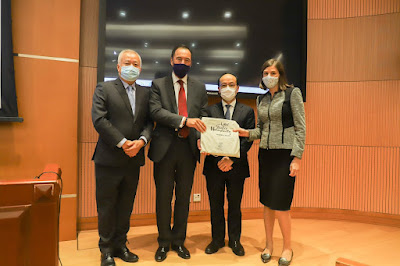
L-R: Dean Fu, Justice Fok, Prof Young, Dr Dziedzic
    The Global Academic Fellowship also provided me with the time and space to revise and extend my PhD thesis for publication as a monograph titled Foreign Judges in the Pacific.

3.    What other opportunities did you take up during your fellowship?
Living and working in Hong Kong also opened up new areas of comparative study for me. In response to issues raised by the protest movement of 2019, Julius Yam and I prepared a CCPL Policy Paper on the potential use of amnesties in contexts of civil unrest. This work inspired a scholarly paper comparing amnesties for street protesters across the world and examining the normative justifications for amnesties in the distinctive context of street protest.
     While a Global Academic Fellow, I was invited to be Associate Director of the Centre for Comparative and Public Law. This role provided many opportunities to collaborate with comparative constitutional law academics and research centres around the world and to organise and participate in seminars and conferences, both in person and online.

4.    How did you like living in Hong Kong and being part of the HKU Law community?
The HKU Law community is very welcoming and supportive. It is also a diverse community and in addition to connecting with scholars in my field of public law, I learned a lot from scholars of law and literature, legal theory, and empirical legal studies, to name a few.
     One aspect of the community that I particularly enjoyed was convening the Junior Scholars Forum. Together with Chris Szabla (another Global Academic Fellow) we sought to create a space for post-doctoral and post-graduate researchers from the three law schools in Hong Kong to meet and share their work in a supportive and collegial way. It was a valuable way to build connections with researchers from other Hong Kong universities working in very different areas of law.

5.    How did the Global Academic Fellowship prepare you for the next stage of your academic career?
The Global Academic Fellowship is a great stepping stone to further research as well as a tenured academic career. I was able to extend my research agenda, strengthen my publication record, and develop networks of scholars and practitioners in Hong Kong and beyond. There were also opportunities to teach, participate in events, and engage with student associations and the wider legal community, all experiences that open many doors for future work.

6.    What advice would you have for someone thinking of applying for the fellowship?
Do it! The Global Academic Fellowship is a rare post-doc: two years with the freedom to choose what you are going to research and write about. With time, funding and a supportive Faculty, you can continue to follow research pathways from your PhD thesis or begin something completely new.

Friday, October 8, 2021

HKU Law Welcomes Dr Wanshu Cong, Global Academic Fellow of 2020/21

Welcome to Dr Wanshu Cong, our new Global Academic Fellow at the Department of Law, HKU. Her research interests include theory and history of international law, critical legal studies and the intersection of law and technology. More recently, her work has been looking at transnational data governance by drawing from Marxist and Third World Approaches to International Law. During the Global Academic Fellowship, she will compare claims and practices of digital sovereignty by state and non-state actors around the world and analyze them from a historical perspective.  Before joining HKU, Wanshu was a Max Weber Fellow at the European University Institute. She holds a D.C.L from McGill University and an LL.M. from Geneva Academy of International Humanitarian Law and Human Rights. She is also an associate editor for the European Journal of International Law.

Monday, March 8, 2021

HKU Law Welcomes Two New Post-Docs (Dr Evan Rosevear and Dr Hui Chen)

HKU Law warmly welcomes two new postdoctoral legal scholars who, respectively, will explore questions of comparative law and politics with a focus on national constitutions, and legal developments in the Greater Bay Area.   
     Dr Evan Rosevear is a Global Academic Fellow who joins us from Canada.  His research lies at the intersection of comparative law and comparative politics with a focus on national constitutions and domestic legal systems. It is guided by a desire to understand how courts, rights, and constitutions operate, how they interact with other state and non-state actors, and whether and when they are capable of fostering social and political change. Methodologically, it takes the form of theoretically-informed, empirically-driven comparative analysis that involves single case and small-n research supplemented by large-n statistical analysis.
     His current projects include a comparative examination of the interaction of legal reasoning and politics in the adjudication of constitutionalized social rights and the use of executive discretion in instances of executive aggrandizement. He is also interested in developing the empirical and comparative study of non-US judges and courts.
      Evan holds a PhD in political science and a JD from the University of Toronto. He has been a Research Associate with the Toronto Initiative for Economic and Social Rights (TIESR) and previously spent time at the Center for Justice and Society at FGV Direito-Rio and the South African Institute for Advanced Constitutional, Public and International Law (SAIFAC) at the University of Johannesburg.

Dr Hui Chen is Post-Doctoral Fellow in the Department of Law. His research centres on WTO law, international trade negotiation, dispute settlement, and legal harmonization in the Greater Bay Area.
     Prior to joining HKU, Hui had the experience of working and researching in the WTO headquarters in Geneva, during which he worked in the Accessions Division to support the application of membership for Kazakhstan, Afghanistan, Algerian, and Yemen. Having obtained the Chinese Legal Professional Qualification Certificate, he has practiced law in Shanghai.
     Hui has been participating in research projects on China’s global governance, dispute settlement and legal harmonization in the Greater Bay Area, including but not limited to exploring the path of Hong Kong becoming a centre of international dispute resolution, the establishment of an International Commercial Arbitration Centre in the Greater Bay Area, and the facilitation for liberalizing the legal services markets between the Mainland and Hong Kong. He co-authored a book chapter titled “The Belt and Road Initiative in China’s Approach to Global Governance: Implications for China-EU Relations and Economic Cooperation” in the book European Union and China’s Belt and Road: Impact, Engagement and Competition, which will be published in Routledge in 2021. His present research focuses on the legal convergence and harmonization across different legal regions in the Greater Bay Area.

Friday, November 27, 2020

Call for Applications: HKU Law Global Academic Fellows 2021-2022 (Deadline: 1 January 2021)

THE UNIVERSITY OF HONG KONG

Global Academic and Presidential Fellows

Department of Law

Applications are invited for three appointments as Global Academic Fellow in the Department of Law, to commence in August 2021 or January 2022, for a period of two years.

The Global Academic Fellows Programme was created to provide outstanding and aspiring legal academics with time and resources to transition into the global teaching market. Fellows will have access to an internationally leading faculty for mentorship, affiliation with related research centers, and funding for attending academic conferences to present their work. Other opportunities will include teaching appointees’ own course or gaining experience in core courses, and organizing funded academic conferences in their field. Applicants should have completed their doctoral degrees (JD or PhD) before the start of their appointments, unless they possess significant practice experience.

One to three fellows will be appointed each year, and will be expected to be in residence at HKU and devote their time primarily to their own research and preparation for entering the international teaching market. Fellows will be provided shared office space and administrative support when needed. Information about the Department of Law and the Faculty of Law can be found at: www.law.hku.hk.

Global Academic Fellows enjoy a highly competitive salary of 480,000HKD (~60,000USD/52,000EUR) in addition to annual leave, travel funds, relocation expenses and full medical benefits. At current rates, salaries tax does not exceed 15% of gross income.

Additionally, all shortlisted candidates will be nominated for HKU’s Presidential Post-Doctoral Fellowship. Each of these nominations potentially represents a 25% increase in salary, research funds and the optional extension of the fellowship for a third year. Address any specific questions to the Director at: jkroncke@hku.hk.

The University only accepts online application for the above post. Applicants should apply at https://jobs.hku.hk/cw/en/job/502489/global-academic-fellow-3-posts. Applications require the following 4 components: 1) an updated C.V., 2) a 3-page research agenda (including past, current and future projects), 3) a list of at least three academic references, and 4) a writing sample (under 50 pages).

Closes 1 January 2021.

Monday, October 5, 2020

HKU Law Welcomes First Global Academic Fellow of 2020/21

Welcome to Dr Chris Szabla, the first of three Global Academic Fellows in the second round. The fellows were selected following a global competition of accomplished postdoctoral law applicants. 
     Dr Szabla researches in the areas of international, comparative, and transnational law and legal history, with a focus on borders and migration. He holds a JD from Harvard Law School and an MA and PhD from Cornell University, where he taught history and international law and completed a dissertation examining the international law and global governance of migration from the nineteenth century to the present. At HKU he plans to extend his research on contemporary borders, including investigating the legal entanglements of immigration preclearance facilities and the use of surveillance technologies at borders. He also plans to begin a new historical research project focused on the development of transnational norms of border governance in colonial Asia, investigating the influence of local innovations and common commercial pressures. 
      Dr Szabla's research has attracted sponsorship from organisations including the Social Science Research Council, the Council for European Studies, and the Graduate Institute for International and Development Studies, and has been recognised by the American Association of Law Libraries. His scholarship includes work focused on, inter alia, the reform of global migration governance, the place of migration in the international law of development, decolonisation in the history of global migration governance, the intellectual history of free movement, and the international law of armed conflict. He has also organised international scholarly collaborations focused on law and migration. Prior to his academic career he worked as an attorney in New York, and has studied and/or lived in Berlin, Geneva, Paris, London, and in Cairo, where he also provided legal assistance to refugees.

Tuesday, October 1, 2019

Welcome to HKU Law's Inaugural Global Academic Fellows

Welcome to Dr Yu-Jie Chen, Dr Anna Dziedzic, and Dr Alexander Ezenagu, our first batch of Global Academic Fellows.  The fellows were selected following a global competition of accomplished postdoctoral law applicants. The inaugural group will further enrich the Faculty of Law's research areas of strength in human rights law, constitutional law, and financial law.
Dr Yu-Jie Chen
   Prior to joining HKU, Dr Yu-Jie Chen was a Postdoctoral Research Associate at the Institutum Iurisprudentiae of Academia Sinica in Taiwan. Dr Chen received her JSD and LLM degrees from New York University School of Law. She also holds an LLM and LLB from National Chengchi University in Taiwan. She has had extensive experience as a research scholar at the US-Asia Law Institute, NYU School of Law. Prior to that, she served as a researcher and advocate for the non-governmental organization Human Rights in China. She earlier practiced in the Taipei-based international law firm Lee and Li. Dr Chen's research focuses on human rights issues in China, Taiwan and cross-strait relations.
   Dr Chen's recent scholarship includes “China’s Challenge to the International Human Rights Regime,” “Human Rights in the Chinese Administration of Justice,” “Localizing Human Rights Treaty Monitoring: Case Study of Taiwan as a Non-UN Member State,” “Isolated but Not Oblivious: Taiwan’s Acceptance of the Two Major Human Rights Covenants,” “China-Taiwan Relations Re-examined: the ‘1992 Consensus’ and Cross-strait Agreements” (with Jerome A. Cohen), “China-Taiwan Repatriation of Criminal Suspects: Room for Human Rights?” (with Jerome A. Cohen), “Freedom from Arbitrary Detention in Asia: Lessons from China, Taiwan and Hong Kong” (with Jerome A. Cohen), “‘Rule of Trust’: Powers and Perils of China’s Social Credit Megaproject” (with Ching-fu Lin & Han-wei Liu), “Beyond State v Loomis: Artificial Intelligence, Government Algorithmization and Accountability” (with Han-wei Liu & Ching-fu Lin), and “Transitional Justice in Taiwan: Changes and Challenges” (with Nien-chung Chang Liao).
Dr Anna Dziedzic
    Dr Anna Dziedzic researches in the field of comparative constitutional law, with a particular focus on judges and judiciaries and constitutional change. She completed her PhD at Melbourne Law School in 2019, with a doctoral thesis examining the use of foreign judges on courts of constitutional jurisdiction in Pacific island states. She will use the Global Academic Fellowship at HKU Faculty of Law to undertake broader comparative research into foreign judges and the significance of nationality to judicial office.
     Dr Dziedzic was awarded an MA in Human Rights from University College London in 2011, and first class honours degrees in Arts and Law and the University Medal in English Literature from the Australian National University in 2004. Prior to undertaking post-graduate study, Dr Dziedzic  worked at the Australian Law Reform Commission, the Australian Department of the Prime Minister and Cabinet, as an Associate to a Justice of the Federal Court of Australia and a volunteer legal analyst at the Samoa Law Reform Commission.
     Dr Dziedzic’s academic publications include work on constitutional law and constitution making in Pacific island states, Australian constitutional law, Indigenous constitutions, federalism, parliamentary sovereignty, and judges and judiciaries. She has also undertaken consultancies on various issues including constitutional implementation, gender and constitutions, and citizenship.  She is a co-convenor of the Constitution Transformation Network at Melbourne Law School, a network that brings scholars and practitioners together to explore the dynamics and challenges of change in constitutional law, theory and practice across the globe. 
Dr. Alexander Ezenagu
     Dr Alexander Ezenagu researches on the intersections of trade, investment, tax and development. He is also designing a taught course on the governance of development from a developing country perspective. 
     Dr Ezenagu obtained his doctorate degree from McGill University, Canada, in International Tax Law. His doctorate dissertation studied the alternatives to the arm’s length principle of income allocation among related entities and the adoption and application of unitary taxation approach for allocating income among entities within a multinational group. Dr Ezenagu is a graduate of the University of Cambridge, United Kingdom, where he obtained a Master of Law degree (LLM) in Commercial Law. 
      Dr Ezenagu’s current research focuses on the relationship between taxation and economic development, as well as the role of government and non-government institutions and actors in the creation of tax policies and rules. He writes on the right to tax by countries and how such taxing rights should be allocated. He also researches and writes on illicit financial flows out of developing countries and ways to curb them. 
    The HKU Faculty of Law launched the Global Academic Fellows Programme in 2018 under the directorship of Dr Jed Kroncke, assisted by Ms Ivy Lai.  The aim of this postdoctoral law programme is to provide a highly stimulating research environment for the most promising legal academics to continue and develop their internationally excellent research.