Showing posts with label Frank He. Show all posts

Friday, January 2, 2026

Xin He and Huina Xiao on Women and Divorce: Institutional Constraints and Outcomes, and Possible Ways Forward (New Book Chapter)

"Women and Divorce: Institutional Constraints and Outcomes, and Possible Ways Forward"
Xin He and Huina Xiao
in Gordana Malešević (ed), Challenges for Chinese Women in the Early Twenty-First Century (World Scientific, November 2025), Chapter 9, pp. 159-175
Published online: November 2025

Abstract: The following sections are included in this chapter: Introduction, Institutional Constraints of Judicial Decision-Making in Divorce Disputes, Gendered Judicial Practices in Divorce Disputes, Gendered Lawyering, Conclusion, References, Statutes Cited

Friday, December 26, 2025

Congratulations to Xin He, Chair Professor

Congratulations to Professor Xin He on his recent conferral of the title Chair Professor at The University of Hong Kong.  The title is a mark of distinction as the President wrote in his conferment letter to Professor He:

"At this University, a Chair Professor title is reserved for world-class scholars of distinction. It signifies due recognition of outstanding academic leadership and excellence. As a top-rated researcher and academic leader, you are held in high regard by your peers globally, and your significant contributions and accomplishments have received international acclaim."

Professor He is now only one of four Chair Professors in the Faculty of Law.  He was appointed to the Mok Sau-King Professorship in Law at the University of Hong Kong in 2024 and his latest monograph The Judicial System of China was published by Oxford University Press in November 2024.  For more information on Professor He's research outputs and impact, click here.

Monday, July 14, 2025

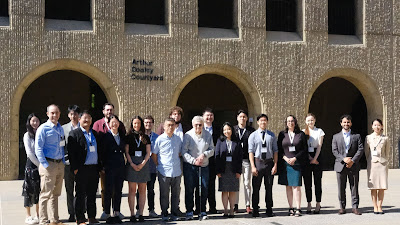
CCL Member Professor Xin He delivered the keynote speech at the 9th Conference for Junior Researchers on Law and Society at Stanford Law School

On May 9, 2025, the Law and Society Association at Stanford Law School (LSAS) successfully held its Ninth Conference for Junior Researchers. The conference provided a forum for junior researchers to share their current research projects on law and society and receive input from faculty and other participants.

The focus of the conference was on the intersections of law, power, and reform, particularly in systems undergoing rapid political or social transformation. In particular, the conference explored how courts navigate these transformations, and the roles legal actors play in resisting or facilitating change.

Xin He, HKU Mok Sau-King Professor in Law and member of Philip K.H. Wong Centre for Chinese Law, was invited to deliver the keynote speech titled “A State Perspective on China’s Rights Development” at the conference. Emeritus Professor Lawrence M. Friedman from Stanford Law School delivered a warm opening remark, welcoming Professor He back to his alma mater and congratulating him on his achievements in the field of sociology of law, particularly in comparative Chinese legal studies.

In his keynote speech, Professor He introduced a viewpoint that diverges from the dominant rights mobilization approach, arguing that a state perspective and especially the dynamics between the state apparatuses offer crucial insights on China rights development. Professor He elaborated on this perspective through examples from several key areas of justice and explored the significance of the state perspective by comparing China with other authoritarian states. He noted the contrast with many authoritarian countries where law often opposes the state, pointing out that China’s legal system closely serves state interests. The extensive control of judges, courts, and legislative processes by the state highlights the unique context of China’s law and politics.

Participants in the conference included Stanford Law School professors such as Lawrence M. Friedman, Amalia D. Kessler, Deborah R. Hessler, Curtis J. Milhaupt, and Henry T. Greely. The attendees also included promising young scholars from academic institutions like Yale University, Duke University, the University of California, Berkeley, and the University of California, Los Angeles.

Friday, March 14, 2025

Xin He on Threat to Family Stability or Social Stability? Domestic Violence Protection Orders in Two Chinese Courts (LSI)

"Threat to Family Stability or Social Stability? Domestic Violence Protection Orders in Two Chinese Courts"
Xin He
Law & Social Inquiry
Published online: February 2025

Abstract: In this examination of domestic violence protection orders in two lower-level Chinese courts, the interpretation of gender violence with respect to political concerns for social stability plays an essential role in the law’s effectiveness. In an urbanized coastal area court, judges see gender violence as a direct threat to social stability. To maintain stability, they facilitate claims against gender violence. Conversely, in a rural court, judges view gender violence as a direct threat to family stability. To maintain family stability, which is closely linked to social stability, they suppress claims against gender violence. This study proposes that, when global discourses are reformulated, new forms of cultural and political appropriation emerge. It highlights the complexities that arise when law, culture, and politics intermingle in the process of law and globalization. Understanding these complexities is crucial for addressing challenges in implementing global legal reforms at the local level and ensuring protection against gender violence.

Wednesday, December 25, 2024

Xin He on The Judicial System of China (Oxford University Press)

The Judicial System of China
Xin He
Oxford University Press
Published in November 2024

Abstract: Grounded in both English- and Chinese-language sources, The Judicial System of China is a systematic study of Chinese courts after Xi Jinping took power and thoroughly reformed China’s judiciary. How have Chinese courts come to the shape they are in today? How are decisions made on the major categories of cases—civil, criminal, and administrative? What drives and explains the behavior of the judges? How do the common people view the law and courts? How are the legal professions developed, and what are their roles in court? How do the judges interact with other actors—their political bosses, the prosecutors, and the lawyers? Different from the judicial independence perspective and the rights-protection approach, this book presents a governance model for understanding the operation of the Chinese court system, under which the courts have two overarching characteristics—policy implementation and legitimacy enhancement. The various policies that the courts are tasked with implementing, and the approaches the courts use for enhancing the judiciary’s legitimacy— and, by extension, that of the state, have played key roles in the courts’ evolution. This book is as much an account of Chinese courts in action as a social ethnography of China in the midst of momentous social change.

Monday, November 4, 2024

Congratulations to Xin He, Mok Sau-King Professorship in Law

Congratulations
to Professor Xin He who has been appointed to the Mok Sau-King Professorship in Law at the University of Hong Kong.

Professor He is a leading authority and an eminent scholar on comparative Chinese law. He writes principally on the role of courts and the judicial process in Chinese society. He is an award-winning author and undoubtedly one of the most prolific and widely-published Chinese law scholar in the English world. His record of publication is exceptional, in terms of both volume, as measured by annual output, and quality, as judged by the ranking of journals and the reputation of publishers.

Wednesday, July 3, 2024

Thursday, August 10, 2023

Xin He on From Hierarchical to Panoptic Control: The Chinese Solution in Monitoring Judges (International Journal of Constitutional Law)

Published:26 May 2023
Abstract: This article examines the potential and challenges of the ‘Cooperation Mechanism’, a scheme introduced jointly by the Supreme People’s Court in China and the Government of the Hong Kong Special Administrative Region on 14 May 2021, for enhancing mutual recognition and assistance in insolvency proceedings. This article contends that the Cooperation Mechanism does not in itself constitute a formal mechanism for mutual recognition. To assess the impact of the Cooperation Mechanism, this article traces and analyses court decisions on recognition and assistance made before the implementation of the Cooperation Mechanism, and places them in contrast to those pursuant to or influenced by the Cooperation Mechanism. Additionally, it highlights a similar practice between Europe’s Brussels Convention of 1968 and two arrangements between Hong Kong and China prior to the Cooperation Mechanism, namely the 2006 Arrangement and the 2019 Arrangement, in carving out bankruptcy and insolvency proceedings, notwithstanding some technical differences.

Friday, June 24, 2022

Three HKU Law Scholars Profiled in HKU Bulletin (May 2022)

The latest HKU Bulletin magazine (May 2022, Vol. 23, No. 2) features the accomplishments of several Faculty of Law colleagues: Dr Angela Zhang (Research, pp 28/29), Professor He Xin (Research, pp 30/31), and Dr Haochen Sun (Books, pp 44/45). 

For years, the Chinese government treated technology companies with kid gloves, encouraging them to get on the innovating and making money,  But in 2020, that changed.  Dr Angela Hueyue Zhang has been looking into the factors motivating the new hard-line regulation of techonlogy in Mainland China ...
'China's volatile style of policymaking is deeply ingrained in its authoritarian governance system, where regulatory authorities need to adhere to central policy initiatives and administrative power is subject to few institutional constraints.'  
~ Dr Angela Huyue Zhang
Dr Zhang also recently had a book published by Oxford University Press on the wide-ranging issues involved in China’s regulatory regime, Chinese Antitrust Exceptionalism: How the rise of China challenges global regulation.

"Men Win Out in Divorce in China"
Professor He Xin's research shows that a combination of institutional constraints on Chinese judges, traditional values about gender, and income inequality frequently result in divorce decisions that are more favourable to men than women.

'The judges follow strictly the law and the instructions of the Supreme People’s Court and they think their decisions are neutral. But they are ignoring the underlying socioeconomic inequality between the two genders, which affects the outcomes.'

           ~ Professor He Xin 

Divorce in China: Institutional Constraints and Gendered Outcomes was published by NYU Press in 2021.

Access to COVID-19 vaccines, broadband connections and other beneficial technologies should be a human right, argues legal scholar Dr Haochen Sun in a new book.
'Technology has become the major driver of our economic, cultural and political life. We have to talk about access to technology as a human right so that everybody can benefit and we can prevent serious harm caused by improper application of the technology.'

          ~ Dr Haochen Sun

Monday, December 13, 2021

"Want a Divorce? In China, Try, Try Again" (Frank He's Interview on Sixth Tone)


Want a Divorce? In China, Try, Try Again
by 
Cai Yineng
Published at Sixth Tone
26 November 2021

In 2004, while conducting fieldwork at a local court in southern China, legal scholar He Xin struck up a casual conversation with a judge. On the subject of challenges he faced in the job, the judge grumbled about his law school education, which he characterized as focused more on teaching how the law was written in books, rather than the “law in action.” “Why did no professor mention that, in divorce cases for instance, Chinese courts had made a habit of rejecting almost all first attempts to file?” the judge asked. “It’s not until they file again that the petition will be processed.”
     The conversation started He on a decade-long journey through the weeds of Chinese divorce law. The product of these efforts, Divorce in China: Institutional Constraints and Gendered Outcomes, was published by New York University Press this year. In the book, He draws on a wide range of empirical evidence from court audits and judge interviews to demonstrate how the enforcement of China’s Marriage Law — the first law passed after the Communist Party of China founded the People’s Republic in 1949 — has diverged from its original intention of protecting women’s rights to marry and divorce. Responsible for handling cases efficiently and maintaining social stability, judges often choose to broker a deal that can be accepted by both parties, rather than issue a ruling that holds one or the other responsible. In practice, this has led to drawn-out legal proceedings, the trivialization of serious problems like domestic violence, and an inability or unwillingness to protect women’s custody rights. ...Click here to read the full article.

Wednesday, September 29, 2021

He Xin on Guanxi and Law and Society Fieldwork in China (HKLJ)

"Guanxi and Law and Society Fieldwork in China"
He Xin
Hong Kong Law Journal, 
2021, Vol. 51, Part 2 of 2021, pp. 625-644
Abstract: While many scholars have stressed the role of guanxi in conducting law and society fieldwork in China, rarely explored is the relationship between guanxi and other factors such as social class, gender, overseas status and politics. Drawing on two decades of the author’s experience, this article demonstrates that when guanxi operates across political, social and cultural dimensions, it forms tensions that subtly affect who, how and what we access. We are constantly tested, and there are various pitfalls. This article not only sheds light on the challenges and opportunities when doing fieldwork in China but also reflects on the limitations of the knowledge created.

Tuesday, May 25, 2021

He Xin on Why Don’t Chinese Divorce Courts Better Protect Women? Efficiency and Stability Matter More (U.S.-Asia Law Institute)

U.S.-Asia Law Institute blog, Volume 1, Number 22
Published on 13 May 2021
Why do so many Chinese women suffer or even die from domestic violence? Why are personal safety protection orders rarely issued? Why are women still at a disadvantage in Chinese divorce courts when property is divided and child custody is awarded? Why are the laws protecting women’s rights not well implemented? 
     Based on extensive fieldwork and interviews in various court settings over more than a decade, I argue that institutional constraints to which Chinese judges are subject, a factor largely ignored by the existing literature, play a crucial role in generating outcomes unfavorable to women. The bureaucratic incentives of the court distort the implementation of the divorce law. Judges are responding to two sets of interrelated institutional constraints: efficiency concerns and stability concerns. 
      Click here to view the full text.

Monday, May 10, 2021

New Issue of Hong Kong Law Journal (Vol. 51, Part 1 of 2021)


Editor-in-Chief: Professor Rick Glofcheski
Associate Editor: Professor Albert Chen
Publisher: Sweet & Maxwell

TABLE OF CONTENTS


Analysis

Judicial Responses to the National Security Law: HKSAR v Lai Chee Ying Johannes Chan ...1

“Explosive Substances” that cannot Explode? Jiang Zixin ...15

Lectures

The Right to Life Hon Mr Justice Kemal Bokhary GBM, NPJ ...23

Lesbian, Gay and Bisexual Human Rights in Europe, Taiwan and Hong Kong Robert Wintemute ...31

Articles

Copyright, Freedom of Speech and the Insult to the National Anthem Tianxiang He ...53

Proportionality, Unreasonableness and a Unified Model: Reframing the Spectrum of Intensity of Judicial Review Shiling Xiao ...85

Service Out and the Abela Interpretation in Hong Kong: The Triumph of Private Parties over Sovereignty Liam H. Y. Yuenw ...115

“The Court” Rises: The New Use of Depersonalised Opinions on the Hong Kong Court of Final Appeal Stuart Hargreaves ...141

Fragmented before a Global Menace: WHO, COVID-19 and the Fragmentation of International Law Jaemin Lee ... 169

Lord Reed and Unjust Enrichment: A Correct(ive) Retreat from Expansionism Nguyen Sinh Vuong ...203

China Law

The Reformed Individual Income Tax Law in China: A Move towards Equity? Jingyi Wang and Wilson W.S. Chow ...249

Departmental Protectionism and Local Protectionism in China’s WTO Disputes Chenxi Wang ...273

China’s Evolving Data Protection Law and the Financial Credit Information System: Court Practice and Suggestions for Legislative Reform Lu Yu and Björn Ahl ...287

A Typology of Judicial Liability for Error in Chinese Courts Peter C.H. Chan and Huina Xiao ... 309

The Chinese Guiding Case System through the Lens of a CISG Case Qiao Liu339

The Influence of Pre-Conviction Detention on Probation in China Xifen Lin,Sihong Liu and Yong Ma363

Book Review

A Special Standing in the World: The Faculty of Law at The University of Hong Kong, 1969-2019John P. Burns ....395

The Construction of Guilt in China: An Empirical Account of Routine Chinese Injustice Xin He ... 401

Thursday, March 11, 2021

He Xin & Jing Feng on Procedural Justice and Litigants’ Attitudes Toward Civil Justice in Southern China (Law & Society Review)

He Xin & Jing Feng
2021, Vol. 55, Issue 1, pp. 104-138
Abstract: While procedural justice has been regarded as a distinct and essential factor shaping litigants’ views on civil justice, few studies have focused on China, a country with a unique legal tradition and frequent legal reforms. Drawing on surveys and interviews with litigants in a basic-level court in Southern China, this study examines attitudes toward the civil justice system. Echoing several existing studies from China, our mixed methods analysis confirms that their views are dominated by outcomes—litigants with favorable outcomes are more likely to be satisfied, while those with unfavorable outcomes are more likely to be dissatisfied. Their unfamiliarity with the operation of the system constitutes a major reason for the dominance of substantive outcomes in their evaluations of the system. Many cannot distinguish between process and outcomes, nor do they feel control over the process. Moreover, they are dissatisfied with the process because it fails to meet their oftenerroneous expectations. Our results do not necessarily challenge the importance of procedural justice, but they do suggest that China may be different. Litigants’ perceptions of justice and fairness are situated and shaped by specific contexts.

Friday, February 5, 2021

New Book by Frank He: Divorce in China: Institutional Constraints and Gendered Outcomes (NYU Press)

Divorce in China: Institutional Constraints and Gendered Outcomes
Published in January 2021
304 pp.
Description: Why are women still at a disadvantage in Chinese divorce courts?
Despite the increase of gender consciousness in Chinese society and a trove of legislation to protect women, why are Chinese women still disadvantaged in divorce courts? Xin He argues that institutional constraints to which judges are subject, a factor largely ignored by existing literature, play a crucial role. Twisting the divorce law practices are the bureaucratic incentives of courts and their political concerns for social stability. Because of these concerns, judges often choose the most efficient, and safest, way to handle issues in divorce cases. In so doing, they allow the forces of inequality in social, economic, cultural, and political areas to infiltrate their decisions. Divorce requests are delayed; domestic violence is trivialized; and women’s child custody is sacrificed. The institutional failure to enforce the laws has become a major obstacle to gender justice.
     Divorce in China is the only study of Chinese divorce cases based on fieldwork and interviews conducted inside Chinese courtrooms over the course of a decade. With an unusual vantage point, Xin He offers a rare and unfiltered view of the operation of Chinese courts in the authoritarian regime. Through a socio-legal perspective highlighting the richness, sophistication, and cutting-edge nature of the research, Divorce in China is as much an account of Chinese courts in action as a social ethnography of China in the midst of momentous social change.
Praise: 
  • Xin He’s book is a monumental achievement— drawing on close observation of courts in two very different regions of China as well as a deep engagement with a broad range of scholarly literature, both China specific and more general, about gender, judging, authoritarianism and much more. Divorce in China will be a classic, both as concerns its immediate subject, and state and society in China in general. ~William P. Alford, Jerome A. and Joan L. Cohen Professor of East Asian Legal Studies, Harvard Law School
  • An excellent and absorbing examination, based in substantial part on fieldwork sources, of the handling of divorce cases in China today. Xin He builds on his earlier impressive analyses of divorce litigation and gender to offer very important insights into law and gender in the People's Republic. In this important book he concludes that, sadly, the divorce decision-making process in and around the courts has tended to buttress rather than relieve long-standing prejudices against women in contemporary Chinese society. This study is essential reading for all those concerned with social and legal developments in the PRC today. ~Michael Palmer, University of London
Impact:
Professor He's book was featured in a story in The Economist on 27 May 2021 in an article titled "Chinese divorce courts are places of peril for women".

Wednesday, January 13, 2021

He Xin on Pressures on Chinese Judges under Xi (The China Journal)

The China Journal
Published in December 2020 online
Abstract: Drawing on interviews with Chinese judges, this paper reveals the major effects of judicial reforms during the past half decade. It focuses on the ramifications of a new quota and responsibility system for judges and on the strengthening of central-government controls over the judiciary. The paper differentiates between what the Party considers to be legitimate and illegitimate influences on judges, which sheds light on recent legal developments and the role of the judiciary in Chinese governance. The article finds that illegitimate influences on courts have declined palpably, but what the Party perceives to be legitimate influences have persisted and even been reinforced. More direct, comprehensive control over judges has replaced previously fragmented, multilayered mechanisms. Despite important changes, the reforms did not lead to institutional independence of Chinese judges, nor has the stature of the courts in China’s political landscape changed.

He Xin on Professor Sally Engle Merry: A Candid and Caring Giant (Law & Society Review)

"Professor Sally Engle Merry: A Candid and Caring Giant"
He Xin
Law & Society Review
Published on 18 December 2020
Introduction: According to a Chinese aphorism, one purpose of any mourning activity is to stage a show for those who are still alive.  I feel sorry if this short essay leaves such an impression.  I do not mean to do this.  I was not formally a student of Professor Merry, and so I may not be in the best position to document her achievements which include dispute resolution, mediation, legal consciousness, cultural hegemony, human rights, spatial governmentality, and more.  But what I wish to say is that, perhaps, no other scholars has been more influential and inspiring to me. 

Thursday, October 8, 2020

New Issues: HKU Law's SSRN Legal Studies Research Paper Series (July and August 2020)

Vol. 10, No. 10: August 20, 2020

SIMON N. M. YOUNG, EDITOR

Table of Contents

Yulei Luo, University of Hong Kong 
Penghui Yin, Goethe University Frankfurt

Haochen Sun, The University of Hong Kong - Faculty of Law 

Haochen Sun, The University of Hong Kong - Faculty of Law 

Yiangos Papanastasiou, University of California, Berkeley - Haas School of Business 
S. Alex Yang, London Business School 
Angela Huyue Zhang, The University of Hong Kong - Faculty of Law

Douglas W. Arner, The University of Hong Kong - Faculty of Law 
Emilios Avgouleas, University of Edinburgh - School of Law 
Evan Gibson, University of Hong Kong


Vol. 10, No. 9: July 28, 2020

SIMON N. M. YOUNG, EDITOR

Table of Contents

Xin He, The University of Hong Kong - Faculty of Law 

Xin He, The University of Hong Kong - Faculty of Law 

Douglas W. Arner, The University of Hong Kong - Faculty of Law 
Ross P. Buckley, University of New South Wales (UNSW) - Faculty of Law 
Dirk A. Zetzsche, Universite du Luxembourg - Faculty of Law, Economics and Finance, Heinrich Heine University Dusseldorf - Center for Business & Corporate Law (CBC) 
Anton Didenko, University of New South Wales (UNSW) - Faculty of Law

Ross P. Buckley, University of New South Wales (UNSW) - Faculty of Law 
Emilios Avgouleas, University of Edinburgh - School of Law 
Douglas W. Arner, The University of Hong Kong - Faculty of Law

Nobumichi Teramura, University of Sydney Law School, Adelaide Law School 
Shahla F. Ali, The University of Hong Kong - Faculty of Law 
Anselmo Reyes, Court of First Instance (Hong Kong)

Friday, October 2, 2020

HKU Law Begins 2020/21 with $12 Million in New Competitive Research Funding

Congratulations to our 8 colleagues who were successful in their research funding applications this year in competitive exercises conducted by external funding bodies.

RGC Senior Research Fellowship 2020/21
Professor Douglas Arner was awarded an inaugural RGC Senior Research Fellowship by the Research Grants Council.  This fellowship in the amount of $7,798,380 enables Professor Arner to deepen his research on "Digital Finance, Financial Inclusion and Sustainability: Building Better Financial Systems" over the next five years.  This fellowship builds on the RGC Research Impact Fund award Professor Arner obtained in the 2018/19 exercise.

Public Policy Research Funding Scheme 2020/21
Ms Amanda Whitfort was awarded a Public Policy Research (PPR) grant from the Policy Innovation and Co-ordination Office in the amount of $462,019.  She will conduct "An Empirical Study of the Nature of Animal Abuse Cases in Hong Kong from 2013-2019" over the next 12 months.  Ms Whitfort's 2008 PPR project, "Review of animal welfare legislation in Hong Kong", produced an influential policy report that improved the welfare of pets and animals in Hong Kong by triggering impactful legislative and policy reforms.

RGC General Research Fund 2020/21
Six colleagues were awarded General Research Fund (GRF) grants by the Research Grants Council in the 2020/21 round. The GRF success rate was 40%, compared to last year's 31%. The projects cover a range of legal topics of importance to Hong Kong, China and beyond. The details of the new funded projects are as follows:
Dr Clement Chen, Accountability in Algorithm-assisted Sanctions: Public Law Scrutiny of China’s Social Credit System, $705,920

Prof Frank He Xin, The Personal Safety Protection Order against Domestic Violence in China, $924,000

Prof Lusina Ho, A Comprehensive Examination of Judicial Practice on the Chinese Trust Law, $650,064

Ms Rebecca Lee, Rebuilding Trust and Legitimacy for Charities in Hong Kong, $375,000

Dr Michael Ng, Liberating Hong Kong: The awakening of freedom of expression and the rule of law in British Hong Kong (1978-1997), $591,400

Dr Marco Wan, The Construction of Sexual Minority Identities in Legal and Political Discourse in Hong Kong, $585,080

Monday, July 13, 2020

Interview with HKU Law Recipients of RGC Prestigious Fellowship in Humanities and Social Sciences

In 2019, two senior scholars of HKU's Faculty of Law were awarded the RGC Humanities and Social Sciences Prestigious Fellowship (HSSPF). Professor Johannes Chan was awarded HK$508,949 to study constitutional review and judicial independence under one country, two systems, asking whether the two systems are converging or diverging. Professor Frank He was awarded HK$494,000 to further his research on gendered divorce litigation in China. HKU Legal Scholarship Blog's Ivy Lai caught with both scholars to find out how they are progressing with their projects.