Showing posts with label Singapore law. Show all posts

Wednesday, September 17, 2025

Felix Chan and Chan Wai Sum on Revising the Amount of Statutory Bereavement Awards in Singapore (SJLS)

"On Revising the Amount of Statutory Bereavement Awards in Singapore"
Felix Chan, Chan Wai Sum
Singapore Journal of Legal Studies, September 2023, pp.481-489
Published online: September 2023

Abstract: This comment reviews the amount of damages for bereavement under the Civil Law Act 1909 in Singapore. It is argued that the current award is inappropriately low and needs to be increased. The statutory amount of bereavement damages should be reviewed periodically, taking inflation and changing economic conditions into consideration.

Thursday, January 13, 2022

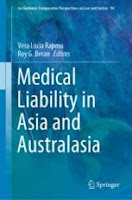
Calvin Ho on The Patient-Centric Turn in Medical Liability in Singapore (new book chapter)

"The Patient-Centric Turn in Medical Liability in Singapore"
Calvin Ho
in Medical Liability in Asia and Australasia (Springer, 2022), pp 245-265
Published online in November 2021
Abstract: The basis of medico-legal claims against a doctor may occur in contract law, tort law or criminal law. This chapter focuses on the ethical and legal requirement of informed consent, which in tort law relates to two legal actions, namely trespass to persons (or battery) and negligence, as they give effect to a patient’s right to autonomous decision-making on matters relating to her or his medical treatment and care. These legal actions have been central in defining legal expectations of the doctor’s responsibility to the patient which, apart from the provision of medical advice, includes medical diagnosis and treatment. Where medical advice is concerned, an important change in the legal standard of care, from one that was profession-centric to a more patient-centric formulation, is also considered. This development has been codified into statutory law, and is instructive in a number of ways. From a jurisprudential angle, it shows the law to be normatively open, as the change occurred interactively with the norms of medical ethics, and the practical realities of professional medicine. Developments since this change suggest that the courts may be more open to look beyond the doctor-patient relationship in addressing institutional and systemic deficiencies. If medical jurisprudence should advance in this direction, it may be fair to say that medical liability is likely to acquire a more prominent role in sustaining quality of medical care.

Tuesday, March 10, 2020

Calvin Ho on the Regulation of Human Germline Genome Modification in Singapore (new book chapter)

Summary: In Singapore, genome editing techniques may be applied in research but not for therapeutic (or clinical) purposes. Broadly speaking, the legal, regulatory and ethical provisions that apply to genome editing are drawn from five (at times overlapping) regulatory regimes: (i) research involving human embryos and stem cells; (ii) research involving assisted reproduction centers (and assisted reproduction services); (iii) research involving non-human animals; (iv) human biomedical research other than clinical trials; and (v) clinical trials. A human embryo may be created solely for the purposes of research (to study a genome editing technique, for instance), provided certain conditions are met and requisite approvals are obtained. Any such research should not extend beyond fourteen days from the time that the embryo was created. These requirements apply mutatis mutandis to the use of genome editing techniques to modify the genome of human oocytes and embryos. Owing to a moratorium that has been imposed, human germline genetic modification is not allowed in the clinical setting. However, it is less clear if such procedures could be applied in a clinical trial. This chapter provides an analysis of the regulatory framework and its application, as well as how it is expected to change in the foreseeable future.

Friday, February 7, 2020

Emily Lee & Eric Ip on Judicial Diplomacy in the Asia-Pacific and the Singapore-initiated Transnational Judicial Insolvency Network (J Corp L Studies)

Published online on 9 Jan 2020
Abstract: The promulgation of the Judicial Insolvency Network (JIN) Guidelines by the Supreme Court of Singapore in 2017 has triggered innovative cross-border insolvency developments in the Asia-Pacific. It is intriguing that the Guidelines were conceived not by Singaporean judges alone, but jointly with a transnational network of bankruptcy judges. This article undertakes the original contribution of examining the Guidelines in light of the overall need for participating jurisdictions to craft a transnational insolvency framework. It uses Hong Kong as a test case to illustrate trends of likely future convergence.

Thursday, October 11, 2018

Po Jen Yap & Benjamin Joshua Ong on Judicial Rectification of the Singapore Constitution (HKLJ)

"Judicial Rectification of the Constitution: Can Singapore Courts Be “Mini-Legislatures”?"
Po Jen Yap & Benjamin Joshua Ong 
Hong Kong Law Journal
Vol. 48, Part 2 of 2018, pp 389-398
Abstract: In Wong Souk Yee v Attorney-General, the High Court of Singapore — on its own accord — rectified the country’s Constitution such that a by-election is not required if the only ethnic minority in a multi-racial Group Representation Constituency (GRC) vacates her seat mid-term. This decision makes a mockery of the multi-racial parliamentary representation entrenched in art 39A of the Singapore Constitution, as it allows for elected minority Members of Parliament (MPs) in the GRCs to be expelled from their GRCs by their respective political parties after the election, with no legal repercussion. Furthermore, we argue that exogenous causes that would compel existing MPs to vacate their seats are provided for in art 46(1) of the Singapore Constitution, which, read with arts 39A and 49(1), require every MP in a GRC to vacate his seat when the only ethnic minority MP in that GRC departs. Moreover, the High Court has ignored the Singapore Court of Appeal’s instruction that the Constitution’s express text prevails over extraneous materials unless the ordinary meaning of the express text is manifestly absurd or unreasonable. Finally, the judicial updating/rectification of the Constitution flagrantly flouts its Court of Appeal’s warning against courts becoming “mini-legislatures”.

Thursday, July 12, 2018

Wan, Chen, Xia & Goo on "Managing the Risks of Corporate Fraud: The Evidence from Hong Kong and Singapore" (HKLJ)

"Managing the Risks of Corporate Fraud: The Evidence from Hong Kong and Singapore"
Wai Yee Wan, Christopher Chen, Chongwu Xia and Say H Goo
Hong Kong Law Journal
2018, Vol. 48, Part 1, pp. 125-166
Abstract: Since the Asian financial crisis of 1997, Hong Kong and Singapore have implemented reforms that promote independence and monitoring competency of the boards of directors of their listed companies. However, with the advent of the financial crisis of 2007/2008, a wave of fraud cases prompted the question as to the effectiveness of these reforms. Analysing a sample of 62 listed companies which were found to have committed fraud between 2007 and 2014 and comparing them against a matched sample of non-fraud companies, we found that fraud companies tend to combine the roles of chairman and chief executive officer (or they are close family members) and have fewer non-accounting finance experts on their boards. They were also likely to be overseas Chinese firms. Analysing the specific case studies of fraud, the reasons for the lack of effectiveness in the independent directors in preventing fraud are likely due to the difficulties in obtaining access to information in approving conflicted transactions, low threat of enforcement actions, their incentives to side with controlling shareholders and the challenges in regulating foreign listings.

Wednesday, February 15, 2017

Comparative Study of Legal Education and Pathways to Admission in Singapore, Hong Kong and Australia (J of Legal Education)

"Legal Education, Practice Skills, and Pathways to Admission: A Comparative Analysis of Singapore, Hong Kong, and Australia"
Andrew Godwin and Richard Wu
Journal of Legal Education
Winter 2017, Vol. 66, Number 2, pp. 212-236
Introduction: It appears axiomatic that as legal practice becomes more globalized, so too must legal education. One of the byproducts of the globalization of legal practice, involving both an increase in cross-border activity and also changes in the way the legal profession is structured and regulated, is that law schools are increasingly expected to prepare graduates for the challenges of global practice. An important question that arises in this respect is the role law schools should perform in preparing graduates for admission and, in particular, equipping graduates with the practice skills that lawyers need to operate effectively in a cross-border context. A substantial body of literature exists concerning the globalization of legal education and the globalization of legal practice. This paper contributes to the discourse by examining the relationship between the design of pathways to admission—namely, the processes by which graduates qualify for admission to legal practice—and legal education, particularly the incorporation of practice skills into the law school curriculum. This paper examines three jurisdictions in Asia that share a common-law heritage but adopt substantially different pathways to admission: Singapore, Hong Kong, and Australia. All three jurisdictions share a requirement for graduates to obtain practical training before they gain admission to practice.Singapore is unique among the three jurisdictions in that its pathway to admission involves a bar examination that follows a compulsory preparation course. Hong Kong and Australia, by contrast, currently do not adopt a bar examination and, instead, require completion of postgraduate professional legal training as a prerequisite to admission. However, two important points of difference exist between Hong Kong and Australia. First, enrollment in Hong Kong’s postgraduate certificate in laws (PCLL), an intensive one year full-time legal qualification program, is through competitive application. The existence of caps at each of the three providers means that not all graduates are guaranteed of winning a place in the PCLL and, therefore, gaining admission to practice. By comparison, enrollment in the practical legal training (PLT) course in Australia is not capped and all law graduates are therefore able to enroll in the course and gain admission to practice upon successful completion of the course. The second point of difference is that graduates in Australia can undertake supervised workplace training as an alternative to the PLT course and gain admission to practice on that basis without the need to complete a postgraduate professional training course. Interestingly, Hong Kong is currently moving closer to the approach of Singapore with the announcement by the Law Society of Hong Kong in January 2016 that a common entrance examination will be introduced and will come into effect by 2021. Critical questions in all jurisdictions are the role that law schools should play in preparing graduates for admission and the extent to which practice skills are expected to form part of the curriculum for the academic degree, as distinct from the professional training course that follows graduation and precedes admission. In this respect, the similarities are closer among the three jurisdictions. Unlike the American Bar Association, which requires students to complete at least six credit hours of experiential education, all three jurisdictions to date have avoided a prescriptive approach and have instead given the law schools discretion to determine how practice skills should be incorporated into the curriculum. However, some interesting points of difference exist among the three jurisdictions in terms of the extent to which the design of pathways to admission has been driven by perceived deficiencies in the teaching of practice skills within the academic degree and, therefore, the need to supplement these deficiencies as a prerequisite to practice. This paper examines the development of pathways to admission and identifies a number of interesting countervailing trends and contradictions. A central question raised by the comparative analysis is whether professional admission courses should serve as a gatekeeper in terms of assuring quality and competence or whether they should serve simply as preparatory courses for admission to the legal profession. The comparative analysis reveals a number of countervailing trends and contradictions concerning fundamental issues such as the function of a law degree and the impact of globalisation on legal education and legal practice. This paper argues that it is important for legal education to strengthen practice skills while maintaining a rigorous focus on legal doctrine and general skills such as analysis, problem-solving and research. This paper is structured as follows: Part II explores the relationship between legal education and legal practice by examining the emergence of professional training courses and the increasing expectations for law schools to incorporate practice skills into the curriculum. Parts III, IV, and V consider the pathways to admission in Singapore, Hong Kong, and Australia, respectively, and track the debates in each of those jurisdictions concerning the relative importance of practice skills in their design. Part VI sets out the findings of the comparative analysis and offers some observations by way of conclusion.  Click here to read the full article.
 

Sunday, December 18, 2016

Dean Hor Speaks on Death Penalty and Public Opinion in Singapore

Credit: The Online Citizen
"Singapore can no longer use majority support as the reason for not abolishing the death penalty"
Martha Soezean
The Online Citizen
15 December 2016
Speaking in a panel of a public forum held on last Friday (9 Dec) , Michael Hor, Dean of the Faculty of Law in University of Hong Kong, said that with the results from the survey, "Public Opinion on the Death Penalty", the Singapore government can no longer support the use of death penalty by claiming it has majority support of the Singapore population.
     While Roger Hood, the Professor Emeritus of Criminology at Oxford University and an Emeritus Fellow of All Souls College, spoke on the ambiguity of the death penalty and how the general public change their impression of the death penalty when probed further about the implications of the punishment.
     Along with Mr Hor and Professor Hood, Chan Wing Cheong, Associate Professor at the Faculty of Law, National University of Singapore; Jack Tsen-Ta Lee, Assistant Professor at the School of Law, Singapore Management
University; Tan Ern Ser, Associate Professor of Sociology and Academic Adviser to Social Lab,
Institute of Policy Studies and Braema Mathi is founder and former president of MARUAH were present at the panel.
     The survey on Public Opinion on the Death Penalty conducted by the National University of Singapore (NUS) in April to May 2016, showed support for mandatory death penalty by Singaporeans is much lower that what have been inferred from previous surveys which sought opinion about the death penalty in general... Click here to read the full article.

Saturday, August 13, 2016

Po Jen Yap on Originalism and Textualism in Singapore (new book chapter)

"Uncovering originalism and textualism in Singapore"
Po Jen Yap
in Jaclyn Neo (ed), Constitutional Interpretation in Singapore (Routledge 2016) chapter 5
Introduction: Our judges in Singapore, like many of their counterparts in the West, tend to present adjudication merely as a mechanical exercise of applying the law to the facts of a specific case. In so doing, it would appear that the law can truly be separated from politics and judges merely follow pre-determined rules and exercise little discretion when making decisions. 
     However, if we were to closely examine the prevailing theories of interpretation that our judges purport to rely upon when they resolve constitutional disputes, we may discover that these principles are often mere constitutional ‘fig leaves’ that cover their normative choices. In particular, two such interpretive modalities are flourishing in Singapore: originalism and textualism. 
     But, I must emphasise that that these fig leaves seek not to mislead anyone about what the courts are doing. As astutely observed by Professor Christopher Forsyth in his seminal article: 
The point about the fig-leaf metaphor (and why it is so apt) is that fig leaves do not deceive anyone as to what lies beneath them. The fig leaf, like the swimming costume on a crowded beach, is to preserve the decencies. It enables individuals to interact in an appropriate manner without threatening the social order.
Similarly, the use of fig leaves in Singapore demonstrates that our judges implic- itly accept the constitutional role that they are expected to play within our political system; and the truth is, our judges, on their own, can do very little. 
     The political reality is that, in Singapore, the state has been governed by the same ruling party, the People’s Action Party (PAP), since the nation’s independence, and will be so governed for the foreseeable future. When legislative and executive powers are consolidated by a semi-permanent party, the dominant political entity in question can display its disagreement by overriding a constitutional decision easily with a constitutional amendment. Our judges, operating in such a political system, would not be oblivious to this fact. More significantly, Singapore has experienced a judicial crisis, which arguably has cast a pall over the state of constitutional review. When the Court of Appeal ruled against them in 1989, for the first and last time on constitutional grounds, the Government swiftly overturned this decision via a series of constitutional and statutory amendments within a month of the judgment. In that seminal decision of Chng Suan Tze v Minister of Home Affairs, the Court of Appeal, after surveying a litany of Commonwealth precedents, quashed the preventive detention orders issued under the Internal Security Act (ISA) against alleged Marxist conspirators and also concluded in obiter that the ministerial discretion to detain personnel under the ISA would be subject to an ‘objective’ test of review by the courts as constitutionally required under Articles 96 and 127 of the Singapore Constitution. This decision proved to be disquieting to the Government, so much so that in the subsequent amendments, it restricted judicial review in ISA cases to only narrow procedural grounds. 
     Part II of this chapter begins by identifying and uncovering the judicial use of ‘originalism’ as an interpretive modality. Part III continues with a close exami- nation of the judicial reliance on ‘textualism’ as another preferred mode of con- stitutional interpretation. In essence, I shall seek to illustrate that the judicial decisions reached by our courts are neither mandated by the text nor the history of our Constitution, but are the consequence of normative choices made by our judges.

Friday, May 27, 2016

Singapore International Commercial Court Issues First Judgment (ALB)

"SICC issues its first judgment on $800 mln dispute"
Ashima Ohri
Asian Legal Business
25 May 2016
The Singapore International Commercial Court (SICC) has issued its first written judgment on an $800 million dispute concerning parties from Indonesia and Australia, involving various claims related to the breaches of a joint venture agreement. 
     The three-judge panel comprising of presiding judge Quentin Loh from Singapore, and international judges Sir Vivian Ramsey from the UK and Anselmo Reyes from Hong Kong, ruled in the favour of the defendants, PT Bayan Resources and Bayan International. The full judgment can be found here... Click here to read the full article.

Thursday, April 21, 2016

New Book by PJ Yap: Judicial Review of Elections in Asia (Routledge)

Judicial Review of Elections in Asia
Editor: Po Jen Yap
April 2016, Routledge, 238 pp
Description: In the past century, Asian nations have experienced a wave of democratisation as countries in the region have gained independence or transitioned from authoritarian military rule towards more participatory politics. At the same time, there has been an expansion of judicial power in Asia, whereby new courts or empowered old ones emerge as independent constraints on governmental authority.
     This is the first book to assess the judicial review of elections in Asia. It provides important insights into how Asian courts can strategically engage with the political actors in their jurisdictions and contribute to a country’s democratic discourse. Each chapter in the book sheds light on the judicial review of elections and the electoral process in a specific Asian jurisdiction, including Common Law Asia, namely Hong Kong, India, Malaysia, and Singapore, as well as jurisdictions in Civil Law Asia, namely Indonesia, Japan, the Republic of Korea, Taiwan, and Thailand. It fills a gap in the literature by addressing a central challenge to democratic governance, namely the problem of partisan self-dealing in the electoral processes.
     By exploring the constantly evolving role of the courts in addressing pivotal constitutional questions, this book will be of interest to students and scholars of Asian Law, Governance and Politics.

"Courts and Elections in Asia"
In the past century, as the winds of political change swept across the globe, Asian nations too experienced a wave of democratisation as countries in the region gained independence or transitioned from authoritarian military rule towards more participatory politics. In tandem with this democratisation trend, we may also witness a concomitant expansion of judicial power in Asia, whereby new courts or empowered old ones emerge as independent constraints on governmental authority. The rise of the courts, and the accompanying ‘judicialisation of politics’, is as much an Asian phenomenon, as it is a prevalent trend in the West. 
     There is now a rich corpus of literature on how Asian courts have participated in and even reshaped the human rights discourse in their respective jurisdictions. However, little academic literature has examined how Asian courts have responded to deficiencies in the electoral processes and the concomitant problem of partisan self-dealing. Specifically, partisan self-dealing occurs when the political actors devise electoral rules that govern voting, political parties, electoral boundaries, apportionment, the administration of elections, and campaign finance that are designed to entrench themselves in power. The purpose of this book is to redress this gap in the scholarship by exploring how courts in Asia have addressed this central challenge to democratic governance. 
     The chapters in this volume stemmed from a symposium held at the University of Hong Kong in July 2015. Each of the ten chapters profiled in Part I and Part II of this book sheds light on the judicial review of elections and the elect- oral process in a specific Asian jurisdiction. Part I examines the common law jurisdictions of Hong Kong, India, Malaysia, Pakistan, and Singapore.  Part II explores the civil law jurisdictions of Indonesia, Japan, South Korea, Taiwan, and Thailand. To allow readers to draw insights from judicial practices in non- Asian jurisdictions, Part III includes, as a comparative foil, a brief account of the state of play in Australia, Canada, and South Africa...

The judicial review of elections in Hong Kong is a relatively recent phenomenon. It occurs in a unique milieu of entrenched political rights and political institutions that are on an evolving course to becoming fully democratic. In this milieu, a contradiction has become apparent; while Hong Kong courts are prepared to strike down unreasonable restrictions on voting and candidacy, sometimes with significant consequences, they have done very little to impact the most unfair and illegitimate aspects of Hong Kong’s electoral systems. These aspects include the functional constituencies that have returned at least half of all legislators since 1985, the 1200 member election committee that nominates and elects the chief executive, and the practice of corporate voting used in both the election committee and functional constituency elections. 
     From a critical examination of the relevant judicial review case law, this chapter explains how the contradiction came about and what sustains it. It then reflects on how the contradiction might be resolved going forwards, particularly after the 2015 failed attempt to introduce universal suffrage of the chief executive. Two opposite paths of resolution are discussed. One sees courts applying political rights even more robustly to chip away at those illegitimate aspects mentioned above. The other sees courts becoming even more deferential, declining judicial review of electoral laws on the ground that they are matters best left for political negotiations and legislative review. The chapter notes that the impact of the political reform exercise of 2013 to 2015, which was over-shadowed by a more assertive role played by the Chinese central government, may influence a more deferential approach in the future. However, arguments are made for why courts should resist taking such a path...

"Judicial review of the electoral process in Singapore after Vellama"
Vellama d/o Marie Muthu v. Attorney General remains the first and the only occasion where the Singapore judiciary had the opportunity to review a challenge to the local electoral process. Specifically, the Singapore Court of Appeal held that the Prime Minister had a constitutional duty under Article 492 of the Constitution to call for a by-election when a casual vacancy arose. But, on the facts, the Court of Appeal also held that the applicant, a resident voter of the Hougang Single Member Constituency (SMC), had no standing to seek declaratory relief from the courts after a by-election to fill the vacancy at Hougang SMC had been carried out, and she thus incurred no ‘special damage’ after that to seek judicial relief. 
     The facts and the procedural history of the case may be briefly stated. Following the vacancy of the Parliamentary Hougang SMC on 14 February 2012, a resident voter of the said SMC instituted judicial review proceedings for a mandatory order requiring the Prime Minister to advise the President to issue a writ of election for Hougang SMC and a declaration on the proper construction on Article 49 of the Constitution. On 2 March 2012, the Prime Minister announced that he intended to call for a by-election in Hougang SMC but had not decided on a time. On 3 April 2012, the High Court granted the applicant leave for a judicial review hearing. The by-election was subsequently held on 26 May 2012. The High Court dismissed the applicant’s case on 1 August 2012 and the Court of Appeal dismissed her appeal on 5 July 2013. 
     In this chapter, I shall examine three core issues relating to the judicial review of the electoral process in Singapore that was raised in Vellama: (1) the locus standi of the Applicant; (2) the constitutional duty of Prime Minster to call for a by-election when a vacancy arose; and (3) the determination of cost orders for such public interest litigations...

Sunday, February 28, 2016

Report on the Hong Kong-Singapore Law Schools Conference 2016

Dean Hor welcoming participants.
The HKU-NUS-SMU Conference was held on 22 and 23 February 2016 at the Faculty of Law, University of Hong Kong. Participants from the Law Faculties of the National University of Singapore and the Singapore Management University joined Faculty members from the University of Hong Kong for two days of fruitful presentations and discussions. Colleagues from the Law Faculties of the Chinese University of Hong Kong and City University of Hong Kong were also invited to participate. 
     Panels covered a wide range of topics, including International Law, Economic Regulation, Intellectual Property, Private Law, Corporate Law, Public Law, Dispute Resolution, Chinese Law, Criminal Law and Evidence.
     This conference enabled the Faculty members from all participating universities to meet and explore the possibility of future collaborations, as well as to engage in interesting and enjoyable legal discussions.  Report written by conference organizer Ji Lian Yap.

Sunday, December 13, 2015

New Issue of Hong Kong Law Journal (Part 3 of 2015)

HONG KONG LAW JOURNAL
Vol. 45, Part 3 of 2015
Editor-in-Chief: Professor Rick Glofcheski
Associate Editor: Professor Albert Chen

Articles
Gay Marriage and the Common Law Conflict of Laws Rules: A Singapore Perspective KC Lye and Ervin Tan693
Fair Dealing Doctrine Caught between Parody and UGC Exceptions: Hong Kong’s 2014 Copyright Amendment and Beyond Wenwei Guan719
Non-Traditional Maritime Security and International Cooperation Jun Zhao743
Institutionalising Mediation in Hong Kong AKC Koo769
China Law
Electronic Recording of Custodial Interrogations with Chinese Characteristics: Tool for Transparency or Torture? Kuibin Zhu and David M. Siegel795
Emergence of a Dual Constitution in Transitional China  Shucheng Wang819
Toward a More Balanced Safe Harbour Protection System for Internet Service Providers in China Jia Wang851
Towards a Harmonised Definition of Terrorism in China: A Discussion Under “One-Country, Two Systems” Dr Li Zhe and Dr Sten Idris Verhoeven881
The Transformation of Chinese Law: Mark II Jianfu Chen911
What Happens to Embryos When the Would-Be Parents Die: The “Orphaned Embryos” Custody Dispute in China Ding Chunyan941
“Is Court Mediation Feasible?” Quantitative Research on the Attitudes of Legal Professionals in Southwest Grassroots Society of Chin Xiong Hao963
Why Does a Powerful Regulatory Regime Fail? An Examination of the Regulation of Prepaid Cards in China Pan Su987
Book Reviews
Confucian Perfectionism: A Political Philosophy for Modern Times, Joseph Chan Scott Veitch1023

Wednesday, November 25, 2015

Singapore International Commercial Court's First Case

Professor of Legal Practice, Justice Anselmo Reyes, is hearing the first case in the Singapore International Commercial Court along with international judge Vivian Ramsey from England and Justice Quentin Loh, presiding. The Straits Times reports that in this case "BCBC Singapore, a wholly owned subsidiary of Australian company Binderless Coal Briquetting Company, is seeking damages from Indonesian company Bayan Resources TBK", arising from "alleged breaches of a joint-venture pact for the application of a patented technology to produce and sell upgraded coal from East Kalimantan in Indonesian Borneo".  Click here to read the full news report from the Straits Times.

Saturday, November 7, 2015

Dean Hor Interviewed by Innocence Project Singapore

Prior to his current appointment as Dean, Professor Hor was a Professor of Law at the National University of Singapore’s Faculty of Law where he taught, researched, and published extensively in the areas of Criminal Law, Criminal Procedure, Constitutional Law and Evidence Law.
     Professor Hor served as the Chief Editor of the Singapore Journal of Legal Studies and is a member of the editorial boards of the Singapore Academy of Law Journal and the Asian Journal of Comparative Law. He was also a consultant to the Ministry of Law and the Criminal Practice Committee of the Law Society of Singapore. Internationally, Professor Hor has also been appointed Distinguished Visitor at the University of Toronto’s Law Faculty and Visitor at Oxford Centre for Criminology.
     During this exclusive interview, Professor Hor candidly shared his views on the Innocence Projects in different jurisdictions, specific law reforms, and his experience serving as the Dean of the HKU’s Faculty of Law.

THE INNOCENCE PROJECT (SINGAPORE)
Q: What were your thoughts when the idea of setting up IP(SG) was mooted to you back then? What made you believe in this project?
A: This project was first conceived when a student, Audrey, who went to the United States for her undergraduate exchange programme came to know of the work of Innocence Projects (IPS) in the US. When she returned, she emailed a few Criminal Law Professors at NUS, including myself, to set up an Innocence Project in Singapore, known today as Innocence Project (SG). I was prepared to help but at the same time, I was also prepared to see the Project fail. There were concerns that setting up IP(SG) could potentially be construed as an insult to Singapore’s criminal justice system which prides herself to be reliable and trustworthy.
     However, the merits of this project could not be denied. In fact, which jurisdiction can say that there would be no merits to it? It can only be a good thing. The question, however, was whether this project is practically achievable within this political climate where we have a good and competent Government but any mistakes in convictions could be seen as an insult to that.
     As such, we tried to engage the Minister for Law and the Attorney-General Chambers from the outset. It took a few years and a few changes of IP(SG) heads as it was a potentially sensitive matter. It was a long process, but to-date it has since been set-up. Now, it is a question of pushing IP(SG) forward...

Q: Do you have plans to similarly bring the Innocence Project network into University of Hong Kong (“HKU”)?
A: First of all, it was the students who brought the Innocence Project to Singapore and I believe this is a very good initiative because students have more faith and idealism than practitioners and academics. I will personally support such a project if a student brings it up in HKU.

THE CRIMINAL JUSTICE SYSTEM IN SINGAPORE & HONG KONG
Q: In Veeramani Manikam v Public Prosecutor [2015] SGHC 201 (“Veeramani”), Chan Seng Onn J identified several lapses that happened at trial and the investigation process that led to the accused being wrongly convicted. These lapses include the Investigating Officers’ omission to investigate and verify the accused’s statements. The risk of wrongful convictions in Singapore is real. What are your views on Veeramani?
A: I remembered reading about this case in the Straits Times. Over the years, some judges do come up with judgments which are explicitly or implicitly critical of the way that law enforcement offices have behaved. For instance, in Muhammad bin Kadar and another v Public Prosecutor [2011] SGCA 32, V K Rajah JA (as he then was) was critical towards the investigations process as the police officer failed to comply with the rules. Such irregularities have been happening in Singapore, and it is necessary for judges, once in a while, to distance themselves away from law enforcement and demonstrate their neutral and independent stance in their judgments... Click here to read the full interview.

Monday, October 12, 2015

New Volume of Asia-Pacific Journal on Human Rights and the Law Published (2015)


Editors-in-Chief: Simon NM Young and Kelley Loper
Publisher: Brill, Leiden

Special Section on Lao People’s Democratic Republic
Introduction
Rhona K. M. Smith 1-7

Women’s Rights in Intellectual Property and Traditional Knowledge Protection in Lao PDR
Champathong Phochanthilath 9-25

The Right of Children in Accessing Primary Education: Vientiane Province Case Study
Khonsavanh Vongvannasay, Khamphang Vongphachanh, and Vilay Langkavong 26-41        

The Right to Access a Lawyer in Laotian Criminal Law
Bounmy Ladsamyxay 42-54

Articles
Investment Promotion as Progressive Realization of Economic and Social Rights
Johanna Aleria P. Lorenzo 55-103

The Politics of Domestic Implementation of International Human Rights Law: A Case Study of Sri Lanka
Deepika Udagama 104-149

Equality and Singapore’s First Constitutional Challenges to the Criminalization of Male Homosexual Conduct
Jack Tsen-Ta Lee 150-185

Click here for more information information about the APJHRL and for instructions on article submission.

Tuesday, August 11, 2015

Dean Hor to Speak at Criminal Justice Conference in Singapore

Dean Michael Hor and Po Jen Yap will be speaking at the Criminal Justice Conference 2015: Criminal Justice and the Singapore Constitution to be held on 15 August 2015 at the Singapore Management University.  They will speaking on a panel addressing Punishment/Sentencing and the Singapore Constitution.  Some of the issues that might be discussed on this panel include  
  • Limits on the types of punishment that the state can impose 
  • Punishment/ sentencing, Art 12 and the rule of law in Singapore
  • Mandatory minimum sentences 
  • Constitutional prohibition against cruel and inhuman/unusual punishments 
  • Judicial independence and judicial power in sentencing 
  • The rights of prisoners in Singapore and Art 10
Click here for more information about the conference.

Tuesday, March 24, 2015

Fu Hualing Interviewed on Lee Kuan Yew's Influence on China's Legal System

Chun Han Wong and Josh Chin
The Wall Street Journal
24 March 2015
Chinese state media on Monday gave prominent coverage to the death of Singapore’s founding prime minister Lee Kuan Yew, whose brand of paternalistic one-party rule has long been a model for Beijing.
     “Mr. Lee Kuan Yew was an old friend of the Chinese people,” Chinese President Xi Jinping wrote to Singapore President Tony Tan in a condolence letter Monday, according to a statement from China’s foreign ministry. “Mr. Lee Kuan Yew and the older generation of Chinese leaders jointly set the course for the development of China-Singapore ties.”... 
     More recently, Singapore’s influence on China has been particularly visible in Beijing’s recent legal reform push, scholars say.
      The reforms, outlined by the Communist Party in an ambitious blueprint released last fall, aim to make the country’s courts more independent and credible while ensuring that they continue to cleave to the party’s core interests.
     Fu Hualing, a professor of law at the University of Hong Kong, says the likely end-goal is a legal system that is efficient and consistent in settling commercial and personal disputes while bending to Beijing’s whims in politically sensitive cases, such as those dealing with dissidents, corruption or terrorism.
     “They might not mention Singapore by name, but in many respects we’re moving in that direction. You’ll have a decent judicial system that’s ultimately under political control,Mr. Fu says...  Click here to read the full article.

Saturday, January 17, 2015

Reyes Appointed International Judge in Singapore

Congratulations to Anselmo Reyes, Professor of Legal Practice in our Law Faculty, on his appointment as an International Judge of the Singapore International Commercial Court (SICC).  Professor Reyes, a former Judge of the Hong Kong High Court, was appointed for a three year term beginning 5 January 2015, the day the SICC was officially opened at the commencement of Singapore's legal year.  According to Ian Roberts and Nicholas Sykes (Clyde & Co),   the SICC is a division of the Singapore High Court and "will hear cases which are both international and commercial in nature".  They note that the "establishment of the SICC compliments Singapore's pre-existing ADR institutions (the Singapore International Mediation Centre (opened in November 2014) and the Singapore International Arbitration Centre). Singapore now provides a full suite of dispute resolution options for commercial parties, not just in Asia, but worldwide".  Professor Reyes joins 10 other distinguished international jurists from Australia, Austria, France, Japan, the United Kingdom and the United States.  Assistant Professors Alvin See and Yip Man (Singapore Management University) describe the SICC's objective as "ambitious and visionary"; it is to "determine cross-border commercial disputes that may be governed by foreign law, including disputes that may not otherwise be heard by the Singapore Courts."  The International Judges are appointed "pursuant to the newly amended Article 95 of the Constitution of the Republic of Singapore".

Monday, November 3, 2014

Book Review: Reading Law in Singapore, 2nd Ed

Michael Hor's co-edited work, Reading Law in Singapore, 2nd edition (LexisNexis) (with Tang Hang Wu and Nicholas Poon), published earlier this year was recently reviewed in the Law Gazette (October 2014).  The reviewer, Ms Ho Xin Ling, had high praise for the book.  She concludes, "It is often difficult to find areas to improve upon in an already superb contribution. However, the second edition of Reading Law in Singapore does just that, and provides excellent refinements to the first edition through the further contributions from distinguished law academics, young legal eagles as well as an esteemed member of the Singapore bench. For both aspiring and existing law students, Reading Law in Singapore will thus remain a book of utmost relevance in providing a comprehensive and holistic insight into a student’s journey in law school."  The book features 11 chapters on all aspects of Singapore law, from criminal law, contract law to comparative legal traditions and advocacy and moots.  Ms Ho commended the four chapters written by the Hon. Andrew Phang JA, which are written as "a simulated conversation between a law student and a professor of law at four different stages of the law student's journey from admission into law school to graduation."  On a related note, Dean Hor's co-authored book, Criminal Law for the 21st Century - A Model Code for Singapore (Academy Publishing 2013) was cited by the Singapore High Court in Koh Jing Kwang v Public Prosecutor [2014] SGHC 213, [40] & [43] for its insights on the difference between mens rea and voluntariness.  Dean Hor also spoke on "Political Activism in Authoritarian Societies" in a dialogue with students co-organized by the HKU Law Students Political Reform Concern Group and Law Association, HKUSU on 24 October 2014.