Showing posts with label contract law. Show all posts

Wednesday, July 2, 2025

HKU Law Welcomes Prof. David Winterton

Welcome to Prof. David Winterton, who joins the Faculty of Law as an Associate Professor.

David is an Associate Professor at the University of Hong Kong, with a specialization in contract law, commercial remedies, restitution and private law theory. He has published in several leading academic journals, as well as a monograph based on his doctrinal dissertation, entitled Money Awards in Contract Law (Bloomsbury 2015), which was shortlisted for the St Petersburg International Legal Forum Private Law Prize in 2018. His work has also been cited in various judicial decisions, including in the ultimate appellate courts of Australia and Canada.

Prior to his arrival in Hong Kong, David was a Senior Lecturer at the University of Sydney, and prior to that a Lecturer at UNSW and a stipendiary lecturer at St Anne’s College, Oxford. He holds a BSc (Pure Mathematics) and an LLB from UNSW and a BCL (Dist), MPhil and DPhil from the University of Oxford. Additionally, David has spent some time in legal practice in both Sydney (commercial litigation) and New York (Bankruptcy & Restructuring). He is admitted as a legal practitioner in NSW (2006) and as an Attorney in New York (2012).

Thursday, September 26, 2019

Puja Kapai on Undue Influence and Unconscionability in Comparative Common Law: Delivering Contextualized Justice for Minority Sureties (J of Transnational Law & Contemporary Problems)

Puja Kapai
Journal of Transnational Law and Contemporary Problems
Spring 2019, Vol. 28, Issue 2, pp 361-448
Abstract: Legal transplantation through colonization, mass migration, and—more recently—globalization has long been under the microscope of scholars, anthropologists, and lawyers, among others, who have sought to better understand the workings of the law in contexts foreign to its place of origin. This quest for understanding the relevance and operationalization of law in different contexts is part of the broader discourse of legal pluralism, which encompasses the study of the role of formal and informal normative values and institutions and the interaction between them as alternative, overlapping, or conflicting systems of relational ordering in diverse socio-political contexts. The law’s effectiveness as a tool for responsive justice is brought into sharp focus due to implicit biases which result from the law’s grounding in a dominant cultural framework which leaves minorities outside its legal lens. When the legal order delivers differential justice by overlooking or distorting the lived realities of those who fall outside law’s original frame of reference, it befits a critical inquiry about the law’s commitment to equality and non-discrimination in a plural legal order. The increasing convergence of legal systems cannot, on its own, be taken as determinative of an on-the-ground shift in values among all populations, communities, and peoples. Without an accompanying shift at the societal level, the law risks marginalizing and excluding minorities from an accessible framework for justice. Indeed, equality scholars have long argued that justice requires more than equal treatment and warrants a review of the substantive law itself as much as issues of procedural propriety in its application in demonstrating law’s fairness in terms of outcomes under the law. Despite the open-ended presentation of the common law as an apparatus with sufficient flexibility to achieve substantively just outcomes (and prevent miscarriages of justice) through the use of equitable principles where necessary, limitations inherent in the law’s institutional structure, how its content is populated, its reliance on agents for its dispensation, and its value-laden interpretive and analytical methodologies carve out an underclass of claimants for whom substantive equal justice remains unachievable. Law’s capacity to fulfill its function to deliver meaningful justice rests on its capacity to recognize the full range of complex legal subjects that may present themselves before it and to assess, understand, and interpret their claims and actions meaningfully by acknowledging the impact of the varied contexts within which human activity occurs. This paper critiques law’s purported neutrality in the field of contract law. It uses the doctrine of undue influence as a vehicle for investigating and understanding the implications of law’s entrenchment in a particular cultural context. Reviewing courts’ analyses of the factors grounding a successful claim of undue influence in guarantee contracts involving individuals of minority background, this paper examines the law’s capacity to identify and incorporate broader contextual factors to protect minority claimants against unfairly procured contractual liabilities in a range of jurisdictions. The paper’s critique of the courts’ analyses and framing of cultural factors in relation to the doctrine presents the imperative for a critical re-examination of modern jurisprudence developing judicial doctrine and its capacity for dispensing justice for subjects situated within plural normative orders. In doing so, the Article breaks ground with traditional rule of law analyses which ground conversations about law’s impartiality on law’s principled commitment to equality or, alternatively, seek an essentialized brand of justice. Instead, it avoid essentialism while placing burdens for due diligence where they are likely to be met. Building on this model, the Article offers arguments for incorporating considerations informed by a variety of social and human conditions in efforts to deliver substantive justice for all people regardless of their race, color, religion, or other background. This proposal bears notable implications for devising bespoke analytical tools which may well be specific to a legal field to ensure that legal understandings are rooted in the lived realities of those seeking law’s justice. Such an approach has the potential for development and application in a range of other areas of law such as violence against women and children’s rights. Click here to read the full text.

Thursday, August 2, 2018

Martin Kwan Warns Practitioners on the Precedential Value of Unreported Judgments on the Interpretation of Standard Contract Terms (Business L Rev)

Martin YC Kwan (PCLL candidate)
2018, Vol. 39, Issue 4, pp. 136-8
Abstract: In the recent Court of Appeal decision Allianz Insurance Plc v. Tonicstar Limited [2018] EWCA Civ 434, the Court did not follow the previous interpretation of a standard contract term made by an unreported High Court judgment in 2000. Whilst the Court could lawfully not follow the unreported judgment given (1) the contractual interpretation was just a non-binding finding of fact and (2) the unreported judgment was made by a lower court, a critical reason why the Court did not follow it was because the Court considered the unreported status meant the interpretation was not well known. The meaning of the contract term thus has not been settled by the previous inconspicuous interpretation, which meant it was amenable to reinterpretation. This note suggests that practitioners should be mindful when relying on unreported judgments on contractual interpretation. Although the Court did not expressly and generally devalue any unreported judgment, the Court’s reasoning may be understood to have diminished its precedential value on the interpretation of standard contract terms. It will also be argued that there would be more certainty if the Court had not made such a distinction based on the status of being reported and unreported when considering whether a clause has been given a settled meaning by a previous judgment.

Saturday, April 1, 2017

Felix Chan Comments on PST Energy 7 Shipping LLC v OW Bunker Malta LImited [2016] UKSC 23 (Int'l Comp Comm L Rev)

"Rights to consume bunkers before payment: neither as a bailee nor as an owner"
Felix WH Chan
International Company and Commercial Law Review
2017, Vol. 28, Issue 3, pp 104-106
Abstract: In PST Energy 7 Shipping LLC and another v O W Bunker Malta Limited and another [2016] UKSC 23, the Supreme Court was called upon to determine whether the contract for the supply of bunkers was a contract of sale of goods between the bunker supplier and the shipowners under s. 2 of the Sale of Goods Act. Despite all the hallmarks of being a contract of sale of goods, the Supreme Court concluded that the agreement was not a contract of sale of goods. The implications behind the reasoning of the “nanosecond” argument are examined.  Contact the author for a copy of the comment.

Sunday, October 30, 2016

Puja Kapai Interview on the Problems with Domestic Helper Contracts in Hong Kong (SCMP)

Rachel Blundy
South China Morning Post
29 October 2016
Domestic helpers in Hong Kong continue to be at risk of abuse from their employers because their “cursory” employment contracts offer limited protection leaving them open to exploitation, a legal expert says.
     Migrant worker welfare groups have long called for better job safety guidelines for the city’s 320,000 foreign domestic helpers.
     But these calls have seemingly been met with resistance by the Hong Kong government. This month lawmakers asked to delay a ban proposed by the Philippine consulate on domestic helpers cleaning external windows, after several fell from window ledges, sometimes fatally.
     Secretary for Labour and Welfare Matthew Cheung Kin-chung said more time was needed to draft the new measures, which are due to be reassessed in mid-November.
     Puja Kapai, director of the Centre for Comparative and Public Law and associate law professor at the University of Hong Kong, said the employment contract still failed to stipulate maximum working hours and the extent of a helper’s duties.
     A report by Amnesty International in 2013 found that domestic helpers worked an average of 17 hours per day, but some were “on call” 24 hours a day because of the compulsory live-in rule.
     Kapai described the contract as “cursory” and said it offered limited protection for the employee.
     “The idea that a helper should be expected to be at the beck and call of an employer at any time of day is outrageous,” she said. “[The contract] is not a good mechanism to allow the helper to assess the extent of the burden she faces.”... Click here to read the full article.

Friday, March 4, 2016

Felix Chan on Anti-Suit Injunctions and the Doctrine of Comity (MLR)

Modern Law Review
March 2016, Vol. 79, Issue 2, pp 341-354
Abstract: Hin-Pro International Logistics Limited v CSAV [2015] EWCA Civ 401 is an important case in the areas of anti-suit injunctions, contractual interpretation and private international law. Despite the ambiguities surrounding the jurisdiction clause contained in the bills of lading, the Court of Appeal construed the jurisdiction clause as ‘exclusive’ in the context of a ‘contractual background’, and affirmed the continuation of the anti-suit injunction granted by the Commercial Court. It is argued that the approach of applying the common law principles of contractual interpretation to a bill of lading is questionable. The approach used to apply English private international law is problematic in a number of ways. There are legitimate reasons for concern that the doctrine of comity in English private international law may become undermined as a result. 

Sunday, May 17, 2015

New Issue of Hong Kong Law Journal Published (Vol 45, Part 1 of 2015)

ANALYSIS
Public Entertainment and the Interpretive Dilemma in T v Commissioner of Police Po Jen Yap1
Enforcing Contracts for the Benefit of Third Parties: Recent Reform of the Doctrine of Privity Lee Mason13
Lecture
Vicarious Liability on the Move Lord Phillips of Worth Matravers29
ARTICLES
Relevant Lies Janice Brabyn45
Nullity or Merely Lost Priority? The Effect of Failure to Register a Document Concerning Land Malcolm Merry87
Taking Transgender Rights Seriously: A Rights-Based Model of Gender Recognition in Hong Kong Kai Yeung Wong109
Interests of Youth Suspects are at Risk: Implementing the Right to the Presence of Parent or Guardian and the Right to Legal Assistance at the Police Stations in the Case of Youth Suspects in Hong KongShum Ka Ching, Kelly127
REVIEW ARTICLE
A New Turning Point in the Study of International Legal Compliance, in China and Elsewhere Roda Mushkat157
Focus: Taiwan’s Sunflower Movement
Introduction Brian Christopher Jones189
Confrontational Contestation and Democratic Compromise: The Sunflower Movement and its AftermathBrian Christopher Jones and Yen Tu Su193
Searching for Constitutional Authority in the Sunflower Movement Chia Ming Chen211
Policing an Occupied Legislature: Symbolic Struggle over the Police Image in Taiwan’s Sunflower Movemen Jeffrey T Martin229
Connecting Gender and Trade: Gender Framing in the Anti-Cross-Strait Service Trade Agreement Movement Hsiaowei Kuan249
Dance with the Dragon: Closer Economic Integration with China and Deteriorating Democracy and Rule of Law in Taiwan and Hong Kong? Chien Huei Wu275
Peaceful but “Illegal” Assemblies? – Comparisons between Taiwan’s Constitution and the International Covenant on Civil and Political Rights Wen Chen Chang295
Marching Towards Civic Constitutionalism with Sunflowers Jiunn rong Yeh315
CHINA LAW
Legal Pluralism, Institutionalism and Judicial Recognition of Hong Kong–China Cross-Border Insolvency Judgments Emily Lee331
Declining Jurisdiction by Forum Non Conveniens in Chinese Courts Zheng Sophia Tang351
BOOK REVIEWS
Hong Kong Media Law: A Guide for Journalists and Media Professionals: Expanded Second Edition, Doreen Weisenhaus, with contributions by Rick Glofcheski and Yan Mei Ning Danny Gitting373

Tuesday, March 31, 2015

Lee Mason on Protecting Consumers from Unfair Terms in Standard Form Contracts

"Protecting consumers from unfair terms in standard form contracts: the UK approach" 
European Business Law Review
Vol. 26 (2015), Issue 2, pp 335-45
Abstract: This article examines the current UK consumer protection regime specifically relevant to unfair terms in standard form consumer contracts, as provided for by the Unfair Terms in Consumer Contracts Regulations 1999 (pursuant to the European Union's Council Directive 93/13/EEC) and the solid body of case law that has grown around it. In particular, the article takes a closer look at the decision in Office of Fair Trading v. Ashbourne Management Services Ltd [2011] EWHC 1237 (Ch) and its impact on protecting UK consumers who enter into standard form gym club contracts.

Monday, February 23, 2015

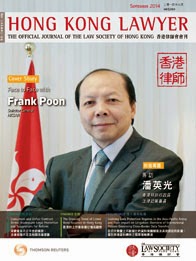
Lee Mason on Hong Kong's New Law on Contracts (Rights of Third Parties)

Hong Kong Lawyer
February 2015, pp 44-48
On 26 November 2014, the Legislative Council passed the Contracts (Rights of Third Parties) Ordinance (the “Ordinance”) which enables contracting parties to confer enforceable contractual rights on third parties and, as such, reforms the current law as governed by the doctrine of privity. Given that almost every other common law jurisdiction already has third party contractual rights legislation in place, it seems that the Ordinance is long overdue. Although the Ordinance is yet to be brought into force, it is useful to now prepare for its inception by taking a closer look at its key aspects and considering how it differs from the UK’s Contracts (Rights of Third Parties) Act 1999 (the “1999 UK Act”), legislation on which the Ordinance is substantially modelled...  Click here to read the full article.  In the same issue of the Hong Kong Lawyer, alumnus Ludwig Ng (LLB (Hons) 1986, PCLL 1987, LLM 1997) writes on the question, "Is Google Subject to the Hong Kong Court's Defamation Jurisdiction?".

Friday, December 26, 2014

Michael Tilbury Interview on Post-Obligations VII

World leading private law scholars and jurists met at the HKU Law Faculty in mid-July 2014 for the Obligations VII conference.  The event was co-organised by the  law schools of Hong Kong University and Melbourne University.  The co-convenors were Michael Tilbury (HKU) and Andrew Robertson (Melbourne).  In the interview below, Professor Tilbury reflects on what was achieved and briefs us on subsequent developments.  
Profs Robertson and Tilbury (L-R)
1. What were you hoping to achieve when you were planning Obligations VII?  By way of background to my answer, it is important to stress that the biennial Obligations conferences, which originated at the University of Melbourne in 2002, are the leading forums that bring together scholars, judges and practitioners from around the common law world to discuss issues in private law. Each conference is organised around a common theme, and speakers are asked to address this theme in their presentations.
     Against this background, the overall objective of the Obligations VII conference was to bring together leading authorities in the common law world who could address the identified theme of the conference, namely divergence and convergence in the common law of obligations.
     The theme starts from the premise that, although the common law has its origins in English law, its development outside England has been subject to local influences (for example, local statutory regimes, including human rights instruments, or even local values) that have led to divergences in the common law. The conference was aimed at identifying the reasons for, and evaluating the utility (or otherwise) of, such divergences.
     In planning the conference we were keen to see a logical development of the theme of the conference throughout its three full days, and to devise individual sessions that were linked, as far as possible, by common topics.
Prof Burrows
2. Do you think the Hong Kong conference achieved those objectives?  The conference certainly achieved its objectives. Indeed, the conveners of the conference have received many messages commenting on its intellectual depth, and its overall coherence.  Specifically, and relating this to the objectives of the conference that I have already outlined, I note the following.
     First, leading authorities from throughout the common law world (both from the academy and from the judiciary), presented papers at, and generally participated in, the conference. The papers engaged the theme of the conference at sophisticated, often ground-breaking, levels, taking into account our current theoretical understandings of the common law of obligations and the practical and societal contexts of those understandings.
Prof Stevens
     Secondly, the conference theme was progressively developed throughout the conference both in plenary sessions and in the parallel sessions broadly classified into tort, contract, unjust enrichment and equity. For example, the plenary session on the first full day began with Professor Andrew Burrows addressing the general influence on the English law of obligations of leading Commonwealth authorities, and ended, on the final day, with Professor Robert Stevens (addressing the conference by video-link from Oxford) discussing the approach to particular aspects of remedies in two leading English and Australian cases. 
Fok PJ, Ma CJ, Ribeiro PJ (L-R)
3. What were some of the main highlights from the Hong Kong conference?  Undoubtedly, the major highlight was the intellectual engagement of the papers with the conference theme. Of course, beyond this, the answer runs the risk of being subjective, depending on the papers that had special personal appeal. 
     However, I think it is not unfair to single out the contributions of our plenary speakers to our understanding of divergence and convergence in the common law of obligations. I have already mentioned the papers of Professors Burrows and Stevens, both from Oxford. Justice Robert Ribeiro of the Hong Kong Court of Final Appeal spoke at the opening plenary session of the conference. His Lordship gave the conference a distinctly Hong Kong ‘feel’ by speaking about a decision of the Hong Kong Court of Final Appeal on defamation on the internet, comparing the decision to those in other common law jurisdictions. 
Dean Hor and Prof Worthington
      Sir Anthony Mason, also of the Hong Kong Court of Final Appeal and formerly Chief Justice of Australia, spoke about the influence of statute law on common law development. Professor Sarah Worthington from Cambridge addressed the issue of the extent to which party autonomy is essential to common law doctrine. Dame Sian Elias, the Chief Justice of New Zealand, spoke about public acts and private obligations. Unfortunately Professor Paul Finn, formerly of the Federal Court of Australia, was unable to attend the conference. 
Prof Smith, Sir Anthony Mason, Elias CJ
However, his written paper, which traced the emergence of diversities from English law particularly in Canada, Australia and New Zealand, formed the subject of a spirited plenary panel session, in which Professor Stephen Smith commented from a Canadian perspective; Sir Anthony Mason from an Australian perspective; Dame Sian Elias from a New Zealand perspective; Professor Anselmo Reyes from a Hong Kong perspective; and Professor Andrew Burrows from an English perspective.

Group photo before dinner cruise
     The other highlight of the conference that must be mentioned was its outstanding organisation, attributable to the quiet determination of the organising team at HKU, led by Priscilla Wong. The organising team ensured that everything ran to clockwork, including the widely enjoyed cruise dinner on Victoria Harbour and the conference dinner at the Bankers’ Club.
4. Will the papers from the conference be published?     Yes, Hart Publishing will publish two volumes of essays from the Conference in 2015. The first will be entitled The Common Law of Obligations: Divergence and Unity and the second Divergences in Common Law. The volumes will be stand-alone works, the first focusing on general topics relating to the conference theme, the second on particular divergences in contract, tort, unjust enrichment and equity. Update: The two books were published in January 2016.  Click here for more information.
5. What can you tell us about Obligations VIII?     Obligations VIII will be held at the University of Cambridge from 19-22 July 2016. The theme of the conference will be ‘Revolutions in Private Law’.  More photos from Obligations VII can be found here

Tuesday, September 9, 2014

THE HOCHELAGA LECTURES 2014

Speaker: Professor Bruno Zeller
Professor of Transnational Commercial Law
University of Western Australia

Lecture I: Tuesday, 7 October 2014
Lecture II: Wednesday, 8 October 2014
Seminar: Thursday, 9 October 2014

The lectures and seminar will all run from 6:00 pm to 7:00 pm at the Academic Conference Room, 11th Floor, Cheng Yu Tung Tower. There will be refreshments after Lecture I.

About the lectures: Professor Zeller will explore the extent to which “good faith” is a settled national and international concept that is capable of definition. He will first outline the sources of “good faith” in national and international law. He will then examine how the term “good faith” is used in contract law as reflected in domestic instruments and the judgments of US, UK, German, and Australian courts, as well as in international instruments such as the United Nations Convention on Contracts
for the International Sale of Goods (CISG) and the UNIDROIT Principles of International Commercial Contracts. Through such analysis, Professor Zeller will assess whether diversity in the use of the term “good faith” has made the concept so amorphous that it has lost all practical utility for the purposes of contract law.

About the speaker: In addition to teaching at the University of Western Australia, Professor Zeller is Adjunct Professor at Murdoch University in Perth; Visiting Professor at the Institut für Anwaltsrecht of the Humboldt University in Berlin; and Visiting Professor at the Stetson Law School in Florida. His areas of expertise are international trade law, international arbitration, conflict of laws, and maritime law. He has published widely on CISG, arbitration law, the harmonisation of contract law, and carbon trading.

About the Hochelaga Lectures: The Hochelaga Lectures commemorate the life and interests of the anonymous donor’s father. Previous Hochelaga Lecturers have included Chief Justice Beverley McLachlin PC CStJ; Professor Gareth Jones QC; Professor Andrew Burrows QC; Professor Lawrence Lessig; Professor Martha Nussbaum; Professor K. Anthony Appiah; Professor Raul Pangalangan; Professor Madhavi Sunder; Professor Mindy Chen-Wishart; and the Hon. Mr. Justice Peter Roth of the English High Court.

The Hochelaga Lectures 2014 (including the seminar) are open to all. Those interested in attending are requested to register in advance with Ms Lydia Bute (LBUTE@HKU.HK).