Showing posts with label police. Show all posts

Wednesday, October 23, 2024

Daisy Cheung on The fatal shooting of a man with mental illness shows Hong Kong police need a better response to such crises (HKFP)

"The fatal shooting of a man with mental illness shows Hong Kong police need a better response to such crises"
Daisy Cheung
Hong Kong Free Press
Published online: October 2024

The recent incident in North Point involving the death of a man with mental disorder at the hands of police responding to an emergency at his home is tragic, but unfortunately not uncommon worldwide.

In jurisdictions all over the world, police often act as first responders in cases involving mental health crises, even though in most cases they severely lack training on how best to support such individuals. A quick search reveals the names of countless vulnerable individuals who met untimely deaths due to interactions with police over just the past year. 

As the number of such deaths increase, places around the world are beginning to take a long, hard look at the suitability of police involvement in situations involving people with a mental disability.

Many countries are calling for police reform, and in some cases, even the police themselves have concluded that they may not always be the most appropriate responders, since their presence may be an “escalating factor” itself.

What lessons can Hong Kong learn from the experiences of these countries? First, the issue of police inadequacy in the face of mental health crises must be recognised and squarely confronted, rather than swept under the rug as merely another incident where the fatality was unfortunate, but the use of force justifiable in the circumstances. 

Concerns about how police in Hong Kong deal with people with mental disability are not new. In 2015, an autistic individual was wrongfully charged with manslaughter......(Please click here to view full text.)


Tuesday, October 24, 2023

Michael Ng on Empires Collaborate: Geopolitics of Colonial Policing in Hong Kong (1880s–1970s) (CUP book chapter)

"Empires Collaborate: Geopolitics of Colonial Policing in Hong Kong (1880s–1970s)"
Michael Ng
in Weitseng Chen (ed) and Hualing Fu (ed), Regime Type and Beyond: The Transformation of Police in Asia(Cambridge University Press, May 2023), pp. 291-315

Summary: To date, most scholarly work on historical Hong Kong policing has focused on the relationship between the governing and governed within a local setting. This approach explains policing solely within the confines of the juxtaposition of the authoritarian power of the colonial government on the one hand with the individual rights and liberties of the colonized on the other. This chapter, which draws upon archival documents from the nineteenth and twentieth centuries showing how public media in Hong Kong were systematically censored, placed under police surveillance, and prosecuted for political reasons, argues that collaboration among the imperial empires to safeguard their interests in East Asia contributed significantly to Hong Kong policing during that period. Hence, this chapter argues that Hong Kong policing was historically not solely a matter of domestic authoritarian governance but also an issue of global geopolitical relevance. Analyzing colonial Hong Kong policing based on the conventional framework of human rights or colonial inequality and racism without considering the bigger picture of global and regional politics is, this chapter argues, seriously inadequate. The bigger picture is the political-economic situation of China, China’s relations with the major world powers, and those powers’ China strategies over time, as this chapter’s archival discovery will discuss.

Hualing Fu on High Policing and Human Rights Lawyering in China (CUP book chapter)

"High Policing and Human Rights Lawyering in China"
Hualing Fu
in Weitseng Chen (ed) and Hualing Fu (ed), Regime Type and Beyond: The Transformation of Police in Asia(Cambridge University Press, May 2023), pp. 53-86

Summary: This chapter studies the interaction between human rights lawyers and activists and political policing in China. While coercion is key to authoritarian governance, coercive and repressive measures in and of themselves do not produce regime resilience and deliver orders, compliance, and effective governance that is commonly observed in China. This chapter examines the systemic use of “soft repression,” which is preventive and preemptive in nature, characterized by surveillance, early intervention, and political persuasion. The process is informal and interactive in which the Chinese political policing systems bring government pressure and other non-state forces to bear on target groups and individuals to achieve compliance. Subtle intimidation, consent under duress, relational repression, and voluntary detention, all hallmarks of China’s political policing, which is referred to as coercive political persuasion, have worked to constrain legitimate advocacy without frequently resorting to direct violence or blatant violation of legal rules.

Jedidiah Kroncke on Discipline or Democracy: The Endogeneity of Police Accountability (CUP book chapter)

"Discipline or Democracy: The Endogeneity of Police Accountability"
Jedidiah Kroncke
in Weitseng Chen (ed) and Hualing Fu (ed), Regime Type and Beyond: The Transformation of Police in Asia(Cambridge University Press, May 2023), pp. 26-50

Summary: Traditionally there has been a reflexive assumption that democratic regimes have more accountable and less violent policing practices than those in authoritarian regimes. Yet modern authoritarian regimes have pursued policies of police professionalization while democratic regimes continue to often suffer from comparatively higher levels of police violence. This chapter argues that an examination of policing in Japan, the Philippines, and China supports the growing irrelevance of regime-type for understanding police violence and accountability. While modern policing has been subject to increased empirical study, a technocratic emphasis on policing practices has been unable to overcome both the core sociogenic drivers of crime and the intransigent moralism through which publics evaluate police action. Consequently, historical and cultural factors are the primary drivers of how any given society perceives the legitimate objects of police violence, and thus police violence strongly resists reduction through technical revisions or the reform of formal police institutions.

Hualing Fu and Weitseng Chen on Mapping the Authoritarian and Democratic Divide: The Transformation of Policing in Asia (CUP book chapter)

"Mapping the Authoritarian and Democratic Divide The Transformation of Policing in Asia"
Hualing Fu and Weitseng Chen
in Weitseng Chen (ed) and Hualing Fu (ed), Regime Type and Beyond: The Transformation of Police in Asia(Cambridge University Press, May 2023), pp. 3-25

Summary: This edited volume explores the nature of authoritarian policing, its transformation and resilience, and its rule of law implications. The discussion of the evolution of policing takes place in the context of the overall development of the police, their professionalization, institutional autonomy and neutrality, legality, and their credibility within the communities they manage and serve. What makes policing “democratic” is a contested concept and the definition varies depending on the level of abstraction and the particular focus of the inquiry. While regime type, which is itself a contested concept, the close nexus between the coercive power of the police and the state, it is never dispositive. Thus, the dichotomous categorization of authoritarian policing (AP) and democratic policing (DP), while useful as a starting point for comparative analysis, misses a large amount of nuance and often overlooks the plurality of either system, neglecting the fact that a police system can be authoritarian or democratic in multiple ways and in different aspects of policing. This volume rejects this simple binary view. It aims to untie and unpack the nexus between the police and the political system and to explore the plurality of both AP and DP.

New Book Edited by Hualing Fu and Weitseng Chen: Regime Type and Beyond: The Transformation of Police in Asia (Cambridge University Press)

"Regime Type and Beyond: The Transformation of Police in Asia"
Edited by Weitseng Chen, Hualing Fu
Cambridge University Press
Published in May 2023
400 pp.
Book Description: Policing is legitimized in different ways in authoritarian and democratic states. In East and Southeast Asia, different regime types to a greater or lesser extent determine the power of the police and their complex relationship with the rule of law. This volume examines the evolution of the police as a key political institution from a historical perspective and offers comparative insights into the potential of democratic policing and conversely the resilience of authoritarian policing in Asia. The case studies focus on eight jurisdictions: Singapore, Thailand, Hong Kong, Vietnam, China, Taiwan, Japan and South Korea. The theoretical chapters analyse and explain the links between policing and society, the politics of policing and recent police reforms. This volume fills a gap in the literature by exploring the nature of authoritarian policing and how it has transformed and developed the rule of law throughout East and Southeast Asia.

Reviews:
‘A comprehensive, in-depth and insightful study of policing and its political context in East and Southeast Asia, including the relationship between authoritarian and democratic policing and democratization.’
Albert Chen - Cheng Chan Lan Yue Professor and Chair of Constitutional Law, The University of Hong Kong


‘The case studies of diverse East Asian societies make clear that an independent legal system and police professionalism can do much to protect citizen rights and wellbeing, even with dictatorial leaders and colonial and authoritarian pasts. This volume is essential reading for those committed to democracy and decency in government. The realism and knowledge the book provides with its’ attention to paradoxes and ambivalences in a rich, nuanced, interdisciplinary tapestry significantly expands understanding. It sets a high standard for comparative international studies of policing and democracy and will become a classic.’
Gary T. Marx - Professor Emeritus, MIT

‘In exploring the complex commonalities and divergences of policing in Asia, Chen and Fu have produced the very best kind of edited volume. It brings together a range of great scholars on a novel question, and collectively moves our knowledge forward. Highly recommended!’
Tom Ginsburg - Leo Spitz Distinguished Service Professor of International Law, Ludwig and Hilde Wolf Research Scholar, Professor of Political Science, The University of Chicago

Wednesday, March 1, 2023

Hualing Fu & Xiaobo Zhai on The Return of High Policing in Hong Kong (new book chapter)

"The Return of High Policing in Hong Kong"
Hualing Fu & Xiaobo Zhai
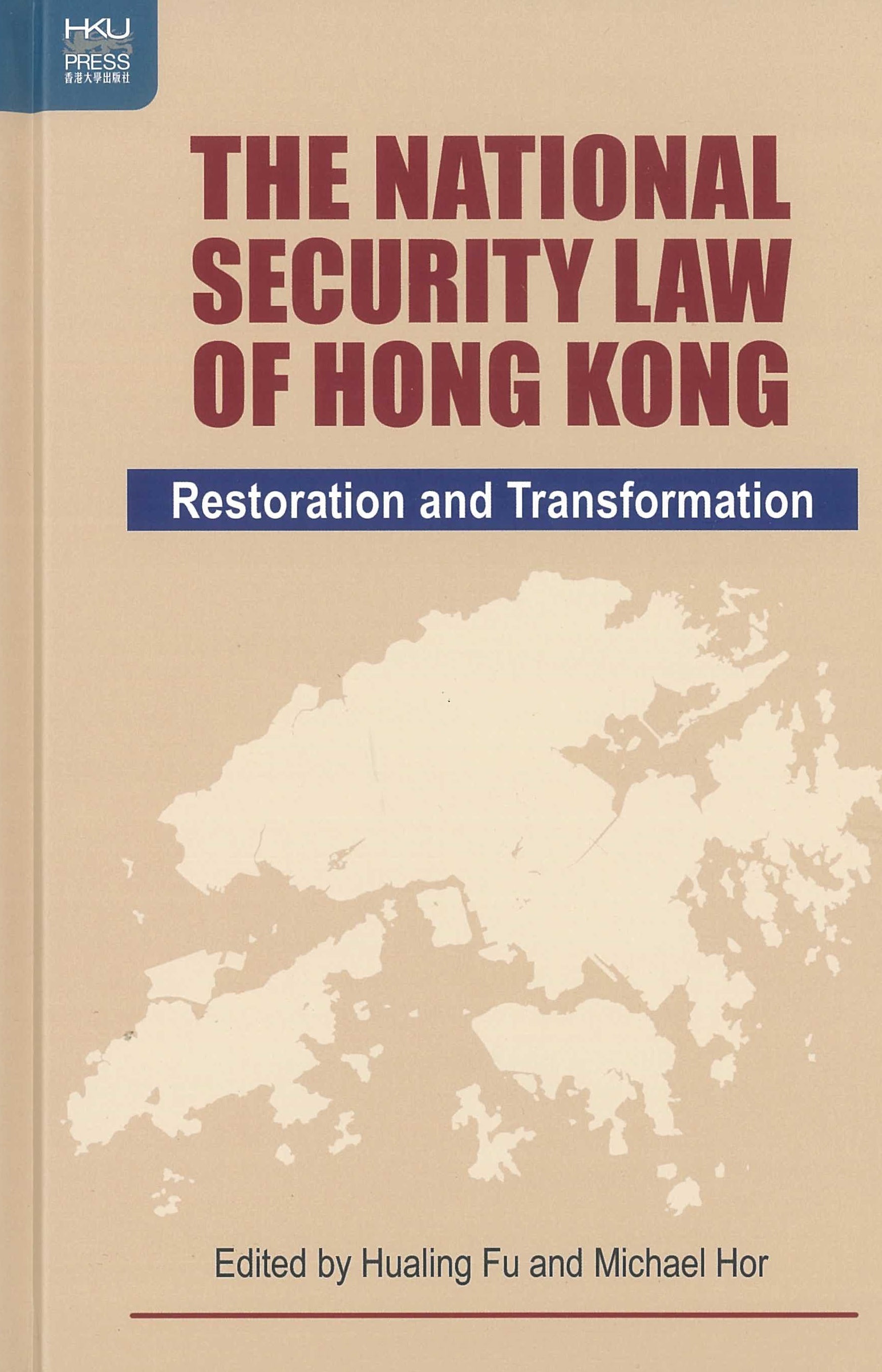
in The National Security Law of Hong Kong: Restoration and Transformation,
Edited by Hualing Fu Michael Hor (Hong Kong University Press, July 2022),
Chapter 9, pp. 187-210
Introduction: "What a disgrace!" lamented Xia Baolong, Director of the Office for Hong Kong and Macau Affairs, the highest-ranking official in the Central People's Government (CPG) in charge of Hong Kong affairs in a particularly condescending outburst to condemn the 2019 protests in Hong Kong.  That's how Beijing, Hong Kong's sovereign, perceived what happened in Hong Kong in 2019.  For the CPG, what was presented as democratic protest by the international media was nothing short of systematic disorder and organized violence bordering on insurrection.  What was shocking and extremely displeasing for the CPG was not only the level of violence and vandalism that some Hong Kong people proved to be capable of, but also the degree of sympathy and support they received from the larger communities in Hong Kong and internationally, and the incompetence and indifference of the Hong Kong government.  In the CPG's eyes, Hong Kong has turned from an economic asset into a political liability.  More importantly, the CPG believed that the unrest in Hong Kong exposed China to hostile international forces and put China's national security at grave risk.
     The mass unrest creates the need - it also offers an opportunity - for the CPG to react forcefully and strongly to put violence to an end and to restore law and order.  Its sharp and drastic action has taken the form of legislative suppression - the passing of the Law of the People's Republic of China for Safeguarding National Security in the Hong Kong Special Administrative Region (NSL).  The law aims both at the immediate goals of "preventing, stopping and punishing" activities endangering national security and the long-term goal of changing the constitutional structure of Hong Kong.  The law creates a range of new criminal offences, often broadly defined to cast a wide net against offences potentially endangering national security, exceeding China's own criminal law for some of the offences in its breadth.  It establishes a web of national security agencies with interlocking jurisdictions and duties with Beijing sitting at a comfortable, commanding height.  The NSL expands police power and correspondingly either ousts or limits judicial authorities at multiple entry points, ranging from restricting bail, excluding juries and enhancing secrecy in judicial proceedings.  Beyond the immediate impact, the NSL attempts to tackle the root cause of the national security risks as China perceives them in Hong Kong - a vibrant and politically charged civil society comprising non-governmental sectors, such as education, the media, the internet, religion or NGOs that were against the government.  Through the NSL, high policing has returned to Hong Kong. 
     This chapter offers a preliminary study of the role and functions of the high policing, also called political or national security policing, which the NSL has introduced in Hong Kong and its initial and long-term impact on the rule of law and rights and freedoms in Hong Kong.  The role that the political policing plays in Hong Kong largely depends upon the ultimate political end of the NSL.  Beyond the immediate goal of ending violence, nipping the pro-independence movement in the bud, and stopping foreign political meddling in Hong Kong, to what degree does the CPG intend to reorient Hong Kong and to bring it into the Chinese orbit?  Clearly, China continues to insist on the One Country Two Systems doctrine (OCTS), although to be enforced in a "correct way" that privileges its one country element.  China, however, does not intend to turn it into just another Chinese city.  In one of his speeches in 2017, President Xi Jinping highlighted Hong Kong's "distinctive strengths", including its pluralist and cosmopolitan society and its status as a major international financial centre.  China clearly stopped far short from imposing its own National Security Law (2015) upon Hong Kong, nor did it transplant its own national security practice in its entirety to Hong Kong.  In enacting the NSL, China sent a clear signal that, while the excess in 2019 should not happen again, Hong Kong will remain a distinct Special Administrative Region (SAR) in the foreseeable future.  There is a long spectrum between the unrest in 2019 and the Chinese regime of national security: where would Hong Kong find itself in the post-NSL era?
      This chapter explores three connected issues: 1) the political circumstances for the creation of the national security policing in Hong Kong; 2) the major features of the high policing that the NSL has created in Hong Kong, which are demonstrated by means of an analysis of the NSL, and the immediate impact that the NSL may have on the rule of law and rights and freedoms in Hong Kong; and 3) a possible new equilibrium between the national security policing and Hong Kong's liberal rule of law under the OCTS doctrine.

Monday, February 20, 2023

Simon Young on Police Powers under the National Security Law: A Commentary (new book chapter)

"Police Powers under the National Security Law: A Commentary"
Simon N. M. Young
Edited by Hualing Fu Michael Hor (Hong Kong University Press, July 2022),
Chapter 8, pp. 167-186
Introduction: The chapter is a commentary on the police powers provided for in the National Security Law (NSL).  It addresses three broad questions.  First, how does the NSL extend the existing scope of duties and functions of police in Hong Kong? Second, how are existing police powers in Hong Kong extended? Third, how does the NSL alter the existing mechanisms of keeping police powers in check?  The first two questions are related because the distinct duties and functions of national security police are related to the powers these officers need to discharge their duties and functions.  The third question explores the methods and mechanisms of limiting these powers.
     In many ways, these questions are novel.  Before the promulgation of the NSL on 30 June 2020, police powers in Hong Kong were either found in the common law or created by Hong Kong legislation.  This is the first occasion for national law to be directly applied to confer powers on the Hong Kong police.  How this affects the equilibrium of police and resident relations in the context of law enforcement is the focus of this chapter.  

Friday, April 30, 2021

Stephen Thomson and Eric Ip on Hong Kong's Legal Response to Covid-19 ( new OUP encyclopedia book chapter)

Stephen Thomson and Eric Ip
in Jeff King and Octavio Ferraz (eds), The Oxford Compendium of National Legal Responses to Covid-19 (Oxford University Press, 2021)
Abstract: Hong Kong is a Special Administrative Region (HKSAR) of the People's Republic of China (PRC). Prior to the outbreak of the Covid-19 pandemic, the HKSAR had experienced several months of civil unrest following the introduction of a bill to the Legislative Council of the HKSAR regarding extradition matters. The protests, which were at their most intense in the second half of 2019 and which included violent clashes between protestors and police officers, vandalism of public property, and the shutting down of major infrastructure in Hong Kong, sparked a series of major political and constitutional events. The unrest eventually led to the enactment of the National Security Law for the HKSAR by the PRC authorities which is arguably the most significant constitutional development in the territory since the resumption of sovereignty over Hong Kong by the PRC on 1 July 1997.    
      It is against this backdrop that Covid-19 arrived in the HKSAR in January 2020. With prior experience of a similar, though globally less severe, outbreak of infectious disease, in the form of SARS in 2003, the HKSAR implemented control measures relatively early in the Covid-19 pandemic which kept reported cases at comparatively low levels by international standards.  Just over 11,000 positive cases have been officially reported of a population of approximately 7.5 million people, and officially reported daily deaths never exceeded single digits.  Although no general 'lockdown' was implemented in the manner of other countries and territories, the HKSAR's 'success' in controlling Covid-19 has nevertheless been achieved through the use of controversial means such as 'ambush' lockdowns of residential blocks, government quarantine camps, and some of the most stringent quarantine and isolation strategies seen anywhere in the world. Additionally, elections to the HKSAR's Legislative Council were postponed for at least one year in the name of public health protection.​ ... Click here to access the full encyclopedia book chapter. 

Friday, January 17, 2020

Simon Young on Policing and Prosecution of Money Laundering (new book chapter)

"Policing and prosecution of money laundering"
Simon Young
in V Mitsilegas, S Hufnagel, and A Moiseienko (eds), Research Handbook on Transnational Crime (Edward Elgar 2019) Chapter 10
Introduction: Almost all countries have a criminal offence of money laundering in their law books. This happened in a relatively short time, beginning from the late 1980s with the emergence of international standard setting on money laundering. With the establishment of the Financial Action Task Force (FATF) in 1989 and the conclusion of a series of transnational criminal law treaties (beginning with the 1988 Vienna Convention against Illicit Traffic in Narcotic Drugs and Psychotropic Substances), countries have accepted and implemented obligations to establish an extensive global anti-money laundering (AML) regime in their domestic law.2 Countries have also accepted international scrutiny of their AML regime through mutual evaluation conducted by the FATF and associated regional bodies.3 In their early years, these evaluations assessed only compliance with a set of international standards (commonly known as the FATF’s 40 Recommendations), but more recently, since 2013, they have also involved separate evaluations of the effectiveness of a jurisdiction’s AML regime according to a smaller set of immediate outcomes.4 The first set of evaluation reports done under the new methodology provides rich data for reflection on what has been achieved in the policing and prosecution of money laundering in the 30 years since the articulation of international standards. The reports show that while states are largely compliant technically with relevant standards, their performance in achieving policing and prosecution outcomes is underwhelming. This chapter identifies some of the salient considerations relevant to high and low effectiveness in policing and prosecution outcomes. The chapter begins with a brief discussion of the distinctive features of policing and prosecuting the money laundering offence. It then outlines the FATF’s international standards on money laundering and its method of mutual evaluation, particularly after the extension of the methodology to effectiveness assessments in 2013. The focus in this chapter is on the standards of policing and prosecution of money laundering. In the FATF methodology, three outcome standards are directly relevant: the use of financial intelligence, the enforcement of the money laundering offence, and the confiscation of criminal property. After providing an overview of the results in the 48 jurisdictions reviewed for effectiveness thus far, this chapter looks more closely at the evaluations of three jurisdictions obtaining high effectiveness ratings and three jurisdictions obtaining low ratings. From this analysis, a list of relevant considerations is identified. The chapter concludes with some reflections on the future of FATF mutual evaluations.

Monday, October 23, 2017

Amanda Whitfort Interviewed on the Need for an Animal Cruelty Police Force in Hong Kong (SCMP)

Yupina Ng and Louise Moon
South China Morning Post
7 October 2017
On the night of September 7, 2013, more than a thousand Hongkongers, some in tears, gathered outside the government’s headquarters at Tamar calling for stricter regulations to stop animal cruelty and a dedicated police unit to enforce those rules.
     The rally was prompted by a shocking case in which a four-month-old stray cat was found in Tsuen Wan with one of its legs cut. Police later arrested a couple on suspicion of animal cruelty, but did not press charges due to “insufficient evidence”.
     In the past four years, Hong Kong has done little to make animals better off, according to activists and law experts. No animal police squad has been set up, but more cruelty cases have been exposed, mainly by social media users.
   Experts said the recent case of a man throwing and kicking a dog in a Tuen Mun supermarket showed that current loose regulations were not serving as sufficient warnings for would-be offenders.
     “The main problem is that we still don’t have a duty of care,” said Amanda Whitfort, an associate professor at the University of Hong Kong’s faculty of law...  Click here to read the full article.

Wednesday, June 29, 2016

Yash Ghai Writes 101 Things About the Kenyan Police (The Star)

"101 things you wanted to know about police but were too afraid to ask"
Patrick Vidija
The Star
28 June 2016
A report by former constitutional review chair Yash Ghai details 101 things Kenyans have never asked police, probably out of fear.
      Ghai says beliefs about police officers have strained the relationship between citizens and members of the police service. He points out that public opinion polls put police at the top of the list of the most corrupt state institutions.
      "Police are regarded as extremely corrupt, especially in extracting money from the less well-off," he says in the preface of the published report.
     "The uniformed men and women are however viewed by the public as suppressing them in order to promote the interests of the rich and the powerful."
     Ghai says the report is meant to streamline the relationship citizens have with police. He raises questions on whether the public knows policing is a full-time job and that officers should generally not be involved in trade or business outside of the occupation.
     "If any officer wishes to be involved in any trade or business they must get permission from the National Police Service only if there is no conflict of interest," he notes... Click here to read the full article and to download the pocketbook.

Tuesday, December 15, 2015

On the question, "Do I have a Hong Kong criminal record?" (SCMP)

"Confusion surrounds police records of criminal convictions"
South China Morning Post
15 December 2015
How do you know if you have a criminal record?  Say you were convicted of careless driving, do you have a criminal record? What if the conviction was for possessing unregistered Chinese medicines or tax evasion? Unfortunately the process used to decide these questions is neither clear nor satisfactory.
     Where a person has been convicted of an offence, the police have a discretionary power to retain the record of that offence and any other identifying particulars of the offender. The police, however, have a policy not to record every conviction. The problem is that the policy is not accessible on the Hong Kong Police Force website, even though it is routinely updated.
     The policy has significant implications as it determines what gets entered into the police records database known as PONICS. This database is used for processing certificate of no criminal conviction applications and sexual conviction record checks, and providing criminal record information to the judiciary for sentencing.
     From an access to information request, I obtained within a week the latest policy as of December 1st. This 2015 policy states that persons convicted of the “following offences by the courts of Hong Kong will be recorded by Police”, followed by more than five pages of listed recordable offences.
     In this policy, careless driving is not a recordable offence but possessing unregistered Chinese medicines and tax evasion are. It is not clear when tax evasion was added because it was not listed in a 2004 version of the policy, which appears to be the only internet-accessible version after legislators raised the matter in the security panel.
     If a person was convicted of tax evasion in 2006 and wanted to know if his conviction was “recorded”, he could only find out by asking the police, and, if told that it was, he might wonder whether the police were simply making it up after the fact, because without an official public statement of the policy at the time no one could know for sure when the offence was listed.
     There are other uncertainties about the policy. The 2004 version stated that if a person was sentenced to imprisonment, including a suspended sentence, the conviction would be recorded whether or not the offence was listed. The 2015 version omits this statement.
     Since 2004, many more offences have been added to the list and few have been delisted. There remain some glaring omissions such as torture, misconduct in public office, maintenance and champerty. The scope of a listed offence category is sometimes unclear, leaving one to guess what is meant by “serious offences only” or “all related offences”.
     Without knowing when minor offending is recorded by the police, one perpetually has difficulty answering the question “do you have a criminal record?” A scheme set in law would provide greater legal certainty and address the fear of retrospective criminal records.
FOLLOW-UP NOTE: In April 2016, the Honourable Mr Dennis Kwok raised this issue in the Legislative Council.  On 13 April 2016, the Secretary for Security, Mr Lai Tung-kwok, provided a written reply that shed more light on the police policy and practices of recording criminal convictions.  It was stated in the reply that newly added recorded offences do not have retrospective effect, but recorded convictions based on delisted recordable offences remain in place.  It was confirmed that where a person has been sentenced to imprisonment, included suspended sentences, whether or not the offence is on the list of recordable offences, the conviction will be recorded.   Importantly, the Secretary stated that the Hong Kong Police Force was currently reviewing the list of recordable offences and "the relevant information will be made available to the public upon completion of the review".  It is hoped that this means the full list of recordable offences and updates to that list will be uploaded promptly to the Hong Kong Police Force website for all to access at anytime.

Saturday, October 18, 2014

Police and the Rule of Law

Although it is a trite thing to say that the rule of law is essential for Hong Kong’s freedom and prosperity, people from different walks of life in Hong Kong have repeated this claim over and over again in the past few months. Critics of the Occupy Central Movement (OCM) are quick to point out that civil disobedience not only violates certain laws but also damages Hong Kong’s rule of law tradition. Mr. Benny Tai who has passionately advocated and organised the movement also says that he treasures the rule of law. For him, Hong Kong’s rule of law tradition is at risk and eroding right in front of our eyes. His OCM argues that there is a strong need to give people a wake-up call so as to protect and strengthen the rule of law in Hong Kong in the longer term. 

What do people have in mind when they talk about the rule of law in Hong Kong?  For some, it is first and foremost judicial independence; for others, it is the courage of the legal profession to act out when arbitrary power appears on the horizon; and most people would agree that rule of law means the obedience and fidelity to legal rules on the part of the ordinary Hong Kong people.

One neglected aspect in Hong Kong’s rule of law discourse is the importance of accountable and effective law enforcement, especially by the police, in creating a sustainable rule of law tradition. 

Political scientists since Hobbes have identified the maintenance of peace and order as core functions of a legitimate state. In a society with a deficit of democracy, social stability and effective control of crime provide adequate legitimacy. In that regard, police effectiveness and accountability are indispensable in legitimizing a political order. Criminologists have also proved that police matter the most in maintaining peace and order and it is principally the diligence of police men and women in the front line who make us safe. It may not be much an exaggeration to say that Hong Kong is one of the safest cities on earth and Hong Kong has one of the best police forces in the world. 

Hong Kong has come a long way in building and maintaining a well-disciplined, highly regarded and effective force. It has taken the collective effort of generations of people to create this reality. The Hong Kong Police Force excels in two fundamental ways. The first is its political neutrality in the sense that the police enforce the law fairly, equally and, above all, effectively without political considerations entering into the process. This important, relative distance from politics has allowed the police to develop a high level of professionalism, effectiveness and accountability in Hong Kong. Second, an accountable and effective police in turn nurtures fine police and community relations and the degree of mutual trust between the police and citizens is high. 

The OCM has unfortunately placed tremendous pressure on the police and posed challenges to both political neutrality and community relations. Without doubt, it is extremely difficult, if possible at all, to insist on neutrality in all circumstance in policing given the embedded nature of police in politics. Given the sensitivity about the OCM amongst all parties involved and the political attention that the OCM has received, it is not possible to avoid political pressure, either from Beijing or from a worried Hong Kong Government, entirely. The use of force on the first evening of the OCM was plainly excessive and unnecessary. It is hard to believe, as the government is arguing, that it was merely an operational decision which led to this unprecedented use of force. The Hong Kong police force, given its experiences in public order policing and its level of professionalism, would have known how to have managed matters better. It is highly likely that the OCM has rattled either Beijing or the Hong Kong government into dictating some police operational matters. Police professionalism may have been sacrificed to political expediency.

There is also the second, and a bigger, disaster – the high level of tension between the police and a significant sector of the public. Effective police work relies on public support and the trust that the police and the public place have in each other as the key to any successful maintenance of public order. Unfortunately the OCM, which started with a demand for Beijing to withdraw its most recent decisions on the 2017 election of the CE, has slowly and painfully mutated into a direct confrontation between the police and the public. The frustration arising from this process has hijacked the original objectives and there is the possibility that the police will become the scapegoat in the blaming game.

As the OCM goes on, it is becoming crystal-clear that our political system, our police system in particular, is more fragile than what we have taken for granted. We have a decent police force that we are proud of, but we may lose it more quickly than we can imagine. As a law enforcement agency, the police are ill-fitted to meet competing political demands. The force is bound to be hard-pressed in maintaining order in an increasingly polarized society. Significant changes in the external environment could swiftly cause a chain reaction within the police force leading to a qualitative change in the internal dynamics. There may be an authoritarian DNA in any police force which may manifest itself in certain circumstances.  The OCM has generated massive international and domestic pressure, evil or benign, that our policing system may not be able to bear. Even if, as most everyone hopes, the OCM is wound back greatly and some discussions begin as soon as possible, we have learned a most important lesson about how rapidly the foundations of our high quality police force can be placed in jeopardy.

Hong Kong has long enjoyed judicial independence, an active legal profession and a free press, but Hong Kong did not always have the rule of law as we define the term. It is the changes in the policing in Hong Kong, especially since the 1970s, which have played a key part in this vital game change. A police force that is clean, effective and accountable, is what makes our rule of law possible. Police are important for us and indispensible for our law and order. Let’s think more carefully about the difficult position in which the OCM has placed our police force.  Written by Hualing Fu.