Showing posts with label Calvin Ho. Show all posts

Friday, November 10, 2023

Calvin Ho on Generative AI and the Foregrounding of Epistemic Injustice in Bioethics (The American Journal of Bioethics)

"Generative AI and the Foregrounding of Epistemic Injustice in Bioethics"
Calvin Ho
The American Journal of Bioethics
Volume 23, 2023 - Issue 10
Published online: October 2023
Introduction: OpenAI’s Chat Generative Pre-training Transformer (ChatGPT), Google’s Bard and other generative artificial intelligence (GenAI) technologies can greatly enhance the capability of healthcare professionals to interpret data across different data sources and locations with a simple query, as well as advance medical research through its ability to generate synthetic data (The Lancet Regional Health-Europe 2023). However, the performance of these technologies depends on the data they are trained on. Existing data may be seriously biased due to a lack of gender, ethnic, racial, social and/or religious diversity, and is a concern that the Global Alliance for Genomics & Health (2023) seeks to address in a recent initiative to promote global diversity in datasets within genomic research. If used in clinical medicine, the results from GenAI technologies present serious normative challenges that Cohen (2023) has clearly and succinctly set out, quite aside from the direct impact that they could have on human health and wellbeing.
    While it should come as no surprise to anyone that emerging health technologies tend to present normative and regulatory challenges, many of the “new-ish” problems that are anticipated to arise from the use of GenAI technologies in healthcare and research foreground intransigent concerns with epistemic injustice. I provide three reasons why GenAI’s clinical use is a big deal in bioethics. First, it highlights that bioethics does not adequately account for the impact that power dynamics and system biases have in knowledge production and dissemination. Marginalized individuals and communities still lack the capability to participate…Click here to read the full text


Thursday, April 14, 2022

Calvin Ho et al on WHO Guidance on COVID-19 Vaccine Trial Designs in the Context of Authorized COVID-19 Vaccines and Expanding Global Access: Ethical Considerations (Vaccine)

Jerome Amir Singh, Sonali Kochhar, Jonathan Wolff, Caesar Atuire, Anant Bhan, Ezekiel Emanuel,  Ruth Faden, Prakash Ghimire, Dirceu Greco, Calvin Ho, Suerie Moon, Ehsan Shamsi Gooshkio, Aissatou Touré, Beatriz Thomé, Maxwell J.Smith, and Ross E.G.Upshur
Published on 28 February 2022
Abstract: While the degree of COVID-19 vaccine accessibility and uptake varies at both national and global levels, increasing vaccination coverage raises questions regarding the standard of prevention that ought to apply to different settings where COVID-19 vaccine trials are hosted. A WHO Expert Group has developed guidance on the ethical implications of conducting placebo-controlled trials in the context of expanding global COVID-19 vaccine coverage. The guidance also considers alternative trial designs to placebo controlled trials in the context of prototype vaccines, modified vaccines, and next generation vaccines.

Calvin Ho on Taking an Ethics+ Approach to Conceptualising Laws in Research Governance (new book chapter)

Calvin Ho
Published online on 23 December 2021
Summary: The lived experience of law in medical practice and research is typified by intricate, sometimes complex and often mundane (perhaps even ritualistic) procedural requirements. While some scholars have been content thus to limit the normativity of law, Graeme reminds us that law is interconnected with ethics and that its distinctiveness may be better understood as process, particularly in boundary or liminal spaces where the roles of ethics and law are blurred. This processual conception of law is in turn a component of governance regimes that he depicts as ‘Ethics+’. He argues that ethics is always a necessary component of a robust and defensible regime of health research that is rooted in the core values and principles at stake while concurrently enabling adaptation and accommodation. Law as an ‘Ethics+’ governance regime embraces uncertainty and the liminal nature of the health research journey, while admitting value-based objectives that can act as foci for stakeholders. The chapter shows the bright beacon dimension of Graeme’s legacy, which points the way to a rich, non-formalistic account of law – not simply as law in action or law on the books but as law subsisting in-between.

Calvin Ho et al on Streamlining Ethics Review for International Health Research (Science)

Published on 24 February 2022
Abstract: International biomedical research, in which projects span borders and engage participants from multiple countries, has increased substantially during the last several decades. Despite the proven value of large, geographically, and ethnically diverse studies, further advancements are being impeded by the burden of submitting separate, and often numerous, applications for research ethics approval in compliance with country-specific laws or varied policy frameworks. To address this, we see promise in applying the international concept of “adequacy,” contained in the European Union (EU) General Data Protection Regulation (GDPR) (1), to ethics review of international health research. We advocate for countries to publish their prior determinations about the adequacy of ethics review requirements in other countries to enable review by one institutional review board (IRB) or comparable body (“single-site” review) in the researcher’s country, streamlining ethics review while safeguarding the welfare of local research participants.

Sunday, January 16, 2022

Calvin Ho & Karel Caals on The International Pandemic Preparedness Treaty and An Emerging Digital Divide (Asia Global Online)

The International Pandemic Preparedness Treaty and An Emerging Digital Divide
Dr Calvin Ho & Karel Caals
Asia Global Online
5 January 2022 
Introduction: The persistent Covid-19 pandemic has uncovered various inequities, from access to crucial supplies and income inequality to the digital divide. As the World Health Organization begins work on a new international treaty on pandemic preparedness and response, Calvin Ho Wai Loon of The University of Hong Kong and Karel Caals of the National University of Singapore examine digital inequalities that have arisen from different health systems, arguing that pandemic preparedness should include a range of digital health capabilities with a view to minimizing the digital divide. ... Click here to read the full text. 

Thursday, January 13, 2022

Calvin Ho on COVID-19 Vaccine Trial Designs in the Context of Authorized COVID-19 Vaccines and Expanding Global Access: Ethical Considerations (a Contributor of Policy Brief of the World Health Organization, 29 November 2021)

Introduction of Executive Summary
     In June 2020, global regulators convened under the auspices of the International Coalition of Medicines Regulatory Authorities (ICMRA) and co-chaired jointly by the European Medicines Agency (EMA) and United States Food and Drug Administration (FDA) reached consensus on the study design requirements for Phase 3 COVID-19 vaccine clinical trials. The ICMRA noted that phase 3 clinical trials should be randomized, double-blinded and controlled with a placebo or active comparators. In September 2020, the World Health Organization (WHO ) advised: “Phase IIB/III efficacy trials should be randomized, double-blinded and placebo controlled.” Since then, multiple COVID-19 vaccines have been authorized worldwide based on interim results of pivotal placebo-controlled efficacy trials, and billions of COVID-19 vaccine doses have been administered under emergency use/conditional marketing authorization or full approval regulatory mechanisms.

Calvin Ho et al on Governing the Access to COVID-19 Tools Accelerator: towards Greater Participation, Transparency, and Accountability (The Lancet)

"Governing the Access to COVID-19 Tools Accelerator: towards greater participation, transparency, and accountability"
Suerie Moon, Jana Armstrong, Brian Hutler, Prof Ross Upshur, Rachel Katz, Caesar Atuire, Anant Bhan, Prof Ezekiel Emanuel, Prof Ruth Faden, Prof Prakash Ghimire, Dirceu Greco, Calvin Ho, Sonali Kochhar, Owen Schaefer, Ehsan Shamsi-Gooshki, Prof Jerome Amir Singh, Maxwell J Smith, Prof Jonathan Wolff
The Lancet
Published on 11 December 2021
Summary: The Access to COVID-19 Tools Accelerator (ACT-A) is a multistakeholder initiative quickly constructed in the early months of the COVID-19 pandemic to respond to a catastrophic breakdown in global cooperation. ACT-A is now the largest international effort to achieve equitable access to COVID-19 health technologies, and its governance is a matter of broad public importance. We traced the evolution of ACT-A's governance through publicly available documents and analysed it against three principles embedded in the founding mission statement of ACT-A: participation, transparency, and accountability. We found three challenges to realising these principles. First, the roles of the various organisations in ACT-A decision making are unclear, obscuring who might be accountable to whom and for what. Second, the absence of a clearly defined decision making body; ACT-A instead has multiple centres of legally binding decision making and uneven arrangements for information transparency, inhibiting meaningful participation. Third, the nearly indiscernible role of governments in ACT-A, raising key questions about political legitimacy and channels for public accountability. With global public health and billions in public funding at stake, short-term improvements to governance arrangements can and should now be made. Efforts to strengthen pandemic preparedness for the future require attention to ethical, legitimate arrangements for governance.

Calvin Ho et al on GA4GH: International Policies and Standards for Data Sharing across Genomic Research and Healthcare (Cell Genomics)

"GA4GH: International policies and standards for data sharing across genomic research and healthcare"
Heidi L. Rehm, Angela J.H. Page, Lindsay Smith, Jeremy B. Adams, Gil Alterovitz, Lawrence, J. Babb, Maxmillian P. Barkley, Michael Baudis, Michael J.S. Beauvais, Tim Beck, Jacques, S. Beckmann, Sergi Beltran, David Bernick, Alexander Bernier, James K. Bonfield, Tiffany F. Boughtwood, Guillaume Bourque, Sarion R. Bowers, Anthony J. Brookes, Michael Brudno, Matthew H. Brush, David Bujold, Tony Burdett, Orion J. Buske, Moran N. Cabili, Daniel L. Cameron, Robert J. Carroll, Esmeralda Casas-Silva, Debyani Chakravarty, Bimal P. Chaudhari, Shu Hui Chen,  J Michael Cherry, Justina Chung, Melissa Cline. Hayley L. Clissold, Robert M. Cook-Deegan, Mélanie Courtot, Fiona Cunningham, Miro Cupak, Robert M. Davies, Danielle Denisko, Megan J.Doerr, Lena I. Dolman, Edward S. Dove, L. Jonathan Dursi, Stephanie O.M. Dyke, James A. Eddy, Karen Eilbeck, Kyle P. Ellrott, Susan Fairley, Khalid A. Fakhro, Helen V. Firth, Michael S. Fitzsimons, Marc Fiume, Paul Flicek, Ian M.Fore, Mallory A.F reeberg, Robert R.Freimuth, Lauren A.Fromont, JonathanFuerth, Clara L.Gaff, Weiniu Gan, Elena M. Ghanaim, David Glazer, Robert C. Green, Malachi Griffith, Obi L.Griffith, Robert L. Grossman, Tudor Groza, Jaime M.Guidry Auvil, Roderic Guigó, Dipayan Gupta, Melissa A. Haendel, Ada Hamosh, David P .Hansen, Reece K.Hart, Dean Mitchell Hartley, David Haussler, Rachele M. Hendricks-Sturrup, Calvin W.L.Ho, Ashley E.Hobb, Michael M. Hoffmanm, Oliver M.Hofmann, PetrHolub, Jacob ShujuiHsu, Jean-Pierre Hubaux, Sarah E.Hunt, Ammar Husami, Julius O.J acobsen, Saumya S. Jamuar, Elizabeth L. Janes, Francis Jeanson, Aina Jeném Amber L. Johns, Yann Joly, Steven J.M. Jones, Alexander Kanitz, Kazuto Kato, Thomas M.Keane, Kristina Kekesi-Lafrance, Jerome Kelleher, Giselle Kerry, Seik-SoonKhor, Bartha M. Knoppers, Melissa A. Konopko, Kenjiro Kosaki, Martin Kuba, Jonathan Lawson, Rasko Leinonen, Stephanie Li, Michael F. Lin, Mikael Linden, Xianglin Liu, Isuru Udara Liyanage, Javier Lopez, Anneke M. Lucassen, Michael Lukowski, Alice L.Mann, John Marshall, Michele Mattioni, Alejandro Metke-Jimenez, Anna Middleton, Richard J. Milne, Fruzsina Molnár-Gábor, Nicola Mulder, Monica C.Munoz-Torres, RishiNag, Hidewaki Nakagawa, Jamal Nasir, Arcadi Navarro, Tristan H. Nelson, Ania Niewielska, Amy Nisselle, Jeffrey Niu, Tommi H.Nyrönen, Brian D. O’Connor, Sabine Oesterle, Soichi Ogishima, VivianOta Wang, Laura A.D.Paglione, Emilio Palumbo, Helen E. Parkinson, Anthony A. Philippakis, Angel D.Pizarro, Andreas Prlic, Jordi Rambla, Augusto Rendon, Renee A.Rider, Peter N.Robinson, Kurt W.Rodarmer, Laura Lyman Rodriguez, Alan F.Rubin, Manuel Rueda, Gregory A.Rushton, Rosalyn S.Ryan, Gary I. Saunders, Helen Schuilenburg, Torsten Schwede, Serena Scollen, Alexander Senf, Nathan C.Sheffield, Neerjah Skantharajah, Albert V. Smith, Heidi J. Sofia, Dylan Spalding, Amanda B.Spurdle, Zornitza Stark, Lincoln D.Stein, Makoto Suematsu, Patrick Tan, Jonathan A. Tedds, Alastair A. Thomson, Adrian Thorogood, Timothy L.Tickle1 Katsushi Tokunaga, Juha Törnroos, David Torrents, Sean Upchurch, Alfonso Valencia, Roman Valls Guimera ,Jessica Vamathevan, Susheel Varma, Danya F. Vears, Coby Viner, Craig Voisin, Alex H. Wagner, Susan E. Wallace, Brian P.Walsh, Marc S.Williams, Eva C.Winkler, Barbara J.Wold, Grant M. Wood, J. Patrick Woolley, Chisato Yamasaki, Andrew D.Yates, Christina K.Yung, Lyndon J.Zass, Ksenia Zaytseva, Junjun Zhang, Peter Goodhand, Kathryn North1, Ewan Birney
Cell Genomics
Published in Nov 2021
Summary: The Global Alliance for Genomics and Health (GA4GH) aims to accelerate biomedical advances by enabling the responsible sharing of clinical and genomic data through both harmonized data aggregation and federated approaches. The decreasing cost of genomic sequencing (along with other genome-wide molecular assays) and increasing evidence of its clinical utility will soon drive the generation of sequence data from tens of millions of humans, with increasing levels of diversity. In this perspective, we present the GA4GH strategies for addressing the major challenges of this data revolution. We describe the GA4GH organization, which is fueled by the development efforts of eight Work Streams and informed by the needs of 24 Driver Projects and other key stakeholders. We present the GA4GH suite of secure, interoperable technical standards and policy frameworks and review the current status of standards, their relevance to key domains of research and clinical care, and future plans of GA4GH. Broad international participation in building, adopting, and deploying GA4GH standards and frameworks will catalyze an unprecedented effort in data sharing that will be critical to advancing genomic medicine and ensuring that all populations can access its benefits.

Calvin Ho on A Call to Engage: Consensus Building from the Bottom Up (Voices of GA4GH members: Collaborating in Technology and Policy Development)

in Voices of GA4GH members: Collaborating in technology and policy development
Background: The Global Alliance for Genomics and Health (GA4GH) is organized around eight Work Streams, where members develop technology standards and policy frameworks to enable the responsible sharing of human genomic and health-related data. These are implemented across 24 Driver Projects, reflecting real-world genomics initiatives. In this Voices, Cell Genomics asked GA4GH members to reflect on their engagement with GA4GH and how this has driven progress in open science and genomic medicine.
Volume 1, Issue 2
Published in 10 Nov 2021
Voice of Calvin Ho
   In 2020, the Hong Kong Genome Institute (HKGI) was established by the territory’s government to implement the Hong Kong Genome Project (HKGP), an initiative to promote the development of genomic medicine and population health in Hong Kong. In setting up HGKI operational procedures, key issues included feedback of whole-genome sequencing results to participants, right of participants to withdraw, data security and privacy protection, data access mechanisms, and use of data. For this, we consulted the GA4GH Regulatory & Ethics Toolkit, which has been an important ready-to-use reference for internationally accepted standards on responsible sharing of genomic and health-related data. For instance, discussions and recommendations on setting up infrastructure to support the flow of data from clinical practice into research and establishing data access and accountability mechanisms that are appropriate to research settings are implicit in the considerations of the expert committee and likely to be evident in the policies and practices of the HKGI. Some of my colleagues and I have the double privilege of contributing to the work of GA4GH and the HKGI and have thereby been able to facilitate the cross-pollination of values, concepts, and practices. As an intrinsically open and collaborative enterprise, GA4GH provides the forum, mechanisms, and resources for all interested stakeholders to be involved and in a manner that is non-directive. The consolidation of international policies and standards of the GA4GH in this issue of Cell Genomics is a further step in this direction and is, in my view, exemplary of consensus building from the bottom up.

Calvin Ho on The Patient-Centric Turn in Medical Liability in Singapore (new book chapter)

"The Patient-Centric Turn in Medical Liability in Singapore"
Calvin Ho
in Medical Liability in Asia and Australasia (Springer, 2022), pp 245-265
Published online in November 2021
Abstract: The basis of medico-legal claims against a doctor may occur in contract law, tort law or criminal law. This chapter focuses on the ethical and legal requirement of informed consent, which in tort law relates to two legal actions, namely trespass to persons (or battery) and negligence, as they give effect to a patient’s right to autonomous decision-making on matters relating to her or his medical treatment and care. These legal actions have been central in defining legal expectations of the doctor’s responsibility to the patient which, apart from the provision of medical advice, includes medical diagnosis and treatment. Where medical advice is concerned, an important change in the legal standard of care, from one that was profession-centric to a more patient-centric formulation, is also considered. This development has been codified into statutory law, and is instructive in a number of ways. From a jurisprudential angle, it shows the law to be normatively open, as the change occurred interactively with the norms of medical ethics, and the practical realities of professional medicine. Developments since this change suggest that the courts may be more open to look beyond the doctor-patient relationship in addressing institutional and systemic deficiencies. If medical jurisprudence should advance in this direction, it may be fair to say that medical liability is likely to acquire a more prominent role in sustaining quality of medical care.

Wednesday, December 1, 2021

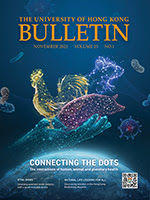
"Disunity of Purpose" (Calvin Ho Profiled in HKU Bulletin)

"Disunity of Purpose"
Calvin Ho
HKU Bulletin
Published in November 2021
Governance and laws relating to human, animal and ecological health are divided across the world, making it difficult to coordinate responses to emerging health threats. Dr Calvin Ho has been analysing the problem.
     In 2007, the Indonesian government announced it would stop sending samples of the H5N1 avian influenza virus detected in its country to the World Health Organization’s (WHO) reference laboratories. Its worry was that these samples, provided freely, would be used by pharmaceutical companies to develop vaccines the country could not afford. The situation prompted the establishment of a new international framework for data and pathogen sharing – but only for H5N1 and other influenza viruses with human pandemic potential.
     Despite other circulating threats to human health, such as antimicrobial resistance (AMR) and emerging zoonotic diseases like the Middle East Respiratory Syndrome (MERS) coronavirus, there is as yet no comprehensive international framework for sharing biological materials and related data to address these concerns. Even the COVID-19 global pandemic has yet to motivate any change.
     Dr Calvin Ho of the Faculty of Law, and Co-Director of the Centre for Medical Ethics and Law, has been looking at ethical and legal means to facilitate data and pathogen sharing for AMR and One Health research, and the development of appropriate countermeasures. 
     AMR, which arises mainly from misuse and overuse of antibiotics and other antimicrobials, is a major concern because drug-resistant pathogens circulate among humans, animals and the environment and are projected to lead to 10 million additional deaths each year globally by 2050. Its growing threat prompted the WHO to endorse the One Health concept in 2010 and recognise that protecting and promoting human health is closely interconnected to animal and environmental health. …Click here to read the full text. 

Calvin Ho et al on Open Science, Data Sharing and Solidarity: Who Benefits? (History and Philosophy of the Life Sciences)

"Open science, data sharing and solidarity: who benefits?"
Ciara Staunton, Carlos Andrés Barragán, Stefano Canali, Calvin Ho, Sabina Leonelli, Matthew Mayernik, Barbara Prainsack & Ambroise Wonkham
History and Philosophy of the Life Sciences
Published on 11 November 2021
Abstract: Research, innovation, and progress in the life sciences are increasingly contingent on access to large quantities of data. This is one of the key premises behind the “open science” movement and the global calls for fostering the sharing of personal data, datasets, and research results. This paper reports on the outcomes of discussions by the panel “Open science, data sharing and solidarity: who benefits?” held at the 2021 Biennial conference of the International Society for the History, Philosophy, and Social Studies of Biology (ISHPSSB), and hosted by Cold Spring Harbor Laboratory (CSHL).

Sunday, March 21, 2021

Calvin Ho et al on Immunity Certification for COVID-19: Ethical Considerations (Bulletin of the WHO)

"Immunity certification for COVID-19: ethical considerations"
By Teck Chuan Voo, Andreas A Reis, Beatriz Thomé, Calvin WL Ho, Clarence C Tam, Cassandra Kelly-Cirino, Ezekiel Emanuel, Juan P Beca, Katherine Littler, Maxwell J Smith, Michael Parker, Nancy Kass, Nina Gobat, Ruipeng Lei, Ross Upshur, Samia Hurst & Sody Munsaka
Bulletin of the World Health Organization (2021) 99(2): 155–161.
Abstract: Restrictive measures imposed because of the coronavirus disease 2019 (COVID-19) pandemic have resulted in severe social, economic and health effects. Some countries have considered the use of immunity certification as a strategy to relax these measures for people who have recovered from the infection by issuing these individuals a document, commonly called an immunity passport. This document certifies them as having protective immunity against severe acute respiratory syndrome coronavirus-2 (SARS-CoV-2), the virus that causes COVID-19. The World Health Organization has advised against the implementation of immunity certification at present because of uncertainty about whether long-term immunity truly exists for those who have recovered from COVID-19 and concerns over the reliability of the proposed serological test method for determining immunity. Immunity certification can only be considered if scientific thresholds for assuring immunity are met, whether based on antibodies or other criteria. However, even if immunity certification became well supported by science, it has many ethical issues in terms of different restrictions on individual liberties and its implementation process. We examine the main considerations for the ethical acceptability of immunity certification to exempt individuals from restrictive measures during the COVID-19 pandemic. As well as needing to meet robust scientific criteria, the ethical acceptability of immunity certification depends on its uses and policy objectives and the measures in place to reduce potential harms, and prevent disproportionate burdens on non-certified individuals and violation of individual liberties and rights.

Sunday, February 28, 2021

WHO Policy Brief on Emergency Use Designation of COVID-19 Candidate Vaccines: Ethical Considerations for COVID-19 Placebo-controlled Vaccine Trials and Trial Unblinding

Policy brief by the World Health Organization (WHO), 18 December 2020
Associate Professor Calvin Ho is a member of the WHO ethics expert group which produced the policy brief. He also shared on the ethical and regulatory issues in the vaccine race in a webinar on "International Law, Science and Technology in the Time of COVID-19" hosted by the Lauterpacht Centre for International Law of the University of Cambridge on 4 December 2020. Click here for the recording.  
Introduction: The grave public health threat posed by COVID-19 has spurred the development of dozens of COVID-19 candidate vaccines, and the conduct of numerous accelerated COVID-19 vaccine trials, many of which are in Phase 2/3 of testing. Given this severe threat, some drug regulatory authorities including the United States Food and Drug Administration (FDA) and the European Union’s European Medicines Agency (EMA) have indicated that, if interim data are sufficiently compelling, they are prepared to issue COVID-19 candidate vaccines conditional / emergency / early approval prior to completion of Phase 3 trials. In such instances the regulatory authority signals that the balance of risk and benefit to designated target populations justifies deployment of the vaccine pending the registration / licensure of that product on public health grounds. Similarly, to assist World Health Organization (WHO) Member States and UN procurement agencies in decision-making on the acceptability for use of specific products in the context of a public health emergency, WHO has established an Emergency Use Listing (EUL) procedure to expedite the availability of interventions needed in public health emergency (PHE) situations. The validity of a WHO EUL in the context of a public health emergency is generally 12 months. All decisions to grant an EUL are reassessed at 12 months (or sooner, if further data become available that could alter the original opinion). EUL is contingent upon the vaccine developer completing the development of the product and its trial, and submitting the candidate vaccine for registration/licensure and WHO prequalification.  EUL is not equivalent or an alternative to WHO prequalification, and should not be thought of as such. For the purposes of this policy brief, all mechanisms that facilitate the public accessibility of investigational vaccines prior to the conclusion of their respective clinical trials or their licensure, shall hereinafter collectively be referred to as ‘Emergency Use Designation’ or EUD... Click here to download the policy brief.

Solutions to COVID-19 Data Sharing (The Lancet Digital Health)

"Solutions to COVID-19 data sharing"
Greg Fegan, Phaik Yeong Cheah and the Data Sharing Working Group (of which Calvin Ho is a member) 
The Lancet Digital Health 
2021, Vol 3, Issue 1, E6
We read with interest The Lancet Digital Health Editorial regarding transparency during global health emergencies, and we wanted to bring to your readers' attention our work on data sharing.  After WHO's declaration of COVID-19 as a global pandemic, the COVID-19 Clinical Research Coalition was established on April 2, 2020. The Coalition is made up of global health researchers working in, or allied with, resource-limited settings across multiple continents. This umbrella group has grown, with working groups now spanning nearly a dozen interest areas including ethics, clinical pharmacology, and data sharing. Here, we outline the rationale and aims of the Data Sharing Working Group, which comprises researchers working on ethics, regulatory, and operational aspects of data sharing... Click here to read the full correspondence.

Calvin Ho & Chia-Chin Lin on How the COVID-19 Pandemic Could Reshape Palliative Care Into High-Tech and High-Touch Care (Cancer Nursing)

2020, Volume 43, Issue 6, pp. 429-430
Introduction: Coronavirus disease 2019 (COVID-19) disrupted palliative care and other healthcare services as health systems were quickly overwhelmed with patients and by public health measures requiring social distancing and restricting face-to-face contact. These challenges have spurred the adoption of digital health (DH) in many health systems across the globe. Digital health is mainly concerned with the use of routine and innovative forms of information and communications technology to address health needs. Digital health has become an umbrella term that encompasses eHealth, telemedicine, mobile health (or mHealth), and emergent technologies such as big data analytics and artificial intelligence.

Wednesday, May 13, 2020

Calvin Ho et al on Establishing the International Genetic Discrimination Observatory (Nature Genetics)

The first article of the Universal Declaration on the Human Genome and Human Rights states: “The human genome underlies the fundamental unity of all members of the human family, as well as the recognition of their inherent dignity and diversity.” The Declaration further states, in article 6: “No one shall be subjected to discrimination based on genetic characteristics that is intended to infringe or has the effect of infringing human rights, fundamental freedoms and human dignity.” However, more than 20 years after the adoption of this Declaration, genetic discrimination remains one of the most pervasive concerns identified by the public, patients, scientists, clinicians and research participants worldwide. This discrimination hampers genomic research, precision medicine and the implementation of these technologies for the benefit of people globally. Discrimination has been defined differently in diverse contexts, such as in law or private insurance, thus potentially explaining why individuals may have different perceptions, expectations and acceptance thresholds concerning this issue. The plain meaning of genetic discrimination usually refers to treating an individual or a group unjustly or prejudicially on the basis of their genetic characteristics. The extent and incidence rate of genetic discrimination remain subjects of debate, partly because of the difficulty in rigorously assessing these aspects. Calvin Ho teams up with colleagues on an initiative to establish an international genetic discrimination observatory.  Their article is published as "Establishing the International Genetic Discrimination Observatory" (2020) 52 Nature Genetics 466-468 and the introduction is excerpted below:
Introduction: In 1997, representatives of 77 national delegations in attendance at the United Nations Educational, Scientific and Cultural Organization’s 29th session unanimously adopted the Universal Declaration on the Human Genome and Human Rights. The first article of this fundamental human rights text is probably the best known, stating: “The human genome underlies the fundamental unity of all members of the human family, as well as the recognition of their inherent dignity and diversity.” The Declaration further states, in article 6: “No one shall be subjected to discrimination based on genetic characteristics that is intended to infringe or has the effect of infringing human rights, fundamental freedoms and human dignity.” However, more than 20 years after the adoption of this Declaration, genetic discrimination remains one of the most pervasive concerns identified by the public, patients, scientists, clinicians and research participants worldwide. This discrimination hampers genomic research, precision medicine and the implementation of these technologies for the benefit of people globally...

Monday, April 27, 2020

HKU Law's Webinar Series: Exploring the Legal Challenges Arising from COVID-19

The COVID-19 pandemic has posed unprecedented challenges to businesses and people around the world. In this challenging time, the HKU Faculty of Law in collaboration with its research centres have organized a webinar series exploring the legal challenges arising from the pandemic. 

The Fourth Seminar on "Assessing the Risks and Uncertainties with the Covid-19 Litigations Against China" was presented by the Director of the Center for Chinese Law, Dr Angela Zhang, and Stephen A. Cozen Professor of Law at the University of Pennsylvania Carey Law School Professor Jacques deLisle on 15 May. To view the webinar, click here. To view Professor deLise’s commentary about this topic, click here. To view Dr Zhang’s op-ed about this topic, click here.


The Third Seminar on "COVID-19 – A Trigger for Mindset, Policy and Infrastructure Changes Regarding Ai, Lawtech and Regtech" was presented by the LITE Lab@HKU Founding Executive Director, Brian Tang on 6 May. To view the webinar, click here.


The Second Seminar on "State and Professional Autonomy: Conflicting Rights and Obligations in the State-Profession Relationship" was presented by the CMEL Deputy Director, Ms Daisy Cheung & Associate Professor Dr Calvin Ho on 30 April. To view the webinar, click here. To view the powerpoint, click here: Link to the powerpoint.


The First Seminar on "Digital Finance & Crisis" was presented by the AIIFL Director, Professor Douglas W. Arner, on 15 April. To view the webinar, click here. To view the paper and the powerpoint, click here: Link to the paper / Link to the powerpoint.


Wednesday, April 22, 2020

Calvin Ho et al on Trustworthy Use of AI & Big Data Analytics in Health Insurance (WHO Bulletin)

Calvin W L Ho, Joseph Alib & Karel Caalsc
Bulletin of the World Health Organization
Volume 98, Number 4, pp. 229-296
Published in April 2020
Abstract: Technological advances in big data (large amounts of highly varied data from many different sources that may be processed rapidly), data sciences and artificial intelligence can improve health-system functions and promote personalized care and public good. However, these technologies will not replace the fundamental components of the health system, such as ethical leadership and governance, or avoid the need for a robust ethical and regulatory environment. In this paper, we discuss what a robust ethical and regulatory environment might look like for big data analytics in health insurance, and describe examples of safeguards and participatory mechanisms that should be established. First, a clear and effective data governance framework is critical. Legal standards need to be enacted and insurers should be encouraged and given incentives to adopt a human-centred approach in the design and use of big data analytics and artificial intelligence. Second, a clear and accountable process is necessary to explain what information can be used and how it can be used. Third, people whose data may be used should be empowered through their active involvement in determining how their personal data may be managed and governed. Fourth, insurers and governance bodies, including regulators and policy-makers, need to work together to ensure that the big data analytics based on artificial intelligence that are developed are transparent and accurate. Unless an enabling ethical environment is in place, the use of such analytics will likely contribute to the proliferation of unconnected data systems, worsen existing inequalities, and erode trustworthiness and trust.  Click here to read the full article.
摘要: 确保人工智能和大数据分析在医疗保险中的可靠使用 大数据(即,可以快速处理大量不同来源的高度差异 化数据)、数据科学和人工智能领域的技术进步可以 改善医疗系统功能,促进个性化护理和公益服务。然 而,这些技术不会取代医疗系统中的道德领导和治理 等基本组成要素,也不会消除对稳健的道德和监管环 境的需求。在本文中,我们讨论了医疗保险大数据分 析中的稳健道德和监管环境可能是什么样子的,并且 举例描述了应该建立的保障和参与机制。首先,一个 清晰有效的数据治理框架至关重要。需要制定法律标 准,并且鼓励和激励保险公司在设计和使用大数据分析和人工智能方面秉承以人为本的理念。第二,必须 有一个明确的问责流程来解释可以使用哪些信息以及 如何使用这些信息。第三,对于数据被采用的人员, 应该通过积极参与决定如何管理和治理其个人数据的 方式为其赋权。第四,保险公司和治理机构,包括监 管机构和政策制定者,需携手合作,确保基于人工智 能开发的大数据分析是透明且准确的。除非具备有利 的道德环境,否则使用此类分析很可能会导致未连接 的数据系统的分散,加剧现有的不均衡情况,并降低 可靠性和可信度。

Tuesday, March 10, 2020

Calvin Ho on the Regulation of Human Germline Genome Modification in Singapore (new book chapter)

Summary: In Singapore, genome editing techniques may be applied in research but not for therapeutic (or clinical) purposes. Broadly speaking, the legal, regulatory and ethical provisions that apply to genome editing are drawn from five (at times overlapping) regulatory regimes: (i) research involving human embryos and stem cells; (ii) research involving assisted reproduction centers (and assisted reproduction services); (iii) research involving non-human animals; (iv) human biomedical research other than clinical trials; and (v) clinical trials. A human embryo may be created solely for the purposes of research (to study a genome editing technique, for instance), provided certain conditions are met and requisite approvals are obtained. Any such research should not extend beyond fourteen days from the time that the embryo was created. These requirements apply mutatis mutandis to the use of genome editing techniques to modify the genome of human oocytes and embryos. Owing to a moratorium that has been imposed, human germline genetic modification is not allowed in the clinical setting. However, it is less clear if such procedures could be applied in a clinical trial. This chapter provides an analysis of the regulatory framework and its application, as well as how it is expected to change in the foreseeable future.