Showing posts with label commercial law. Show all posts

Wednesday, August 5, 2026

HKU Law Welcomes Prof. Michael Tsimplis

Welcome to Prof. Michael Tsimplis, who joins the Faculty of Law as a Professor.

Professor Michael (Mikis) Tsimplis has been with the Faculty of Law since July 2026. Before joining HKU Mikis worked for CityU (2018-2026). Before 2018 Mikis worked in various academic and leadership positions for the University of Southampton and before that for the UK Natural Environment Research Council. He has taught various courses, including Admiralty Law, Admiralty Enforcement, Charterparties, Bills of Lading, Energy and Environment Law, Law of International Sales, Legal Concepts, Insurance Law, Private International Law, Commercial Contracts, Legal Concepts Law of the Marine Environment in academic and professional courses around the world. Mikis undertakes research in marine, maritime, commercial, and environmental law as well as keeping an interest in oceanography and environmental science. He has led and contributed to various international and interdisciplinary projects and has published mainly in law, oceanography and sea level rise, with extensive interdisciplinary collaborations. He has been involved in the quality assessment and accreditation of university departments and the evaluation of research proposals for national and international bodies. 

Friday, November 14, 2025

Kai Tik Au Yeung on Significance of Coordination: A Comparison between the Cape Town Convention and Hague Securities Convention (AsianJIL)

"Significance of Coordination: A Comparison between the Cape Town Convention and Hague Securities Convention"
Kai Tik Au Yeung (LLB Graduate 2022 and PCLL Graduate 2023)
Asian Journal of International Law
Published online: October 2025

Abstract: The Cape Town Convention is widely regarded as the most successful international convention in terms of ratifications. This essay aims to explore the fundamental reasons behind this success. While it is undeniable that the Cape Town Convention receives substantial industrial support in response to urgent market demands and the innovative protocols it established, this essay argues that this alone does not fundamentally explain its success.

Instead, the underlying reason lies in the Convention’s ability to avoid the trap of a false dichotomy – where one side seeks to convince the other to agree with its viewpoint. Rather, the key is to strive for a viable compromise that accommodates the perspectives of both, or even multiple stakeholders. This proposition will be illustrated by drawing on the social science concept of coordination, through a comparative analysis of the drafting processes of the Cape Town Convention and the Hague Securities Convention.

Monday, February 5, 2024

Peter Chau and Lusina Ho on Agreement and Restitutionary Liability for Mistaken Payments (OUP book chapter)

"Agreement and Restitutionary Liability for Mistaken Payments"
Peter Chau, Lusina Ho
in Sagi Peari (ed.), Warren Swain (ed.), Rethinking Unjust Enrichment: History, Sociology, Doctrine, and Theory, (Oxford University Press,December 2023),pp. 181-200
Published online: December 2023

Abstract: This chapter considers two recent attempts that claim a defendant’s actual or hypothetical agreement as grounds for restitutionary liability for mistaken payments. With respect to Alexander Georgiou’s attempt based on an actual but tacit agreement, it argues that his account: (1) confuses the motivating causes of the payment with the terms of the payment; (2) rests on a long chain of inference that raises doubt as to the general applicability of his argument to cases of mistaken payment; and (3) offers little guidance on when restitutionary liability should be imposed. With respect to Titiana Cutts’s argument, which is inspired by TM Scanlon’s idea of reasonable agreement, the chapter argues that: (1) the principles considered in her contractualist pairwise comparison are unduly limited and (2) the considerations she takes into account in deciding between principles, such as the security of a party’s plans and the impact on people with limited means, are not specific enough for her conclusion. For example, these considerations cannot explain why reasonable people must choose a principle that gives payors who paid upon a relevant mistake a general right to restitution, but not when they paid upon a misprediction.

Thursday, January 6, 2022

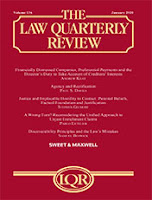
Kelvin Kwok on Land-related Restrictive Covenants in Restraint of Trade (Law Quarterly Review)

"Land-related Restrictive Covenants in Restraint of Trade"
Kelvin Kwok
Law Quarterly Review
2021, Vol 134, p 193
Abstract: Does a land-related restrictive covenant fall within the restraint of trade (RoT) doctrine such that the restrictions under the covenant must be justified as reasonable? This important question, which impacts upon a wide variety of land-related transactions, had long been answered according to the “pre-existing freedom” test prescribed by Lord Reid in the English House of Lords decision in Esso Petroleum Co Ltd v Harper’s Garage (Stourport) Ltd (1968). The question regarding the applicability of the RoT doctrine to land-related restrictive covenants came before the English Supreme Court most recently in Peninsula Securities Ltd v Dunnes Stores (Bangor) Ltd (2020). The Supreme Court took the monumental step of abolishing the long-established “pre-existing freedom” test, and preferred an alternative approach based on Lord Wilberforce’s “trading society” test in Esso.  The purpose of this article is to critically examine the conflicting approaches under the "pre-existing freedom" and "trading society" tests. The article argues that neither of these tests constitutes the proper approach to the assessment of land-related restrictive covenants under the RoT doctrine. The test of applicability should instead consist of the simple question of whether the covenant restricts a person’s liberty to trade, a broad approach advocated by J.D. Heydon many years ago. This all-encompassing approach would represent a major policy improvement in the common law, albeit purchased at the expense of legal certainty.

Friday, September 24, 2021

Shahla Ali on Transnational Commercial Law in the OUP Handbook of Transnational Law (new book chapter)

"Transnational Commercial Law"
Shahla Ali in Peer Zumbansen (ed)
Oxford University Press
21 September 2021
Abstract: Alongside a growing recognition that the traditional territorialist theory is limited in its ability to deal with intensifying cross-border dealings, a pluralistic converging of a multiplicity of legal orders (including domestic) to ensure the efficacy of cross-border commercial law is emerging. The future development of a transnational legal order will reflect the intensifying interactions between diverse norms, laws, actors and institutions – mirroring not necessarily the end of the nation state - but requiring a wider loyalty beyond nation state. To understand these dynamics, this chapter will explore developments in the field of transnational arbitration by examining the evolution of relevant substantive commercial laws and procedure, key forces including global soft law-making bodies, relevant actors including the nation state, arbitrators, parties and institutions, and relevant norms and governance processes influencing the continued evolution of transnational arbitration...  Click here to read a manuscript version of the book chapter.

Giuliano Castellano & Andrea Tosato on Commercial Law Intersections (Hasting Law Journal)

"Commercial Law Intersections"
Giuliano Castellano & Andrea Tosato
Hasting Law Journal, 
Vol. 72, Issue (19 April 2021)
Abstract: Commercial law is not a single, monolithic entity. It has grown into a dense thicket of subject-specific branches that govern a broad range of transactions and corporate actions. When one of these events falls concurrently within the purview of two or more of these commercial law branches – such as corporate law, intellectual property law, secured transactions law, conduct and prudential regulation – an overlap materializes. We refer to this legal phenomenon as a commercial law intersection (CLI). Some notable examples of transactions that feature CLIs include bank loans secured by shares, supply chain financing, patent cross-licensing, and blockchain-based initial coin offerings. 
     CLIs present a complex and multi-faceted challenge. The convergence of commercial law branches is frequently beset with failures in coordination that both distort incentives for market participants and increase transaction costs. Crucially, in the most severe cases, this affliction deters business actors from entering into the affected transactions altogether. The cries of scholars, judges, and practitioners lamenting these issues have grown ever louder yet methodical, comprehensive solutions remain elusive.  
     This article endeavors to fill this void. First, it provides a comprehensive analysis of CLIs and their coordination failures. Drawing from systems theory and jurisprudence, it then identifies the deficiencies of the most common approaches used to reconcile tensions between commercial law branches, before advancing the concepts of “coherence” and “unity of purpose” as the key to addressing such shortcomings. Finally, it formulates a two-step interpretive method that unties the Gordian knot created by CLI coordination failures.  Click here to read the full article. The article has been cited in the following policy documents: Cape Town Convention Academic Project, 
Guide on Best Practices For Electronic Collateral Registries (Cambridge, UK and Rome, Italy 2021); International Finance Corporation, Coordinating Prudential Regulation and Secured Transactions Frameworks: A Primer(Washington D.C., 2020); World Bank, Distributed Ledger Technology and Secured Transactions: Guidance Note 3 (Washington D.C., 2020).

Monday, June 1, 2020

Castellano & Tosato on Personal Property Security Law: International Ambitions and Local Realities (new book chapter)

"Personal Property Security Law: International Ambitions and Local Realities"
Giuliano Castellano & Andrea Tosato
in L Ghia (ed), International Business Law (Wolters Kluwer Int'l, 2019) 283-337
Published in December 2019, U of Penn, Inst for Law & Econ Research Paper No. 20-27
Abstract: Personal property security law is a key element of “access to credit” and “financial inclusion”. The prevailing view is that a legal framework enabling the effective use of personal property as collateral markedly benefits both lenders and borrowers. Lenders can offer financing at a lower cost thanks to reduced credit risk; borrowers can access funding by leveraging the otherwise unavailable value of the assets integral to their operations.
     Over the past century, the priorities of personal property security law have evolved fundamentally. As small and medium-sized enterprises (SMEs) and individual entrepreneurs have become the growth engine of both developed and developing economies, legislators have grown sensitive to the financing needs of these entities. In parallel, the advent of the information society has demanded that lawmakers address squarely the rules governing the use as collateral of intangibles such as “receivables”, “intermediated securities”, “non-intermediated securities”, and “intellectual property rights”, rather than confine their gaze to tangibles such as industrial machinery, mobile equipment and inventory. Concurrently, the increasingly transnational nature of both economic development policies and commercial activity have engendered the need for global principles and standards for asset-based lending.
     To address these novel priorities and promote a healthy and vibrant credit ecosystem, international and regional organizations have undertaken projects aimed at modernizing and harmonizing personal property security law. Over time, these efforts have yielded a panoply of legal instruments. Binding conventions have been adopted to unify the rules of discrete facets of personal property security law, while soft-law texts, such as model laws and legislative guides, have been formulated to supply comprehensive legal templates to lawmakers keen to revise their domestic legal regimes. Nevertheless, states have struggled to assimilate these international efforts into their domestic legal systems. Common law jurisdictions have been loath to abandon the familiarity and safety of the path paved by centuries of case law; in similar vein, civil law jurisdictions have resisted inducements to renovate the normative infrastructure erected by the codifications of the 19th century.
     This Chapter explores the tension between international ambitions and local realities, with a special focus on the issues encountered in civil law jurisdictions. To this end, the case of Italy is examined as a living experiment in comparative personal property security law. In this jurisdiction, the recent enactment of a non-possessory security device, absent a comprehensive reform of the country’s civil code affords important lessons for any civil law system which might be pondering personal property security law reforms. More profoundly, it epitomizes the gap that separates the aspirations of international legal instruments from their effective implementation in domestic contexts. This analysis is divided into two parts. The first reviews international and regional legal initiatives that have shaped the personal property law landscape and then identifies a set of core tenets shared among them. In the second part, attention shifts to Italy, scrutinizing both the personal property security legal edifice originally constructed in this jurisdiction and the attempts to overhaul it that have taken place over the past three decades. This is followed by a critical appraisal of the current state of the law, by reference to the aforementioned core tenets of personal property law reform.

Friday, May 15, 2020

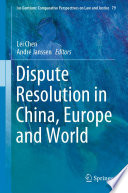
Gu Weixia on the Key Ingredients for Successful Reform of International Commercial Arbitration in the Asia (new book chapter)

"Reflections on the Key Ingredients for Successful Reform of International Commercial Arbitration in the Asia"
Gu Weixia
in Lei Chen & André Janssen (eds), Dispute Resolution in China, Europe and World (Springer 2020), pp.131-152
Abstract: Many states have recognized the economic importance of being 'arbitration-friendly', and many have naturally advertised themselves as such. Beyond the catch phrase lie these questions: What arbitration regimes are sufficiently 'arbitration-friendly'? Looking into the past, is there a standard pathway of arbitration reform in the Asia Pacific? Or are there divergent modes of development? To what degree have political, legal, social, cultural and other factors influenced a jurisdiction's ability to replicate successful reform patterns? This chapter looks into the development of arbitration regimes across the Asia Pacific, and aims to reflect on key ingredients for successful arbitration reform in the East. Among the Asia Pacific jurisdictions, some have reached greater success and have attracted many more commercial disputes within and outside the region. Others have been less successful, even with efforts to substantially reform the arbitration laws and institutions. To examine arbitration reforms and outcomes of Asia Pacific jurisdictions, this chapter relies on a hypothetical model of arbitration reform. This model is then tested again the reform pathways undertaken by 12 Asia Pacific jurisdictions for accuracy as a 'formula' for arbitration reform in the region.

Wednesday, April 29, 2020

New Book: UNCITRAL Model Law on International Commercial Arbitration - A Commentary (Shahla Ali et al)

February 2020, 1014 pp.
DOI: https://doi.org/10.1017/9781108633376
Description: This book provides a comprehensive commentary on the UNCITRAL Model Law on International Arbitration. Combining both theory and practice, it is written by leading academics and practitioners from Europe, Asia and the Americas to ensure the book has a balanced international coverage. The book not only provides an article-by-article critical analysis, but also incorporates information on the reality of legal practice in UNCITRAL jurisdictions, ensuring it is more than a recitation of case law and variations in legal text. This is not a handbook for practitioners needing a supportive citation, but rather a guide for practitioners, legislators and academics to the reasons the Model Law was structured as it was, and the reasons variations have been adopted.

Sunday, January 27, 2019

HKU Law Welcomes New Lecturer in Commercial Law

Welcome to Ms Stephanie Wong, who recently joined the Department of Law as a full-time Lecturer in Commercial Law (JD and LLB).  Stephanie is a graduate of our double degree programme in Business and Law.  She went on to obtain her LLM from University of Cambridge and joined Des Voeux Chambers as a barrister in 2016.  Her practice covers general civil, commercial, intellectual property, competition, chancery, public law, and arbitration. She is also currently a member of two Practice Area Committees of the Hong Kong Bar Association, namely the Committee on Intellectual Property Law and the Committee on Competition Law.   She was Editor of the UK Supreme Court Issue 2014-2015 of the Cambridge Journal of International and Comparative Law.  She has published work in the Journal of Intellectual Property Law & Practice and King's Law Journal.

Tuesday, November 21, 2017

New Book by Anselmo Reyes: The Practice of International Commercial Arbitration (Routledge)

Anselmo Reyes
October 2017, 211 pp.
Description: Focusing on practical principles or guidelines for arbitrators, this book covers everything a prospective international commercial arbitrator should know about conducting an arbitration in Hong Kong. Specifically geared to those interested in or starting work as an international commercial arbitrator in Hong Kong, the book takes readers step-by-step through the problems that are likely to arise in the conduct of a commercial arbitration and in the development of their careers as international commercial arbitrators.

Friday, May 27, 2016

Singapore International Commercial Court Issues First Judgment (ALB)

"SICC issues its first judgment on $800 mln dispute"
Ashima Ohri
Asian Legal Business
25 May 2016
The Singapore International Commercial Court (SICC) has issued its first written judgment on an $800 million dispute concerning parties from Indonesia and Australia, involving various claims related to the breaches of a joint venture agreement. 
     The three-judge panel comprising of presiding judge Quentin Loh from Singapore, and international judges Sir Vivian Ramsey from the UK and Anselmo Reyes from Hong Kong, ruled in the favour of the defendants, PT Bayan Resources and Bayan International. The full judgment can be found here... Click here to read the full article.

Wednesday, November 25, 2015

Singapore International Commercial Court's First Case

Professor of Legal Practice, Justice Anselmo Reyes, is hearing the first case in the Singapore International Commercial Court along with international judge Vivian Ramsey from England and Justice Quentin Loh, presiding. The Straits Times reports that in this case "BCBC Singapore, a wholly owned subsidiary of Australian company Binderless Coal Briquetting Company, is seeking damages from Indonesian company Bayan Resources TBK", arising from "alleged breaches of a joint-venture pact for the application of a patented technology to produce and sell upgraded coal from East Kalimantan in Indonesian Borneo".  Click here to read the full news report from the Straits Times.

Sunday, August 30, 2015

Anna Koo on International Commercial Mediation in China

"Mediation in China: Towards a Modernised and Harmonised Framework for International Commercial Mediation"
(2015) 19 Vindobona Journal of International Commercial Law and Arbitration 55-78
Abstract: As China’s international trade in goods led the world in 2013 and ranked number two if trade in services was included, its economic activeness provides a fertile ground for cross-border commercial mediation. A comparative analysis of the mainland’s, Hong Kong’s and Macao’s dominant mediation rules in their respective legal context will suggest that intraregional cooperation could strengthen China’s position as an attractive forum to foreign parties for international commercial mediation than maintaining the status quo. This article first describes the rules and laws applicable to international commercial mediation in mainland China and its two special administrative regions. It then explains the extent to which such rules and laws address pressing procedural problems differently or whether they generate largely similar results under different labels. It concludes by arguing that regional resemblances and disparities prompt modernisation and harmonisation in light of the unformulated policies of keeping the parties’ freedom of action intact and maintaining the need for flexibility, and that the Conciliation Rules, the Model Law, recent deliberations of the UNCITRAL Working Group on Arbitration and Conciliation, and up-to-date mediation rules of global mediation service providers could provide helpful resources for improvements.  Contact the author for a copy.

Saturday, March 14, 2015

Ji Lian Yap on Commercial and Company Law Reform

"Considering Commercial and Company Law Reform"
Ji Lian Yap
Statute Law Review
March 2015 (Advance Access)
Abstract: This article considers the factors that contribute to effective commercial and company law reform. First, the factors contributing to the success of the recent company law reforms in Hong Kong will be considered. Next, suggestions will be made as to how future law reform processes may be improved. These will be a focus on personal property security law, which involves aspects of both commercial and company law. Suggestions include the importance of considering insolvency implications, the formation of a Personal Property Security Law Working Group in Hong Kong, and the need to allow sufficient time for the law reform process.

Tuesday, September 9, 2014

THE HOCHELAGA LECTURES 2014

Speaker: Professor Bruno Zeller
Professor of Transnational Commercial Law
University of Western Australia

Lecture I: Tuesday, 7 October 2014
Lecture II: Wednesday, 8 October 2014
Seminar: Thursday, 9 October 2014

The lectures and seminar will all run from 6:00 pm to 7:00 pm at the Academic Conference Room, 11th Floor, Cheng Yu Tung Tower. There will be refreshments after Lecture I.

About the lectures: Professor Zeller will explore the extent to which “good faith” is a settled national and international concept that is capable of definition. He will first outline the sources of “good faith” in national and international law. He will then examine how the term “good faith” is used in contract law as reflected in domestic instruments and the judgments of US, UK, German, and Australian courts, as well as in international instruments such as the United Nations Convention on Contracts
for the International Sale of Goods (CISG) and the UNIDROIT Principles of International Commercial Contracts. Through such analysis, Professor Zeller will assess whether diversity in the use of the term “good faith” has made the concept so amorphous that it has lost all practical utility for the purposes of contract law.

About the speaker: In addition to teaching at the University of Western Australia, Professor Zeller is Adjunct Professor at Murdoch University in Perth; Visiting Professor at the Institut für Anwaltsrecht of the Humboldt University in Berlin; and Visiting Professor at the Stetson Law School in Florida. His areas of expertise are international trade law, international arbitration, conflict of laws, and maritime law. He has published widely on CISG, arbitration law, the harmonisation of contract law, and carbon trading.

About the Hochelaga Lectures: The Hochelaga Lectures commemorate the life and interests of the anonymous donor’s father. Previous Hochelaga Lecturers have included Chief Justice Beverley McLachlin PC CStJ; Professor Gareth Jones QC; Professor Andrew Burrows QC; Professor Lawrence Lessig; Professor Martha Nussbaum; Professor K. Anthony Appiah; Professor Raul Pangalangan; Professor Madhavi Sunder; Professor Mindy Chen-Wishart; and the Hon. Mr. Justice Peter Roth of the English High Court.

The Hochelaga Lectures 2014 (including the seminar) are open to all. Those interested in attending are requested to register in advance with Ms Lydia Bute (LBUTE@HKU.HK).