Showing posts with label Po Jen Yap. Show all posts

Wednesday, December 4, 2024

Po Jen Yap on Dialogic Judicial Review and First World Autocracies (new book chapter)

"Dialogic Judicial Review and First World Autocracies"
Po Jen Yap
in Madhav Khosla (ed),Vicki C Jackson (ed),Redefining Comparative Constitutional Law: Essays for Mark Tushnet (Oxford University Press),Chapter 19,pp.274 - 292
Published online: November 2024

Abstract: Dialogic or weak-form review is the only viable and effective path for courts operating in First World autocracies. The judicial use of strong-form review to address problems posed by sedition laws and restrictions on the franchise—as Mark Tushnet suggests—would be counterproductive as this would only be to the detriment of the courts. At the same time, I argue that dialogic review is not judicial abdication. I will also show how weak-form review has enhanced rights protection in Singapore and Hong Kong, and has imposed soft but meaningful controls on state power in these autocracies. Precisely because these autocracies want to remain First World, the perceived independence of the courts must be preserved for their governments to retain talent and continued investments in the economy. Governments in First World autocracies are sensitive to global businesses’ perception of the regime’s commitment to the rule of law as that directly impacts the entity’s economic future. This is unlike military dictatorships and banana republics, where the rent-seeking behavior of autocrats is driven primarily by the self-interest of its cabal. Therefore, in First World autocracies, so long as the courts respect the regime’s plenary agenda-setting powers, the government will in turn acquiesce to the judiciary’s calibrated show of force to preserve rights.

Thursday, March 14, 2024

New Book edited by Po Jen Yap and Mathias Siems: The Cambridge Handbook of Comparative Law (Cambridge University Press)

The Cambridge Handbook of Comparative Law
Edited by Mathias Siems, Po Jen Yap
Cambridge University Press
Published in February 2024
780 pp.

Book Description: Comparative law is a common subject-matter of research and teaching in many universities around the world, and the twenty-first century has aptly been termed 'the era of comparative law'. This Cambridge Handbook of Comparative Law presents a truly global perspective of comparative law today. The contributors are drawn from all parts of the world to provide different perspectives on how we understand the 'law' and how it operates in practice. In substance, the Handbook contains 36 chapters covering a broad range of topics, divided under the following headings: 'Methods of Comparative Law' (Part I), 'Legal Families and Geographical Comparisons' (Part II), 'Central Themes in Comparative Law' (Part III); and 'Comparative Law beyond the State' (Part IV).

Abstract of book review by Fernanda Pirie on 16 November 2024:
The Cambridge Handbook of Comparative Law, edited by Matthias Siems and Po Jen Yap, continues recent calls to expand the field of comparative law. By including authors drawn from all parts of the world, it presents ‘new perspectives’ on the field. This wide geographic remit proves successful as a way of moving beyond traditional ‘families’ and doctrinal topics. The contributors raise new themes for comparison, many related to public law and processes of change. But this, in turn, raises questions about the purposes of expanding the field. The volume largely concerns the laws and legal issues of modern states, and the authors do not venture far into history. Nor do they consider the alternatives offered by religious and traditional legal systems or forms of non-state ordering. I suggest that these subjects could productively expand the field even further, raising more theoretical questions about what law is and does.

(Please click here to view the full text of book review.)

Monday, September 18, 2023

New Book by Albert Chen and Po Jen Yap: The Constitutional System of the Hong Kong SAR: A Contextual Analysis (Hart Publishing)

Published on 17 August 2023
264 pp.

Description: This book provides an account of the evolving constitutional arrangement known as “One Country, Two Systems”, as practised in the Hong Kong Special Administrative Region of the People's Republic of China (PRC).
The British colony of Hong Kong, one of the “Four Little Dragons” of East Asia, reverted to Chinese rule in 1997. Since then, Hong Kong has continued to be an international financial centre, a free market, and a cosmopolitan city. At the same time, the tensions and contradictions inherent in “One Country, Two Systems” have given rise to constitutional controversies and social movements, culminating in the Umbrella movement of 2014, the anti-extradition law movement of 2019, the enactment of a National Security Law in 2020, and the electoral overhaul of 2021. This book discusses the structure and operations of Hong Kong's legal, judicial and political systems and their interactions with the national authorities of the PRC.
     The book provides a useful case study in comparative constitutional law, especially on autonomy and devolution issues within sovereign States. This comparative study is particularly interesting because Hong Kong is a common law jurisdiction within the PRC's socialist legal system. It will therefore be of interest to students and scholars of Chinese law, Hong Kong law and comparative politics, as well as lawyers whose practice involves Hong Kong.

New book review available in 2024 (Click here for details)
New book review available in 2025 (Click here for details)

Monday, June 19, 2023

New Book Edited by Po Jen Yap & Rehan Abeyratne : Routledge Handbook of Asian Parliaments (Routledge)

Routledge Handbook of Asian Parliaments
Edited By
Po Jen Yap & Rehan Abeyratne
Published in March 2023
408 pp.
Book Description: This Handbook showcases the rich varieties of legislatures that exist in Asia and explains how political power is constituted in seventeen jurisdictions in East, Southeast and South Asia.
     Legislatures in Asia come in all stripes. Liberal democracies co-exist cheek by jowl with autocracies; semi-democratic and competitive authoritarian systems abound. While all legislatures exist to make law and confer legitimacy on the political leadership, how representative they are of the people they govern differs dramatically across the continent, such that it is impossible to identify a common Asian prototype. Divided into thematic and country-by-country sections, this handbook is a one-stop reference that surveys the range of political systems operating in Asia. Each jurisdiction chapter examines the structure and composition of its legislature, the powers of the legislature, the legislative process, thereby providing a clear picture of how each legislature operates both in theory and in practice. The book also thematically analyses the following political systems operating in Asia: communist regimes, liberal democracies, dominant party democracies, turbulent democracies, presidential democracies, military regimes, and protean authoritarian rule.
     This handbook is a vital and comprehensive resource for scholars of constitutional law and politics in Asia.

Monday, February 27, 2023

Po Jen Yap on Judging Hong Kong's National Security Law (new book chapter)

"Judging Hong Kong's National Security Law"
Po Jen Yap
in The National Security Law of Hong Kong: Restoration and Transformation,
Edited by Hualing Fu Michael Hor (Hong Kong University Press, July 2022),
Chapter 7, pp. 149-166
Introduction: An hour before the twenty-third anniversary of the Hong Kong Special Administrative Region's (HKSAR) establishment, the Standing Committee of the National People's Congress (NPCSC) bequeathed a new National Security Law (NSL) to Hong Kong.  Presented as a "birthday gift", this offering was prepared behind closed doors - the details were not subject to any public consultation and the law as only unveiled before the awaiting population after it took effect.  Surprise!
     Secession, which includes independence advocacy, subversion of state power, which includes the use of unlawful means to seriously undermine the operations of "the body of central power of the People's Republic of China or the body of power of [the HKSAR]", and collusion with foreign governments, which includes the receipt of any funding or support from a foreign country to provoke by unlawful means hatred among Hong Kong residents towards the Central or Hong Kong Government are all national security penal offences now.  Terrorism has also been defined to include the sabotage of vehicular transport and traffic facilities for political ends.  For all four crimes, offenders face sentences of up to life imprisonment for grave violations.  Even non-Hong Kong residents based outside the jurisdiction are liable for prosecution if they commit any of these penal offences against Hong Kong.  A national security agency established by Beijing to gather intelligence can now operate legally in Hong Kong but must abide by local laws, though these mainland officials are not subject to local jurisdiction for acts performed in the course of duty.  The enforcement and prosecution decisions made under this NSL are entrusted to local officials and Hong Kong courts are also empowered to adjudicate the vast majority of cases brought under this law.  Most local criminal law procedures and human rights safeguards continue to apply.  But jury trial in individual cases can be replaced with a panel of three judges, and where state secrets are involved, all or part of the trial can be closed to the public, though the verdict must still be announced in open court.  In those rare serious cases where foreign governments are involved or the Hong Kong government is unable to enforce the law effectively, the Chinese procuratorate and courts are legally empowered to take over from local counterparts.  The law opens up the chilling possibility that for these exceptional cases, the offenders, if in Hong Kong, can be extradited to the Mainland to face trial.  Finally, the power of interpreting this national security law lies with the NPCSC, which expressly allows mainland officials to overrule the Hong Kong judiciary's interpretation of this NSL.
     As to be expected, responses to this NSL have been sharply divided.  Western media has largely portrayed the NSL as the "final nail in Hong Kong's coffin" and mourned the city's death.  On the other hand, Beijing loyalists fete the law as a "new social contract" that restores stability and recovers Hong Kong's "original aspiration of 'One Country, Two Systems."'
     In this chapter, I do not intend to engage with the histrionics or propaganda.  Neither do I seek to navel-gaze and portend the long-term impact - salubrious or deleterious - that the NSL would have on Hong Kong's economic and civic life.  My aim is more modest: I shall examine whether the NSL is constitutional and explore the options Hong Kong judges have in assessing its legality and interpreting its operative scope.
     In essence, my arguments are as follows.  First, it is defensible - as Albert Chen has argued - that the HKSAR's constitutional duty to enact national security laws "on its own" is subject to an implied requirement that this duty be fulfilled within a reasonable time, or the Central Government may intervene and legislate on the HKSAR's behalf.  But to be consistent, Beijing should also act unilaterally on another mothballed provision - Article 68 of the Basic Law (BL) - which guarantees the election of all members of the Legislative Council by universal suffrage.  Second, the insertion of the NSL into Annex III BL is problematic as the BL only authorises the inclusion of 全國性法律   - People's Republic of China (PRC) laws that have nation wide applications or effects.  Notably, the NSL only applies to Hong Kong and not to the Mainland.  Nevertheless, it will be a fool's errand for the Hong Kong courts to reject the NSL wholesale, or invalidate it in part, as Beijing can legally overrule the courts and oust those judges from future national security disputes.  Instead, Hong Kong judges should engage in a remedial interpretation of the NSL, such that the law's operative scope is read down and additional safeguards are judicially inserted into the legislation.  

Monday, October 31, 2022

Rehan Abeyratne & Po Jen Yap on Constitutional Dismemberments, Basic Structure Doctrine, and Pragmatic Justifications in Context (Int'l J Const L)

Published on 6 October 2022
Introduction: Our article “Judicial Self-Dealing and Unconstitutional Constitutional Amendments in South Asia” focused on the Bangladesh Supreme Court’s Appellate Division (AD) judgment in Bangladesh v. Asaduzzaman Siddiqui, which struck down the Sixteenth Amendment to the Constitution of Bangladesh (1972). The Sixteenth Amendment restored an original constitutional provision but was nonetheless held unconstitutional for violating the Constitution’s basic structure. We argued that Siddiqui, though facially problematic, could be defended on both theoretical and pragmatic grounds. First, we argued that the Fifteenth Amendment to the Constitution could be characterized as a “constitutional dismemberment” that created a new constitutional settlement from which the Sixteenth Amendment had unconstitutionally deviated. Second, we noted that the Sixteenth Amendment raised the specter of undue political interference in judicial removals by transferring the removal power from a judge-led Supreme Judicial Council to Parliament. Given Bangladesh’s checkered history of partisan executive interference with the judiciary, we also contended that the AD was justified in striking down the amendment on pragmatic grounds...

Tuesday, January 18, 2022

CCPL Newsletter Spring 2022

CCPL Newsletter Spring 2022

Greetings from the Centre for Comparative and Public Law (CCPL) at The University of Hong Kong!

This past fall has been an enriching and productive season for us at CCPL.

In this Newsletter, we are pleased to share with you highlights from the events we held last semester as well as information on upcoming events for Spring 2022.

We look forward to seeing you soon at our events – in person or on zoom!

With best wishes,
Prof Po Jen Yap

Professor of Law
Director, Centre for Comparative and Public Law
Faculty of Law
The University of Hong Kong

Thursday, December 9, 2021

New Book by Po Jen Yap & Chien-Chih Lin: Constitutional Convergence in East Asia (CUP)

Po Jen Yap and Chien-Chih Lin
Published: December 2021
Description: This comparative study of the constitutional jurisprudence of three East Asian jurisdictions investigates how the rulings of the Constitutional Court of Taiwan, the Constitutional Court of Korea and the Hong Kong Court of Final Appeal have converged. The unique political contexts of all three jurisdictions have led to strong courts using the structured proportionality doctrine and innovative constitutional remedies to address human rights issues. Hong Kong, Taiwan, and South Korea have the only courts in Asia that regularly use a structured four-stage Proportionality Analysis to invalidate laws, and routinely apply innovative constitutional remedies such as Suspension Orders and Remedial Interpretation to rectify constitutionally flawed legislation. This volume explores how judges in these areas are affected by politics within their different constitutional systems. The latest developments in Asian constitutional law are covered, with detailed analysis of key cases.
  • Explains why and how the apex courts in Hong Kong, Taiwan and South Korea have converged on constitutional law
  • Enhances understanding of how politics shape judicial behaviour
  • Identifies and analyses the key constitutional case-law in Hong Kong, Taiwan and South Korea

Tuesday, July 6, 2021

Po Jen Yap & Rehan Abeyratne on Judicial Self-Dealing and Unconstitutional Constitutional Amendments in South Asia (Int'l J Const Law)

Published in January 2021
Abstract: Courts around the world today are empowered to strike down unconstitutional constitutional amendments. But can a court strike down amendments that restore parts of the original constitution? The Appellate Division of the Bangladesh Supreme Court did precisely this in Bangladesh v. Asaduzzaman Siddiqui (2017), holding unconstitutional an amendment that restored the judicial removal provision that existed in the original 1972 Constitution. This article analyzes Siddiqui within the comparative constitutional amendment literature and the broader South Asian context. Despite the apparent incongruity of applying the basic structure doctrine to an original constitutional provision, we argue that Siddiqui is defensible on both theoretical and pragmatic grounds. The amendment that was invalidated in this case represented an unconstitutional departure from the judicial removal practice that had existed for several decades and was entrenched by a previous amendment, which “dismembered” the original constitution and safeguarded constitutional democracy in Bangladesh. At a regional level, Siddiqui is similar to recent judgments in India and Pakistan in which apex courts assert their control and limit political influence in judicial appointment and removal proceedings. Such judicial self-dealing, we argue, is more justified in Bangladesh and Pakistan than in India due to their checkered histories with democracy and political interference with judicial functions.

Sunday, December 27, 2020

New Book: The Oxford Handbook of Comparative Administrative Law (co-edited by Eric Ip)

The Oxford Handbook of Comparative Administrative Law
Edited by Peter Cane, Herwig C H Hofmann, Eric C Ip, and Peter L Lindseth
Oxford University Press
Published in December 2020
1,168 pp.
Abstract: The comparative study of administrative law has a long history dating back more than 200 years. It has enjoyed a renaissance in the past 15 years or so and now sits alongside fields such as comparative constitutional law and global administrative law as a well-established area of scholarly research. This book is the first to provide a broad and systematic view of the subject both in terms of the topics covered and the legal traditions surveyed. In its various parts it surveys the historical beginnings of comparative administrative law scholarship, discusses important methodological issues, examines the relationship between administrative law and regime type, analyses basic concepts such as 'administrative power' and 'accountability', and deals with the creation, functions, and control of administrative power, and values of administration. The final part looks to the future of this young sub-discipline.
     In this volume, distinguished experts and leaders in the field discuss a wide range of issues in administrative law from a comparative perspective. Administrative law is concerned with the conferral, nature, exercise, and legal control of administrative (or 'executive') governmental power. It has close links with other areas of 'public law', notably constitutional law and international law. It is of great interest and importance not only to lawyers but also to students of politics, government, and public policy. Studying public law comparatively helps to identify both similarities and differences between the way government power and its control is managed in different countries and legal traditions.
    HKU Law colleagues contributed to three chapters of this important work co-edited by Eric Ip: Ch 4 "A Chinese Tradition" by Albert Chen, Ch 14 "Parliamentary Regimes" by Eric Ip, and Ch 17 "Authoritarian Regimes" by Po Jen Yap.

Thursday, October 29, 2020

New Issue of Hong Kong Law Journal (Vol. 50 - Celebrating 50 Years of Legal Scholarship, Part 2 of 2020)

Vol. 50, Part 2 of 2020


Editor-in-Chief: Professor Rick Glofcheski
Associate Editor: Professor Albert Chen
Publisher: Sweet & Maxwell


TABLE OF CONTENTS

Analysis
Under art 29(4) of Hong Kong's National Security Law, a person or company who "receives instructions" from a foreign country to commit the act of "imposing sanctions" against the Hong Kong Special Administrative Region (HKSAR) or the People's Republic of China (PRC) commits a criminal offence. If, as required by the law of a foreign country X, a financial institution in Hong Kong, performs an act in the course of its business for the purpose of implementing a sanction imposed by country X against the HKSAR or PRC, does that financial institution violate art 29(4)? In this article, we argue the financial institution does not. The scope of art 29(4) must be interpreted contextually. It covers the performance of an act of imposing a sanction or blockade or of engaging in other hostile activities. Such an act is only capable of being performed by a state, an individual acting on behalf of a state or an international organisation. A financial institution, giving effect to sanctions against the HKSAR or the PRC, cannot be regarded as 'receiving instructions' to 'impose sanctions', which have already been imposed by a foreign state. It cannot be guilty of a criminal offence under art 29(4) merely by participating in the implementation of the sanctions concerned to comply with a foreign law applicable to it.

Focus: 2019 Hong Kong Protests: Political Origins and Legal Ramifications
Po Jen Yap ... 365
For most of 2019, Hong Kong was rocked by civil unrest. The protests originally arose in opposition to the Hong Kong Government's attempt to pass an extradition law that would allow for Hong Kong residents to be extradited to other regions and countries, including Mainland China, to face trial for alleged offences committed here. Even though the bill was eventually withdrawn, the unrest continued as protestors pressed on for other demands, including universal suffrage. In response to escalating street violence, the Hong Kong Government invoked the Emergency Regulations Ordinance (Cap 241) (ERO) to enact a regulation that bans facial covering in public. And the roiling constitutional crisis culminated with Beijing's imposition of a bespoke National Security Law on Hong Kong in June 2020.

The Unprosecuted Taiwan Homicide, the Unaccepted Extradition Law Amendment Bill and the Underestimated Common Law
PY Lo ... 373
The 2019 Hong Kong Protests arose out of the popular opposition to a Bill that the Hong Kong Special Administrative Region (HKSAR) Government introduced to amend, generally, fugitive offenders and mutual legal assistance legislation. The Government claimed that the Bill was necessary to address "loopholes" identified in the handling of a case of homicide of a Hong Kong-resident woman in Taiwan by her Hong Kong-resident boyfriend who, having committed the homicide, returned to Hong Kong and was prosecuted only for money laundering. This article addresses two sets of legal issues concerning the Bill. First, it asserts that contrary to the Government's contention, the HKSAR courts do have jurisdiction to try the suspect in the Taiwan homicide case for the common law offence of homicide here. Next, the provisions of the Bill are examined to explain not only its principal flaws but also the implications from those flaws that fuelled the opposition against the Bill. In conclusion, some suggestions are made on judicial cooperation between Hong Kong and the "One Country" in criminal matters based on Hong Kong's flexible and resilient common law legal and judicial systems.

Political Crowdfunding of Rights
Julius Yam ... 395
This article takes a first look at political crowdfunding in Hong Kong. Crowdfunding has not only changed the ways businesses raise capital but also have great implications for law and politics. This article explores how crowdfunding was used by protestors during the 2019 anti-extradition bill movement to facilitate political expressions and litigations related to the events at the time. It describes the political crowdfunding scene in Hong Kong, highlights the dependency of rights on financial conditions and the potential of this financing technology to enhance the realisation of the rights to freedom of expression and access to justice in Hong Kong. More generally, the article prompts reflection about the relationship between law, politics and money, especially in non-democratic regimes.

"Who but the Governor in Executive Council is the Judge?" — Historical Use of the Emergency Regulations Ordinance
Michael Ng, Shengyue Zhang and Max Wong ... 425
Drawing upon archival documents and previous scholarly works, this article investigates the invocation of Emergency Regulations Ordinance (Cap 241) (ERO) in colonial Hong Kong against the broader historical context connecting China, Britain and Hong Kong during the interwar and Cold War periods to make three main arguments. First, it argues that in comparison with similar statutes in other British colonies, the ERO was much easier for the Hong Kong Government to invoke to the extent that it was extremely difficult, if not impossible, for any challenge of its constitutionality to succeed. Second, China factors, be they factors related to China under Nationalist or Communist Party rule, were crucial in almost every occasion on which the ERO was used throughout Hong Kong's colonial history. Finally, partly because of the nearly unchecked freedom that the colonial government enjoyed, it used the ERO not only to deal with grave political instability or legitimacy crises but also to tackle the inconveniences of domestic governance, thereby effectively "ruling by decree". Accordingly, the number of times the ERO was invoked exceeds the figure we would expect if its use had arisen only on "occasion of emergency".

A "Guardian" Controversy over Hong Kong's Basic Law?
Ryan Mitchell ... 463
The High Court's November 2019 overturning of the mask ban turned in part on finding that the Emergency Regulations Ordinance (Cap 241) improperly arrogated "general legislative authority" to the Chief Executive. In doing so, it raised questions that might be usefully compared with those of Weimar Germany's so-called Guardian controversy involving the legal theorists Carl Schmitt, Hans Kelsen and Hermann Heller. That dispute concerned both the scope of emergency powers and the final locus of constitutional review authority. In the mask ban case, only the former issue has been directly raised. However, any future interpretation issued by the Standing Committee of the National People's Congress (NPCSC) would indeed risk broader implications for the principle of separation of powers. The NPCSC's taking action to empower a greater legislative role for the Chief Executive would likely be criticised by each of these three leading late Weimar legal scholars, though for very different reasons.

Article 18(4) of the Basic Law creates a dual emergency power: the internal emergency power of the Hong Kong Special Administrative Region (HKSAR) and the external emergency power of the Standing Committee of the National People's Congress. The external and internal emergencies represent two paradigms of emergency regime: the former is based on the state of exception, in which a state manages a crisis, largely independent of legal rules and without constitutional and legal accountability, and the latter is based on the concept of the rule of law, according to which the emergency power is subject to significant legal constraints. The internal and external emergencies in Hong Kong represent the opposite ends of the spectrum of emergency law between the liberal Hong Kong and the statist, authoritarian Chinese state. However, the minimum requirements of the International Covenant on Civil and Political Rights, as provided in the Basic Law, should be and can be observed in both internal and external emergencies. To maximise the protection of rights and freedoms while addressing security concerns, it is necessary for the HKSAR to internalise emergency measures.

Deference as Proper Judicial Attitude — with Special Reference to Anti-Mask Law Judgments 
Guobin Zhu and Xiaoshan Zhang ... 517
The anti-mask law case mainly deals with the constitutionality and legality of the Emergency Regulations Ordinance (Cap 241) (ERO) and the Prohibition on Face Covering Regulation (Cap 241K) (PFCR). The ERO allocates power, while the PFCR restricts rights. The Court of First Instance (CFI) struck down the ERO on the ground of separation of powers and the PFCR on the ground of disproportionality. The Court of Appeal (CA) set aside the CFI's declaration of unconstitutionality with respect to the ERO and parts of the PFCR. The difference between the CFI and CA judgments lies not only in the outcome but also in the degree of deference. This article provides a reflective commentary on the judgments by the CFI and the CA from the perspective of judicial deference. It starts with the proper role of the courts under the separation of powers in Hong Kong. Next, it introduces deference as a sensible judicial attitude and delineates the requirement of deference under Hong Kong's constitutional framework. Then, it applies deference in the analysis of the anti-mask law case and examines the degree of deference shown in the judgments of the CFI and CA. The main idea is that deference is required by the separation of powers doctrine and in the specific context of the case, whereas insufficient deference has led the CFI to a controversial and not amply justified conclusion, which had been later overturned by the CA.

The Necessity of Balancing: Hong Kong's Flawed Approach to Proportionality, and Why It Matters
Alec Stone Sweet...541
Virtually all of the world's most powerful high courts recognise the proportionality principle — as enforced through a distinctive sequence of subtests — to be an overarching criterion of constitutional legality. In Hysan Development Co Ltd v Town Planning Board, the Court of Final Appeal added a fourth and final "balancing phase" to what had been a truncated version of the proportionality framework. This article analyses Hysan and its effects from two perspectives. First, compared to the standard model of proportionality analysis, Hysan places deference to legislative and executive authority at its core, thereby transforming rights doctrine into a form of reasonableness review. Indeed, it creates an approach more akin to Wednesbury unreasonableness than proportionality. Second, the foreign case law invoked by the Court of Final Appeal does not actually support the Hysan framework. Unless corrected, judicial fidelity to Hysan will chronically reproduce three pathologies: analytical incompleteness; doctrinal instability; and judicial abdication.

Remedial Discretion and the Prohibition on Face Covering Regulation 
Po Jen Yap and Jiang Zixin ... 569
In this article, we make the following arguments in relation to the Court of First Instance (CFI) and Court of Appeal (CA) decisions on the constitutionality of the Emergency Regulations Ordinance (Cap 241) (ERO) and the Prohibition on Face Covering Regulation (Cap 241K) (PFCR). First, the CFI should have granted a Suspension Order vis-à-vis the ERO so as to allow the police to enforce s 3(1)(a) of the PFCR — a provision the CFI deemed proportionate — until the final resolution of the appeal. Second, the CA's reasons for upholding the constitutionality of the ERO are flawed as the CA has conflated public dangers with public emergencies, and the putative judicial safeguards identified are illusory in nature. Third, the CA in effect applied Remedial Interpretations (RI) to impugned legislation in four instances without expressly declaring the law unconstitutional: (1) RI was applied to the ERO such that the Chief Executive in Council is disempowered from amending or suspending its statutory duty to place all subsidiary legislation before the Legislative Council for vetting and repeal by resolution; (2) RI was applied to the ERO such that regulations made under the ERO cannot derogate from the Hong Kong Bill of Rights Ordinance (Cap 383) unless a public emergency is officially proclaimed, the derogation is strictly required by the exigencies of the situation and non-derogable rights are unaffected; (3) RI was applied to the Public Order Ordinance (Cap 245) such that minor non-compliance with conditions issued by the police would not per se turn a procession into an unauthorised assembly; and (4) RI was applied to s 3(1)(b) of the PFCR such that the facial covering prohibition would not apply to mere passers-by present at the scene of an unauthorised assembly.

Amnesty for Street Protesters 
In the summer of 2019, protesters took to the streets of Hong Kong. After thousands of arrests for protest-related offences, amnesty for street protesters was proposed but not adopted, primarily on the ground that amnesty would undermine the rule of law. Drawing on comparative experiences and theoretical analysis, this article sets out four value-based rationales for protest amnesty — rule of law, democratic responsiveness, virtue and political trust — and considers the relevance of each in the current context of Hong Kong. In doing so, this article focuses on the distinctive and overlooked context of street protest in the literature on amnesties.

Constitutional Controversies in the Aftermath of the Anti-Extradition Movement of 2019
The aftermath of the anti-extradition movement of 2019 saw three great constitutional controversies fuelled by conflicting interpretations of the Basic Law. Collectively, they may be regarded as constituting the greatest shock experienced by the constitutional framework of "One Country, Two Systems" since this political and legal experiment began in 1997. It is the purpose of this article to document and analyse these three constitutional controversies.

50th Anniversary Feature Article
Carole J Petersen ... 633
This article analyses the Law of the People's Republic of China on Safeguarding National Security in Hong Kong (NSL) from the perspective of foreign governments. The NSL empowers security personnel from Mainland China to operate openly in Hong Kong and provides a mechanism through which the Central Government can assert jurisdiction over particular cases. Many nations have responded by suspending their extradition agreements with Hong Kong and by applying new export controls, no longer trusting the "firewall" that previously separated the two legal systems. Foreign governments are also concerned by the broadly defined criminal offences, the extraterritorial reach of the NSL and the expansion in police powers. Although art 4 states that the International Covenant on Civil and Political Rights (ICCPR) will continue to apply, this general statement is undermined by specific clauses that conflict with ICCPR-protected rights. Given that the ultimate power of interpretation rests with the Standing Committee of the National People's Congress, one cannot assume that the Hong Kong judiciary will be able to cure these problems. Foreign governments are therefore justified in concluding that Hong Kong is no longer operating a truly separate legal system from Mainland China.

Articles
The power of the Standing Committee of the National People's Congress (NPCSC) to interpret the Basic Law has been a matter of great controversy in Hong Kong. Given the asymmetrical power relationship between the sovereign and the Special Administrative Region, it is argued that the exercise of sovereign power has to be subject to self-restraint if the common law system is to be preserved. Accepting the sovereign power of the NPCSC to interpret the Basic Law, this article argues that there is no discernible principle of interpretation in the five interpretations made by the NPCSC in the past two decades. The article proposes, in an attempt to reconcile the sovereign power of interpretation and preserve the common law system, some guiding rules for the exercise of this power, so that it can be exercised in a rational and principled manner consistent with the constitutional design of One Country, Two Systems.

The Iron Curtain: Controlling Unreasonable Defamation Immunity Clauses
Neerav Srivastava ... 685
Defamation immunity clauses (DICls) are a new phenomenon. If a guest using Airbnb posts a defamatory review of the host, in theory, the host can sue both the guest and Airbnb. But the guest may have returned to another country and be out of reach. Airbnb, like other commercial platforms, contractually immunise themselves against liability by using DICls. This article argues that there needs to be statutory control of unreasonable DICls. Historically actors involved in defamation would not have been in a contractual relationship. If unchecked, DICls may pose an existentialist threat to defamation law as a protector of reputations.

Non-Invocation of UNCITRAL Model Law Article 16(3) — a Critical Approach
Li Chen and Qianqian Yu ... 719
Article 16(3) of the United Nations Commission on International Trade Model Law on International Commercial Arbitration provides that if a tribunal rules as a preliminary question that it has jurisdiction, a party may seek recourse to the supervisory court to review that ruling within 30 days. The provision, however, is silent on the consequences of failing to challenge a preliminary jurisdictional decision under art 16(3). Some have argued that the provision has a preclusive effect, such that a party failing to seek immediate recourse thereunder will be precluded from revisiting this issue after an award has been rendered; others take a more liberal view as to its effects. This article examines these different approaches towards the interpretation and application of art 16(3) and considers them against the text of art 16(3), its drafting history, doctrinal bases, and policy considerations. It argues against a preclusive view of art 16(3) and posits that a party's non-invocation of art 16(3) can only lead to preclusion based on the general doctrines of waiver and estoppel or other applicable doctrines that may exist within the relevant jurisdiction.

The Guangdong–Hong Kong–Macao Greater Bay Area: Cultural Heritage Laws as a Bridge between Past and Future
Rostam J Neuwirth and Zhijie Chen ... 743
Cultural heritage laws are often primarily understood as being aimed at protecting relics from the past against threats from the passage of time that are manifest in changing social and economic conditions, which may expose those relics to damage, decay or destruction. Recently, however, the focus has been shifting towards the constructive role that cultural heritage laws can play in future. This article aims to give a brief outline of the legal frameworks governing the protection of cultural heritage in Hong Kong, Macao and Guangdong Province of the People's Republic of China. Specifically, the article assesses the potential for cultural heritage protection in the context of the objectives for the development of the Guangdong–Hong Kong–Macao Greater Bay Area.

China Law
This article examines the lack of information transparency on the part of the Chinese government as revealed in the COVID-19 outbreak. Based on the evidence of the lack of information transparency in the initial stage of this public health emergency, the article reviews how the Chinese public health emergency information system, which had been established in response to the 2003 SARS crisis, was implemented. It further analyses the fundamental reasons for the lack of information transparency despite the reporting, disseminating and early warning mechanisms that existed in the country. It finds that powerless centres for disease control and prevention, prioritisation of the political concern of social stability and harmonisation over public health, extremely tight governance of public opinions and inadequacies of the public health emergency information system with respect to new and emerging infectious diseases are the four major factors that combined to result in the lack of information transparency in the COVID-19 outbreak in China. The article identifies big lessons to be learned to promote information transparency in public health emergencies.

Constructing Tainted Witness Immunity in Corruption Crime in China
Xinlin Peng and Heping Dang ... 809
Tainted witness immunity in corruption crime is not a right of any witness to claim independently. It can be seen as a compromise of the State and a restriction of the privilege against self-incrimination so that certain serious corruption crime cases can be prosecuted. Tainted witness immunity in corruption crime is a requirement of the United Nations Convention against Corruption. It is in line with China's policy of severely punishing corruption offences. It facilitates obtaining evidence in corruption cases and accelerates their proceedings. Tainted witness immunity system does not conflict with China's criminal law principles. It does not have a direct connection to judicial corruption. Currently, China is yet to have a tainted witness immunity system in place. This article puts forth a proposal describing it theoretically, focusing on the types, objectives, conditions, procedures, and safeguards of a tainted witness immunity system in corruption crime.

Sunday, October 18, 2020

New Book by Po Jen Yap: Proportionality in Asia (CUP)

Proportionality in Asia
Edited by Po Jen Yap
Published in August 2020, 300 pp.
Description: This is the first book that focusses on how proportionality analysis – a legal transplant from the West – is applied by courts around Asia, and it explores how a country's commitment to democracy and the rule of law is fundamental to the success of the doctrine's judicial enforcement. This book will appeal to lawyers, political scientists, and students of law and political science who seek to understand how proportionality analysis is blossoming and, in some cases, flourishing in Asia.
'This exciting new collection brings together scholars from across Asia to reflect on the use, and non-use, of doctrines of proportionality in the process of constitutional adjudication in nine Asian jurisdictions. It is insightful and compelling.'
Rosalind Dixon - Professor, University of New South Wales Faculty of Law

'An authoritative account of the growth and limits of proportionality analysis in Asia. This important volume combines masterful country-studies with insightful introductory and concluding chapter overviews to identify and address key issues about the various modes of constitutional influence, the impact of political context on courts, and the contrast between proportionality and its alternatives.'
Stephen Gardbaum - MacArthur Foundation Professor of International Justice and Human Rights, UCLA School of Law

'This volume is an invaluable contribution to the global literature on proportionality analysis. Its chapters offer grounded, empirically informed and sometimes skeptical views of the role of proportionality analysis in the jurisprudence of Asian courts.'
Hoi Kong - The Rt. Hon. Beverley McLachlin, P.C., UBC Professor in Constitutional Law, The University of British Columbia

'Proportionality in Asia is a major contribution to the field of comparative constitutional law. Admirably, contributors address cross-national differences in how Asian judges use proportionality, with what impact on the evolution of their respective legal systems. Required reading for anyone doing comparative research on rights protection, proportionality, or Asian law and politics.'
Alec Stone Sweet - Saw Swee Hock Centennial Professor in Law, National University of Singapore

Friday, May 15, 2020

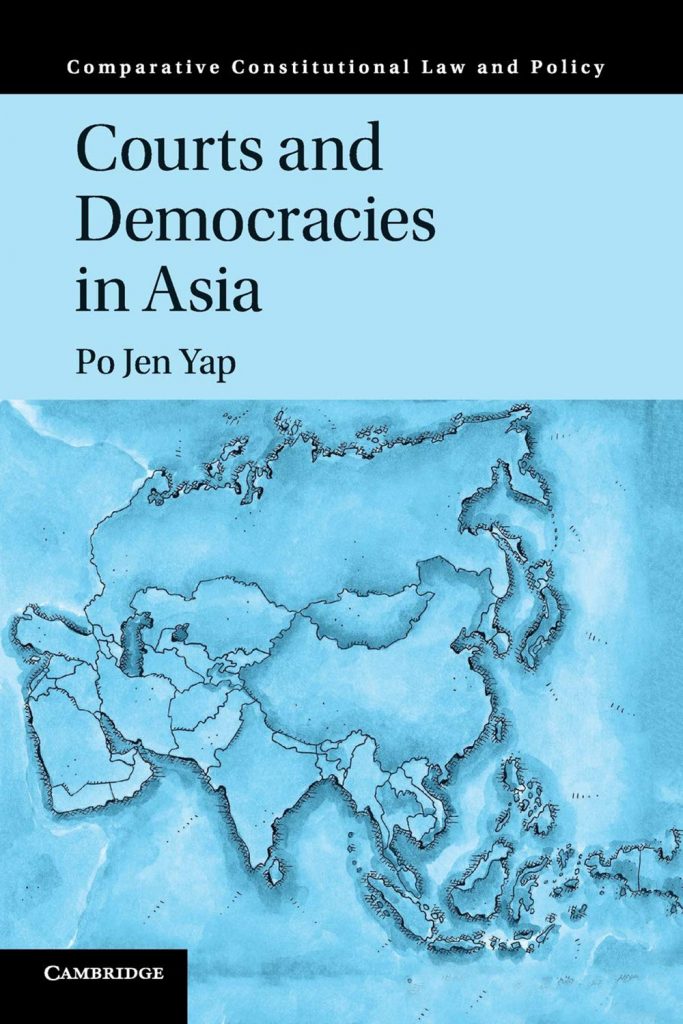
"Democracy and Judicial Behaviour in Asia" (Po Jen Yap Profiled in HKU's The Bulletin)

Book cover

"Democracy and Judicial Behaviour in Asia"
The Bulletin, May 2020
Judiciaries can shape – and are shaped by – the political systems they operate within, for better or worse. Professor Yap Po-jen of the Faculty of Law has been investigating this interplay between law and politics in Asia.
Democracies come in different forms. Some are effectively ruled by a dominant party that has muted most opposition. Some are dynamic, with two or more parties that have taken turns in power. Others are more fragile, with a strong military that may seize power if there is a vacuum. Each system shapes judicial behaviour in different ways, according to Professor Yap Po-jen.
     Professor Yap has studied the political factors that strengthen or constrain judiciaries in Asia. He has also been looking at how some of these judicial systems are converging by intentionally adopting constitutional practices from the West. 
     “Judges today no longer simply interpret the law, they also make law that binds their governments and citizens. The level of democratisation in a political system can impact judicial behaviour, and judicial behaviour can also facilitate the democratisation of a system,” he said. 
      His first major study on the topic, the monograph Courts and Democracies in Asia published in 2017, examined nine Asian democracies – three dominant-party (Hong Kong, Singapore and Malaysia), three dynamic (Taiwan, South Korea and India) and three fragile (Pakistan, Thailand and Bangladesh).

Protecting independence
The dominant democracies are practically ruled by one coalition or its proxies (in Hong Kong, the pro-Beijing forces) and their judiciaries can be easily overruled by the political branches of government. 
     Nevertheless, the courts in these places can still assert some autonomy within bounds – for instance, Hong Kong courts have ruled against the government on multiple occasions on issues relating to social welfare and gay rights. Where the courts cross the tolerance threshold of the government, they will be punished or overridden, as seen in Singapore and Malaysia.
     “All dominant parties will eventually fade away with time, even if this may take a long while. In the meantime, the role of their courts is to do what they can, while protecting their institutional independence. If they rule too aggressively, the dominant party will clip their wings,” Professor Yap said...  Click here to read the full text.

Monday, February 3, 2020

Po Jen Yap and Jiang Zixin on Electoral Disqualification, Political Allegiance, and the Courts (HKLJ)

Po Jen Yap and Jiang Zixin (JD 2018)
2019, Vol 49, Part 3, pp 825-834
Abstract: We disagree with the Court of First Instance's decision in Chow Ting v Teng Yu Yan Anne to confer upon the Returning Officer (RO) the power to evaluate the authenticity of election candidates' intentions to uphold the Basic Law and to disqualify those who are deemed disingenuous. In our view, neither the text of s 40(1)(b)(i) of the Legislative Council Ordinance (Cap 542) nor its history indicates that the RO has this power. The Court of Appeal's decision in Chief Executive of HKSAR v President of the Legislative Council is not precedent for this position. The 2016 Standing Committee of the National People's Congress Interpretation also does not mandate this result.

Thursday, January 23, 2020

Po Jen Yap on Remedial Discretion and Dilemmas in Asia (UTLJ)

"Remedial discretion and dilemmas in Asia"
Po Jen Yap
University of Toronto Law Journal
Nov 2019, Vol 69, Supp 1, pp 84-104
Abstract: Asian courts have mitigated the individual harms and institutional uncertainties associated with the judicial use of delayed remedies by incentivizing the government to comply with the court’s ruling or putting in place judicial safeguards against any legislative delinquency. Expedited remedies like remedial reinterpretation and judicial directives in certain contexts may also be necessary or desirable, even if the judicially imposed result may not be what the enacting legislature had originally intended. Insofar as the legislature can respond and amend these judicial reinterpretation or directives by ordinary legislation, the judiciary does not have the final word and has merely facilitated a constitutional dialogue on rights with the current legislature.

Monday, December 16, 2019

HKU Law's SSRN Legal Studies Research Paper Series (May - Dec 2019)


Vol. 9, No. 7: December 10, 2019

Table of Contents

Ross P. Buckley, University of New South Wales (UNSW) - Faculty of Law
Douglas W. Arner, The University of Hong Kong - Faculty of Law
Robin Veidt, University of Luxembourg - Faculty of Law, Economics and Finance
Dirk A. Zetzsche, Universite du Luxembourg - Faculty of Law, Economics and Finance, Heinrich Heine University Dusseldorf - Center for Business & Corporate Law (CBC)

Ilias Bantekas, Brunel University London - Brunel Law School
Pietro Ortolani, Radboud University
Shahla F. Ali, The University of Hong Kong - Faculty of Law
Manuel A. Gomez, Florida International University College of Law
Michael Polkinghorne, White & Case LLP

Johannes M M Chan, The University of Hong Kong - Faculty of Law

Alex Schwartz, The University of Hong Kong - Faculty of Law

Angela Huyue Zhang, The University of Hong Kong - Faculty of Law

Eric C. Ip, The University of Hong Kong

Shahla F. Ali, The University of Hong Kong - Faculty of Law

Albert H. Y. Chen, The University of Hong Kong - Faculty of Law


Vol. 9, No. 6: Oct 31, 2019


Table of Contents

Shitong Qiao, The University of Hong Kong - Faculty of Law

Alex Green, Faculty of Law, University of Hong Kong
Jennifer Hendry, School of Law, University of Leeds

Successful Secession and theValue of International Recognition
Alex Green, Faculty of Law, University of Hong Kong

Remedial Discretion and Dilemmasin Asia
Po Jen Yap, The University of Hong Kong - Faculty of Law


Vol. 9, No. 5: Oct 17, 2019


Table of Contents

Anna Dziedzic, The University of Hong Kong - Faculty of Law, University of Melbourne - Melbourne Law School
Cheryl Saunders, University of Melbourne - Law School

Jingyi Wang, Peking University - Peking University School of Transnational Law
Wilson Chow, The University of Hong Kong - Faculty of Law

Johannes M M Chan, The University of Hong Kong - Faculty of Law

Po Jen Yap, The University of Hong Kong - Faculty of Law


Vol. 9, No. 4: September 19, 2019

SIMON N. M. YOUNG, EDITOR

Table of Contents

Syren Johnstone, Department of Law, University of Hong Kong, Asian Institute of International Financial Law

Ross P. Buckley, University of New South Wales (UNSW) - Faculty of Law
Douglas W. Arner, The University of Hong Kong - Faculty of Law
Dirk A. Zetzsche, Universite du Luxembourg - Faculty of Law, Economics and Finance, Heinrich Heine University Dusseldorf - Center for Business & Corporate Law (CBC)

Federico Panisi, University of Brescia
Ross P. Buckley, University of New South Wales (UNSW) - Faculty of Law
Douglas W. Arner, The University of Hong Kong - Faculty of Law

Douglas W. Arner, The University of Hong Kong - Faculty of Law
Ross P. Buckley, University of New South Wales (UNSW) - Faculty of Law
Anton Didenko, University of New South Wales (UNSW) - Faculty of Law
Cyn-Young Park, Asian Development Bank
Emilija Pashoska, Universite du Luxembourg - Faculty of Law, Economics and Finance
Dirk A. Zetzsche, Universite du Luxembourg - Faculty of Law, Economics and Finance, Heinrich Heine University Dusseldorf - Center for Business & Corporate Law (CBC)
Bo Zhao, University of Hong Kong - Faculty of Business and Economics, Asian Development Bank - Economic Research and Regional Cooperation Department (ERCD)

Ross P. Buckley, University of New South Wales (UNSW) - Faculty of Law
Emilios Avgouleas, University of Edinburgh - School of Law
Douglas W. Arner, The University of Hong Kong - Faculty of Law

Dirk A. Zetzsche, Universite du Luxembourg - Faculty of Law, Economics and Finance, Heinrich Heine University Dusseldorf - Center for Business & Corporate Law (CBC)
Ross P. Buckley, University of New South Wales (UNSW) - Faculty of Law
Douglas W. Arner, The University of Hong Kong - Faculty of Law


Vol. 9, No. 3: June 11, 2019


Table of Contents

Han Zhu, Centre for Chinese Law, The University of Hong Kong Faculty of Law

Kelvin Hiu Fai Kwok, The University of Hong Kong - Faculty of Law
Ernest Lim, National University of Singapore (NUS) - Faculty of Law

Han Zhu, Centre for Chinese Law, The University of Hong Kong Faculty of Law 
Albert H. Y. Chen, The University of Hong Kong - Faculty of Law

Kelvin Hiu Fai Kwok, The University of Hong Kong - Faculty of Law

Douglas W. Arner, The University of Hong Kong - Faculty of Law
Dirk A. Zetzsche, Universite du Luxembourg - Faculty of Law, Economics and Finance, Heinrich Heine University Dusseldorf - Center for Business & Corporate Law (CBC)
Ross P. Buckley, University of New South Wales (UNSW) - Faculty of Law
Janos Nathan Barberis, The University of Hong Kong - Faculty of Law


Vol. 9, No. 2: May 10, 2019


Table of Contents

The Future of Data-Driven Finance and RegTech: Lessons from EU Big Bang IIDirk A. Zetzsche, Universite du Luxembourg - Faculty of Law, Economics and Finance, Heinrich Heine University Dusseldorf - Center for Business & Corporate Law (CBC)
Douglas W. Arner, The University of Hong Kong - Faculty of Law
Ross P. Buckley, University of New South Wales (UNSW) - Faculty of Law
Rolf H. Weber, University of Zurich - Faculty of Law

A Network Theory of PatentabilityLaura G. Pedraza-Farina, Northwestern University School of Law
Ryan Whalen, The University of Hong Kong - Faculty of Law

The Age of Remix and Copyright Law Reform
Yahong Li, The University of Hong Kong - Faculty of Law

Re-Conceptualizing ‘Object’ Analysis Under Article 101 TFEU: Theoretical and Comparative Perspectives
Kelvin Hiu Fai Kwok, The University of Hong Kong - Faculty of Law

What are Law Courses for? Striking a Balance between Professional and Liberal Education GoalsDanny Gittings, University of Hong Kong, College of Humanities and Law, School of Professional and Continuing Education, The University of Hong Kong, Faculty of Law

From Global to Anthropocenic Assemblages: Re-Thinking Territory, Authority and Rights in the New Climatic RegimeDaniel Matthews, The University of Hong Kong - Faculty of Law