Showing posts with label WHO. Show all posts

Sunday, January 16, 2022

Calvin Ho & Karel Caals on The International Pandemic Preparedness Treaty and An Emerging Digital Divide (Asia Global Online)

The International Pandemic Preparedness Treaty and An Emerging Digital Divide
Dr Calvin Ho & Karel Caals
Asia Global Online
5 January 2022 
Introduction: The persistent Covid-19 pandemic has uncovered various inequities, from access to crucial supplies and income inequality to the digital divide. As the World Health Organization begins work on a new international treaty on pandemic preparedness and response, Calvin Ho Wai Loon of The University of Hong Kong and Karel Caals of the National University of Singapore examine digital inequalities that have arisen from different health systems, arguing that pandemic preparedness should include a range of digital health capabilities with a view to minimizing the digital divide. ... Click here to read the full text. 

Thursday, January 13, 2022

Calvin Ho on COVID-19 Vaccine Trial Designs in the Context of Authorized COVID-19 Vaccines and Expanding Global Access: Ethical Considerations (a Contributor of Policy Brief of the World Health Organization, 29 November 2021)

Introduction of Executive Summary
     In June 2020, global regulators convened under the auspices of the International Coalition of Medicines Regulatory Authorities (ICMRA) and co-chaired jointly by the European Medicines Agency (EMA) and United States Food and Drug Administration (FDA) reached consensus on the study design requirements for Phase 3 COVID-19 vaccine clinical trials. The ICMRA noted that phase 3 clinical trials should be randomized, double-blinded and controlled with a placebo or active comparators. In September 2020, the World Health Organization (WHO ) advised: “Phase IIB/III efficacy trials should be randomized, double-blinded and placebo controlled.” Since then, multiple COVID-19 vaccines have been authorized worldwide based on interim results of pivotal placebo-controlled efficacy trials, and billions of COVID-19 vaccine doses have been administered under emergency use/conditional marketing authorization or full approval regulatory mechanisms.

Wednesday, December 1, 2021

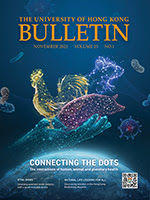
"Disunity of Purpose" (Calvin Ho Profiled in HKU Bulletin)

"Disunity of Purpose"
Calvin Ho
HKU Bulletin
Published in November 2021
Governance and laws relating to human, animal and ecological health are divided across the world, making it difficult to coordinate responses to emerging health threats. Dr Calvin Ho has been analysing the problem.
     In 2007, the Indonesian government announced it would stop sending samples of the H5N1 avian influenza virus detected in its country to the World Health Organization’s (WHO) reference laboratories. Its worry was that these samples, provided freely, would be used by pharmaceutical companies to develop vaccines the country could not afford. The situation prompted the establishment of a new international framework for data and pathogen sharing – but only for H5N1 and other influenza viruses with human pandemic potential.
     Despite other circulating threats to human health, such as antimicrobial resistance (AMR) and emerging zoonotic diseases like the Middle East Respiratory Syndrome (MERS) coronavirus, there is as yet no comprehensive international framework for sharing biological materials and related data to address these concerns. Even the COVID-19 global pandemic has yet to motivate any change.
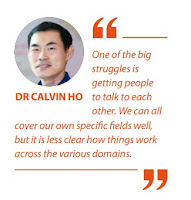
     Dr Calvin Ho of the Faculty of Law, and Co-Director of the Centre for Medical Ethics and Law, has been looking at ethical and legal means to facilitate data and pathogen sharing for AMR and One Health research, and the development of appropriate countermeasures. 
     AMR, which arises mainly from misuse and overuse of antibiotics and other antimicrobials, is a major concern because drug-resistant pathogens circulate among humans, animals and the environment and are projected to lead to 10 million additional deaths each year globally by 2050. Its growing threat prompted the WHO to endorse the One Health concept in 2010 and recognise that protecting and promoting human health is closely interconnected to animal and environmental health. …Click here to read the full text. 

Monday, July 19, 2021

CMEL Newsletter (June 2021)

The Centre for Medical Ethics and Law (CMEL) develops new ideas and solutions in response to the big ethical, legal and policy questions of medicine and health.

 CMEL is the first cross-faculty interdisciplinary institution of its kind in the region. It was founded in 2012 by the LKS Faculty of Medicine and Faculty of Law at The University of Hong Kong as a joint inheritor of their vibrant intellectual traditions dating back to 1887 and 1969 respectively.

 Today, CMEL brings together bioethicists, academic lawyers, medical scientists, and other scholars to conduct cutting edge bioethical and legal research and contribute to policy development in flagship areas like population and global health, mental health and capacity, and digital health and emergent technologies.

 Research, teaching and knowledge exchange—CMEL’s core initiatives—aim to ensure that developments in biomedicine and public health will be underpinned by ethical and legal considerations.


To view the latest newsletter, click: CMEL June 2021 Newsletter.


Highlights of the June newsletter:
  • New WHO Guidance on Artificial Intelligence for Health
  • When learning is continuous
  • The constitutional determinants of Planetary Health
  • Regulation of e-commerce platforms and strict product liability
  • Perspective from a Forensic Pathologist and expert witness in court
  • Youth vaccination
  • Ethical controversies over vaccination incentives
  • Prospect of returning to normality despite continuing COVID-19 concerns
  • Artificial Intelligence in healthcare and COVID-19 prevention poses challenges to privacy in Taiwan
  • Drugs giant reached US$230M settlement agreement for opioids lawsuit in the US

If you would like to take a look at past issues, please visit https://www.cmel.hku.hk/newsletter.php.

Thursday, July 15, 2021

Miron Mushkat and Roda Mushkat on the Challenge of COVID-19 and the World Health Organization’s Response: The Principal-Agent Model Revisited (American University International Law Review)

Published in 2021
Overview: Despite post-Second World War aspirations to the contrary, the State-dominated Westphalian system remains the key ingredient of the global institutional architecture. Nevertheless, non-State entities have entered en masse the space accorded to them by the “gatekeepers” and have been able to exert some impact on policy outcomes across and within national borders. Both quantitatively and qualitatively, the most significant actors among the non-State players have been international organizations. A proper grasp of their relationship with their State “masters” is essential for students of international law and politics.  
      Agency theory has been invoked for this purpose and has proved to be a source of valuable conceptual and practical insights. The World Health Organization’s (WHO’s) underwhelming performance when confronted with an epidemic/pandemic of enormous magnitude and severity, however, suggests that there is considerable scope for placing the principal-agent model in a much broader context and examining it from an unconventional angle.

Sunday, February 28, 2021

WHO Policy Brief on Emergency Use Designation of COVID-19 Candidate Vaccines: Ethical Considerations for COVID-19 Placebo-controlled Vaccine Trials and Trial Unblinding

Policy brief by the World Health Organization (WHO), 18 December 2020
Associate Professor Calvin Ho is a member of the WHO ethics expert group which produced the policy brief. He also shared on the ethical and regulatory issues in the vaccine race in a webinar on "International Law, Science and Technology in the Time of COVID-19" hosted by the Lauterpacht Centre for International Law of the University of Cambridge on 4 December 2020. Click here for the recording.  
Introduction: The grave public health threat posed by COVID-19 has spurred the development of dozens of COVID-19 candidate vaccines, and the conduct of numerous accelerated COVID-19 vaccine trials, many of which are in Phase 2/3 of testing. Given this severe threat, some drug regulatory authorities including the United States Food and Drug Administration (FDA) and the European Union’s European Medicines Agency (EMA) have indicated that, if interim data are sufficiently compelling, they are prepared to issue COVID-19 candidate vaccines conditional / emergency / early approval prior to completion of Phase 3 trials. In such instances the regulatory authority signals that the balance of risk and benefit to designated target populations justifies deployment of the vaccine pending the registration / licensure of that product on public health grounds. Similarly, to assist World Health Organization (WHO) Member States and UN procurement agencies in decision-making on the acceptability for use of specific products in the context of a public health emergency, WHO has established an Emergency Use Listing (EUL) procedure to expedite the availability of interventions needed in public health emergency (PHE) situations. The validity of a WHO EUL in the context of a public health emergency is generally 12 months. All decisions to grant an EUL are reassessed at 12 months (or sooner, if further data become available that could alter the original opinion). EUL is contingent upon the vaccine developer completing the development of the product and its trial, and submitting the candidate vaccine for registration/licensure and WHO prequalification.  EUL is not equivalent or an alternative to WHO prequalification, and should not be thought of as such. For the purposes of this policy brief, all mechanisms that facilitate the public accessibility of investigational vaccines prior to the conclusion of their respective clinical trials or their licensure, shall hereinafter collectively be referred to as ‘Emergency Use Designation’ or EUD... Click here to download the policy brief.

Friday, February 19, 2021

Shitong Qiao on A New Age for the WHO? Comments on "The WHO in the Age of the Coronavirus: (USALI Perspectives)


Shitong Qiao
USALI Perspectives
4 January 2021
In a paper recently published by the American Journal of International Law, USALI Faculty Director José E. Alvarez offered five reasons the World Health Organization is in crisis as well as suggestions for reform. Professor Alvarez also discussed his analysis in this USALI Perspectives essay, and in this October 28 talk. Professor Shitong Qiao of Hong Kong University served as commentator in the October 28 program. This essay summarizes his observations. 
     There is much to agree with in Professor José E. Alvarez’s argument that COVID-19 may ultimately drive organizational change at the World Health Organization (WHO). Indeed, nation states are currently discussing how to reform the WHO, with even China supporting a comprehensive review of the WHO regime. From the starting point of a shared vision of the WHO as defined in the WHO Constitution, I would like to provide a realistic assessment of how China might respond to Professor Alvarez’s proposals for WHO reform... Click here to read the full text.

Tuesday, August 18, 2020

Eric Ip on the Constitutional Economics of the WHO (Health Economics, Policy and Law)

Published online in August 2020
Abstract: This paper brings a constitutional economics perspective to bear on the World Health Organization (WHO), the flagship United Nations intergovernmental health organisation, which is obligated by its Constitution to achieve ‘the highest possible level of health’ for the world's peoples. The WHO has in the seven decades of its existence used its formidable legislative powers only sparingly. It has been widely chided for being weak in regional coordination and unresponsive to transnational emergencies like the West African Ebola outbreak of 2014–2016. In 2020, it found itself at the centre of the COVID-19 pandemic and in the middle of the Sino-American geopolitical tug-of-war. This paper traces the discordance between the Constitution's stated purposes and the actual track record of the WHO not back to its organisational culture nor to weak leadership but to the design of the Constitution itself. It analytically distinguishes the Constitution's expressive from its instrumental halves, and shows that, whilst the former embodies a ‘constitutional moment’ of international health solidarity right after the Second World War, the latter embodies a reserved and limited delegation from member-states that are jealous of their sovereignty.

Tuesday, June 16, 2020

Eric Ip & Daisy Cheung on Global Mental Health Security—Time for Action (JAMA Health Forum)

Published in June 2020
Global health security has been concerned predominantly with organizing transnational collective action to prevent the risks of bioterrorism and infectious disease outbreaks, such as the Ebola crisis of 2014-2016.1 One confounding omission in global health security has been mental health. The Global Health Security Agenda (GHSA), currently a partnership of more than 60 sovereign states plus the World Health Organization (WHO), other international institutions, nongovernmental organizations, and private companies, is committed to “a world safe and secure from infectious disease threats.” Of its 8 Action Packages, from antimicrobial resistance to biosecurity to zoonotic disease, none pertains directly to mental health. The WHO’s Global Preparedness Monitoring Board, which gauges global preparedness not just for outbreaks but also health emergencies, makes no meaningful reference to mental health in its first annual report, released in September 2019.2 None of the 6 indicators on the Global Health Security index, developed by the Johns Hopkins Center for Health Security, the Nuclear Threat Initiative, and The Economist Intelligence Unit, even mentions mental health... Click here to read the full article.