Showing posts with label PDF. Show all posts

Monday, January 2, 2023

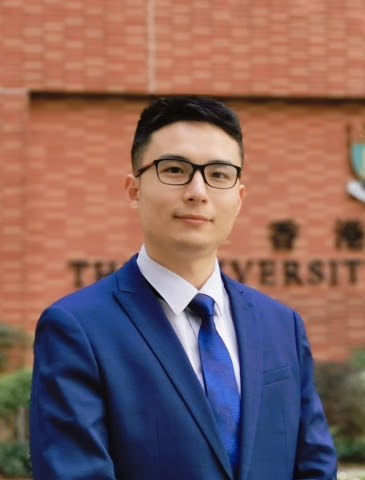
Welcome to Dr Jamieson Kirkwood, PDF in Finance, Technology, Regulation and Sustainable Development

Welcome to  Dr Jamieson Kirkwood who recently joined HKU Faculty of Law as a post-doctoral fellow in Finance, Technology, Regulation and Sustainable Development.  Jamie completed his PhD at the Chinese University of Hong Kong and spent over 10 years practicing as an inhouse counsel with several multinational corporations. He is also Called to the Bar in England & Wales. 
   Jamie specialises in international economic law, regulation and development, financial law & technology and digital dispute resolution. He wrote his PhD thesis on the settlement of disputes arising within China’s Belt and Road Initiative. Whilst at CUHK, Jamie published several related articles and was awarded the prestigious Postgraduate Research Award 2020 from CUHK in recognition of his hard work.
    Currently Jamie is researching under the guidance of Professor Douglas Arner, recipient of a Hong Kong Research Grants Council Senior Research Fellowship for his project on the role of FinTech and RegTech in financial inclusion and the UN Sustainable Development Goals, as well as a 4 year RGC Research Impact Fund project focusing on FinTech policy and regulation.
     Jamie’s most recent publication (co-author with Professor Julien Chaisse of City University of Hong Kong) is Chaisse, Julien and Kirkwood, Jamieson, ‘Smart Courts, Smart Contracts, and the Future of Online Dispute Resolution’ (2022) 5(1) Stanford Journal of Blockchain Law & Policy 62-91, accessible at https://stanford-jblp.pubpub.org/pub/future-of-odr/release/1.

Sunday, October 2, 2022

HKU Law Welcomes Dr Xiaowei Yu, LTC Post-Doctoral Fellow

Welcome to Dr Xiaowei Yu, Post-Doctoral Fellow, who joined the Law and Technology Centre in the Department of Law, the University of Hong Kong. Her research concentrates on the intersection of privacy laws and legal philosophy. Her scholarship includes examining the identifiability problem in transnational privacy regulations, exploring normative approaches to define the material scope of functional privacy regimes, and applying contract theories to address the failure of informed consent in privacy policies.  
     Xiaowei earned her Doctor of the Science of Law (JSD) from the University of Illinois Urbana-Champaign College of Law (UofI). Prior to her JSD, Xiaowei completed her LLM at the UofI. Xiaowei also received her master’s degree of jurisprudence and LLB from China University of Political Science and Law. During her time in Illinois, she served as the JSD chair (2017-2019) and a member of The Elder Law Journal (2017-2018). She participated in the US v. Christensen capital murder trial and acted as a liaison for the victim’s family (2019). Xiaowei is admitted to the national bar in China.

Tuesday, October 12, 2021

Life as a Global Academic Fellow with HKU Law (Interview with Dr Anna Dziedzic)

Anna Dziedzic joined HKU Law as a Global Academic Fellow in 2019. She researches in the field of comparative constitutional law, with a particular focus on constitutional change and the role of judges and judiciaries. She used the Global Academic Fellowship to undertake broader comparative research into foreign judges and the significance of nationality to judicial office.  Her book, Foreign Judges in the Pacific, will be published by Hart Publishing in November 2021.  
1.    When were you a Global Academic Fellow with HKU Law?
I was a Global Academic Fellow in Hong Kong from August 2019 to August 2021. This time encompassed both the Hong Kong protests and the pandemic, but despite these challenges the Fellowship was a dynamic and rewarding experience.

2.   What was the topic of your PhD thesis? Were you able to extend or develop your PhD research during your time as a Global Academic Fellow?
I completed my PhD thesis at Melbourne Law School in 2019, on the topic of foreign judges on courts of constitutional jurisdiction in Pacific island states. The Global Academic Fellowship at HKU Law provided me with the opportunity and the support to develop my research on foreign judges beyond the Pacific to consider the more than 50 jurisdictions which use foreign judges, in some way, on their domestic courts.
     One reason I was attracted to post-doctoral research at HKU was that Hong Kong has its own experience of using foreign judges on its Court of Final Appeal, a point of similarity that connected with my research on Pacific island judiciaries. I was able to test some of the theoretical insights that emerged from my study of foreign judges in the Pacific by applying them to the different context of Hong Kong, especially as the position of foreign judges came under pressure after the enactment of the National Security Law in 2020.
     In addition, with funding from the HKU Law Faculty and support from HKU’s Centre for Comparative and Public Law, I and Professor Simon Young led a comparative project on foreign judges on domestic courts. This included an international workshop in May 2021, during which 36 judges, scholars and practitioners came together to discuss the use of foreign judges in over 30 jurisdictions across the world, and a joint keynote presentation from Justice Joseph Fok PJ and Justice William Gummow NPJ of the Hong Kong Court of Final Appeal. The papers presented at the workshop will be published in The Cambridge Handbook of Foreign Judges on Domestic Courts, co-edited by Professor Young and I.
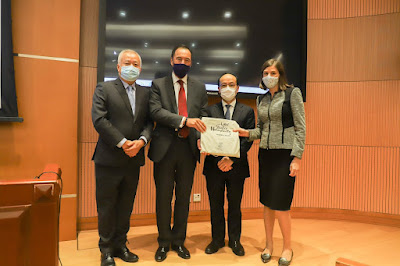
L-R: Dean Fu, Justice Fok, Prof Young, Dr Dziedzic
    The Global Academic Fellowship also provided me with the time and space to revise and extend my PhD thesis for publication as a monograph titled Foreign Judges in the Pacific.

3.    What other opportunities did you take up during your fellowship?
Living and working in Hong Kong also opened up new areas of comparative study for me. In response to issues raised by the protest movement of 2019, Julius Yam and I prepared a CCPL Policy Paper on the potential use of amnesties in contexts of civil unrest. This work inspired a scholarly paper comparing amnesties for street protesters across the world and examining the normative justifications for amnesties in the distinctive context of street protest.
     While a Global Academic Fellow, I was invited to be Associate Director of the Centre for Comparative and Public Law. This role provided many opportunities to collaborate with comparative constitutional law academics and research centres around the world and to organise and participate in seminars and conferences, both in person and online.

4.    How did you like living in Hong Kong and being part of the HKU Law community?
The HKU Law community is very welcoming and supportive. It is also a diverse community and in addition to connecting with scholars in my field of public law, I learned a lot from scholars of law and literature, legal theory, and empirical legal studies, to name a few.
     One aspect of the community that I particularly enjoyed was convening the Junior Scholars Forum. Together with Chris Szabla (another Global Academic Fellow) we sought to create a space for post-doctoral and post-graduate researchers from the three law schools in Hong Kong to meet and share their work in a supportive and collegial way. It was a valuable way to build connections with researchers from other Hong Kong universities working in very different areas of law.

5.    How did the Global Academic Fellowship prepare you for the next stage of your academic career?
The Global Academic Fellowship is a great stepping stone to further research as well as a tenured academic career. I was able to extend my research agenda, strengthen my publication record, and develop networks of scholars and practitioners in Hong Kong and beyond. There were also opportunities to teach, participate in events, and engage with student associations and the wider legal community, all experiences that open many doors for future work.

6.    What advice would you have for someone thinking of applying for the fellowship?
Do it! The Global Academic Fellowship is a rare post-doc: two years with the freedom to choose what you are going to research and write about. With time, funding and a supportive Faculty, you can continue to follow research pathways from your PhD thesis or begin something completely new.

Monday, March 8, 2021

HKU Law Welcomes Two New Post-Docs (Dr Evan Rosevear and Dr Hui Chen)

HKU Law warmly welcomes two new postdoctoral legal scholars who, respectively, will explore questions of comparative law and politics with a focus on national constitutions, and legal developments in the Greater Bay Area.   
     Dr Evan Rosevear is a Global Academic Fellow who joins us from Canada.  His research lies at the intersection of comparative law and comparative politics with a focus on national constitutions and domestic legal systems. It is guided by a desire to understand how courts, rights, and constitutions operate, how they interact with other state and non-state actors, and whether and when they are capable of fostering social and political change. Methodologically, it takes the form of theoretically-informed, empirically-driven comparative analysis that involves single case and small-n research supplemented by large-n statistical analysis.
     His current projects include a comparative examination of the interaction of legal reasoning and politics in the adjudication of constitutionalized social rights and the use of executive discretion in instances of executive aggrandizement. He is also interested in developing the empirical and comparative study of non-US judges and courts.
      Evan holds a PhD in political science and a JD from the University of Toronto. He has been a Research Associate with the Toronto Initiative for Economic and Social Rights (TIESR) and previously spent time at the Center for Justice and Society at FGV Direito-Rio and the South African Institute for Advanced Constitutional, Public and International Law (SAIFAC) at the University of Johannesburg.

Dr Hui Chen is Post-Doctoral Fellow in the Department of Law. His research centres on WTO law, international trade negotiation, dispute settlement, and legal harmonization in the Greater Bay Area.
     Prior to joining HKU, Hui had the experience of working and researching in the WTO headquarters in Geneva, during which he worked in the Accessions Division to support the application of membership for Kazakhstan, Afghanistan, Algerian, and Yemen. Having obtained the Chinese Legal Professional Qualification Certificate, he has practiced law in Shanghai.
     Hui has been participating in research projects on China’s global governance, dispute settlement and legal harmonization in the Greater Bay Area, including but not limited to exploring the path of Hong Kong becoming a centre of international dispute resolution, the establishment of an International Commercial Arbitration Centre in the Greater Bay Area, and the facilitation for liberalizing the legal services markets between the Mainland and Hong Kong. He co-authored a book chapter titled “The Belt and Road Initiative in China’s Approach to Global Governance: Implications for China-EU Relations and Economic Cooperation” in the book European Union and China’s Belt and Road: Impact, Engagement and Competition, which will be published in Routledge in 2021. His present research focuses on the legal convergence and harmonization across different legal regions in the Greater Bay Area.

Friday, November 27, 2020

Call for Applications: HKU Law Global Academic Fellows 2021-2022 (Deadline: 1 January 2021)

THE UNIVERSITY OF HONG KONG

Global Academic and Presidential Fellows

Department of Law

Applications are invited for three appointments as Global Academic Fellow in the Department of Law, to commence in August 2021 or January 2022, for a period of two years.

The Global Academic Fellows Programme was created to provide outstanding and aspiring legal academics with time and resources to transition into the global teaching market. Fellows will have access to an internationally leading faculty for mentorship, affiliation with related research centers, and funding for attending academic conferences to present their work. Other opportunities will include teaching appointees’ own course or gaining experience in core courses, and organizing funded academic conferences in their field. Applicants should have completed their doctoral degrees (JD or PhD) before the start of their appointments, unless they possess significant practice experience.

One to three fellows will be appointed each year, and will be expected to be in residence at HKU and devote their time primarily to their own research and preparation for entering the international teaching market. Fellows will be provided shared office space and administrative support when needed. Information about the Department of Law and the Faculty of Law can be found at: www.law.hku.hk.

Global Academic Fellows enjoy a highly competitive salary of 480,000HKD (~60,000USD/52,000EUR) in addition to annual leave, travel funds, relocation expenses and full medical benefits. At current rates, salaries tax does not exceed 15% of gross income.

Additionally, all shortlisted candidates will be nominated for HKU’s Presidential Post-Doctoral Fellowship. Each of these nominations potentially represents a 25% increase in salary, research funds and the optional extension of the fellowship for a third year. Address any specific questions to the Director at: jkroncke@hku.hk.

The University only accepts online application for the above post. Applicants should apply at https://jobs.hku.hk/cw/en/job/502489/global-academic-fellow-3-posts. Applications require the following 4 components: 1) an updated C.V., 2) a 3-page research agenda (including past, current and future projects), 3) a list of at least three academic references, and 4) a writing sample (under 50 pages).

Closes 1 January 2021.

Monday, October 5, 2020

HKU Law Welcomes First Global Academic Fellow of 2020/21

Welcome to Dr Chris Szabla, the first of three Global Academic Fellows in the second round. The fellows were selected following a global competition of accomplished postdoctoral law applicants. 
     Dr Szabla researches in the areas of international, comparative, and transnational law and legal history, with a focus on borders and migration. He holds a JD from Harvard Law School and an MA and PhD from Cornell University, where he taught history and international law and completed a dissertation examining the international law and global governance of migration from the nineteenth century to the present. At HKU he plans to extend his research on contemporary borders, including investigating the legal entanglements of immigration preclearance facilities and the use of surveillance technologies at borders. He also plans to begin a new historical research project focused on the development of transnational norms of border governance in colonial Asia, investigating the influence of local innovations and common commercial pressures. 
      Dr Szabla's research has attracted sponsorship from organisations including the Social Science Research Council, the Council for European Studies, and the Graduate Institute for International and Development Studies, and has been recognised by the American Association of Law Libraries. His scholarship includes work focused on, inter alia, the reform of global migration governance, the place of migration in the international law of development, decolonisation in the history of global migration governance, the intellectual history of free movement, and the international law of armed conflict. He has also organised international scholarly collaborations focused on law and migration. Prior to his academic career he worked as an attorney in New York, and has studied and/or lived in Berlin, Geneva, Paris, London, and in Cairo, where he also provided legal assistance to refugees.

Saturday, December 21, 2019

HKU Law Global Academic Fellows 2020-2021 (Deadline: 1 February 2020)

Applications are invited for appointments as Global Academic Fellow (3 posts) in the Department of Law (Ref.: 499292), to commence in August 2020 or January 2021, for a period of two years.
     The Global Academic Fellows Programme was created to provide outstanding and aspiring legal academics with time and resources to transition into the global teaching market. Fellows will have access to an internationally leading faculty for mentorship and affiliation with related research centers alongside support for attending academic conferences to present their work. Other opportunities will include the option of co-teaching courses and organizing funded academic conferences. Applicants should have completed their doctoral degrees before the start of their appointments, unless they possess significant practice experience. The successful candidate will be appointed at the grade of Post-doctoral Fellow.
     One to three fellows will be appointed each year, and will be expected to be in residence at HKU and devote their time primarily to their own research and preparation for entering the international teaching market in the second year of their fellowship. Fellows will be provided shared office space and administrative support when needed. Information about the Department of Law and the Faculty of Law can be found at: www.law.hku.hk.
     Successful candidates will be nominated for HKU’s Presidential Post-doctoral Fellowship and Hong Kong’s RGC Post-doctoral fellowship Scheme. Each of these nominations potentially represents additional salary, research funds and the optional extension of the fellowship for a third year. Two of three inaugural fellows have already secured tenure-track appointments within their first year of appointment. Specific questions can be addressed to the Director at: jkroncke@hku.hk.
     A highly competitive package including a monthly salary, housing allowance, relocation allowance, medical benefits, annual leave, and conference and research support will be offered to successful applicant as applicable. At current rates, salaries tax does not exceed 15% of gross income.
     The University only accepts online application for the above post. Applicants should apply online and upload 1) an up-to-date C.V., 2) a 3-page research agenda (including past, current and future projects), 3) a list of at least three academic references, and 4) a writing sample (under 50 pages). Closes February 1, 2020 (extend to February 14, 2020). Click here to submit your online application.

Friday, November 29, 2019

HKU Law Welcomes Dr Xu QIAN (Post-doctoral Fellow in Belt and Road Law)

HKU Law warmly welcomes Dr Xu QIAN who joins the team of scholars researching legal issues related to China's Belt and Road Initiative. Dr Qian explores issues at the intersection of international economic law and human rights. Her work also deals with environmental law, dispute settlement, constitutional law and increasingly Greater Bay Area legal cooperation. Her publications include “Rethinking Judicial Discretion in International Adjudication” Connecticut Journal of International Law (2020); “Is It Finally Time for Asia’s Free Trade Agreements? The ASEAN Present and the RCEP Future” Asian Journal of International Law (2019); “Challenges of Water Governance (and Privatization) in China” Georgia Journal of International and Comparative Law (2018); "Trans-Pacific Partnership: A World Trade Revolution?,” APEC Currents (2016). She contributes to Asia Law Portal which is the leading source of information and insights on the practice of law in the vast Asia-Pacific region. Dr QIAN is currently working on a new article, which critically examines the application of the proportionality principle across two decades of investment disputes.
    Dr Qian was a scholar in residence at The Hague Academy of International Law in 2019 for which she received the Academy’s prestigious “Doctoral Scholarship.” She has presented her work at many academic events including the International Water Association (IWA) Annual Conference (2016), Asia FDI Forum II, III and IV (respectively, May 2016, March 2017 and March 2018), and Loyola School of Law conference “Rule of Law in the 2030 Sustainable Development Agenda”. Dr Qian holds a BA from Heilongjiang University (2012), an LLM and PhD from CUHK Law (respectively 2014 and 2019), and a post-graduate diploma from the Academy of International Trade and Investment Law (2015).

Tuesday, October 1, 2019

Welcome to HKU Law's Inaugural Global Academic Fellows

Welcome to Dr Yu-Jie Chen, Dr Anna Dziedzic, and Dr Alexander Ezenagu, our first batch of Global Academic Fellows.  The fellows were selected following a global competition of accomplished postdoctoral law applicants. The inaugural group will further enrich the Faculty of Law's research areas of strength in human rights law, constitutional law, and financial law.
Dr Yu-Jie Chen
   Prior to joining HKU, Dr Yu-Jie Chen was a Postdoctoral Research Associate at the Institutum Iurisprudentiae of Academia Sinica in Taiwan. Dr Chen received her JSD and LLM degrees from New York University School of Law. She also holds an LLM and LLB from National Chengchi University in Taiwan. She has had extensive experience as a research scholar at the US-Asia Law Institute, NYU School of Law. Prior to that, she served as a researcher and advocate for the non-governmental organization Human Rights in China. She earlier practiced in the Taipei-based international law firm Lee and Li. Dr Chen's research focuses on human rights issues in China, Taiwan and cross-strait relations.
   Dr Chen's recent scholarship includes “China’s Challenge to the International Human Rights Regime,” “Human Rights in the Chinese Administration of Justice,” “Localizing Human Rights Treaty Monitoring: Case Study of Taiwan as a Non-UN Member State,” “Isolated but Not Oblivious: Taiwan’s Acceptance of the Two Major Human Rights Covenants,” “China-Taiwan Relations Re-examined: the ‘1992 Consensus’ and Cross-strait Agreements” (with Jerome A. Cohen), “China-Taiwan Repatriation of Criminal Suspects: Room for Human Rights?” (with Jerome A. Cohen), “Freedom from Arbitrary Detention in Asia: Lessons from China, Taiwan and Hong Kong” (with Jerome A. Cohen), “‘Rule of Trust’: Powers and Perils of China’s Social Credit Megaproject” (with Ching-fu Lin & Han-wei Liu), “Beyond State v Loomis: Artificial Intelligence, Government Algorithmization and Accountability” (with Han-wei Liu & Ching-fu Lin), and “Transitional Justice in Taiwan: Changes and Challenges” (with Nien-chung Chang Liao).
Dr Anna Dziedzic
    Dr Anna Dziedzic researches in the field of comparative constitutional law, with a particular focus on judges and judiciaries and constitutional change. She completed her PhD at Melbourne Law School in 2019, with a doctoral thesis examining the use of foreign judges on courts of constitutional jurisdiction in Pacific island states. She will use the Global Academic Fellowship at HKU Faculty of Law to undertake broader comparative research into foreign judges and the significance of nationality to judicial office.
     Dr Dziedzic was awarded an MA in Human Rights from University College London in 2011, and first class honours degrees in Arts and Law and the University Medal in English Literature from the Australian National University in 2004. Prior to undertaking post-graduate study, Dr Dziedzic  worked at the Australian Law Reform Commission, the Australian Department of the Prime Minister and Cabinet, as an Associate to a Justice of the Federal Court of Australia and a volunteer legal analyst at the Samoa Law Reform Commission.
     Dr Dziedzic’s academic publications include work on constitutional law and constitution making in Pacific island states, Australian constitutional law, Indigenous constitutions, federalism, parliamentary sovereignty, and judges and judiciaries. She has also undertaken consultancies on various issues including constitutional implementation, gender and constitutions, and citizenship.  She is a co-convenor of the Constitution Transformation Network at Melbourne Law School, a network that brings scholars and practitioners together to explore the dynamics and challenges of change in constitutional law, theory and practice across the globe. 
Dr. Alexander Ezenagu
     Dr Alexander Ezenagu researches on the intersections of trade, investment, tax and development. He is also designing a taught course on the governance of development from a developing country perspective. 
     Dr Ezenagu obtained his doctorate degree from McGill University, Canada, in International Tax Law. His doctorate dissertation studied the alternatives to the arm’s length principle of income allocation among related entities and the adoption and application of unitary taxation approach for allocating income among entities within a multinational group. Dr Ezenagu is a graduate of the University of Cambridge, United Kingdom, where he obtained a Master of Law degree (LLM) in Commercial Law. 
      Dr Ezenagu’s current research focuses on the relationship between taxation and economic development, as well as the role of government and non-government institutions and actors in the creation of tax policies and rules. He writes on the right to tax by countries and how such taxing rights should be allocated. He also researches and writes on illicit financial flows out of developing countries and ways to curb them. 
    The HKU Faculty of Law launched the Global Academic Fellows Programme in 2018 under the directorship of Dr Jed Kroncke, assisted by Ms Ivy Lai.  The aim of this postdoctoral law programme is to provide a highly stimulating research environment for the most promising legal academics to continue and develop their internationally excellent research.

Wednesday, January 30, 2019

HKU Law Global Academic Fellows 2019-2020 (Deadline: 15 March 2019)

Applications are invited for appointments as Global Academic Fellow (3 posts) in the Department of Law (Ref.: 493956), to commence in August 2019 or January 2020, for a period of two years. 
     The Global Academic Fellows Programme was created to provide outstanding and aspiring legal academics with time and resources to transition into the global teaching market. Fellows will have access to an internationally leading faculty for mentorship and affiliation with related research centers alongside support for attending academic conferences to present their work. Other opportunities will include the option of co-teaching courses and organizing funded academic conferences. Applicants should have completed their doctoral degrees before the start of their appointments, unless they possess significant practice experience. The successful candidate will be appointed at the grade of Post-doctoral Fellow. 
     One to three fellows will be appointed each year, and will be expected to be in residence at HKU and devote their time primarily to their own research and preparation for entering the international teaching market in the second year of their fellowship. Fellows will be provided shared office space and administrative support when needed. Information about the Department of Law and the Faculty of Law can be found at: www.law.hku.hk. Specific questions can be made to the Director at jkroncke@hku.hk
   A highly competitive package including a monthly salary, housing allowance, relocation allowance, medical benefits, annual leave, and conference and research support will be offered to successful applicant as applicable. At current rates, salaries tax does not exceed 15% of gross income. 
     The University only accepts online applications for the above post. Applicants should apply online and upload 1) an up-to-date C.V., 2) a 3-page research agenda (including past, current and future projects), 3) a list of at least three academic references, and 4) a writing sample (under 50 pages). Closes March 15, 2019. Click here to submit your online application.