Showing posts with label constituionalism. Show all posts

Monday, July 21, 2025

Cora Chan on Pluralizing Constitutionalism (new book chapter)

"Pluralizing Constitutionalism"
Cora Chan
in Madhav Khosla (ed),Vicki C Jackson (ed),Redefining Comparative Constitutional Law: Essays for Mark Tushnet (Oxford University Press),Chapter 24,pp.355 - 368
Published online: November 2024

Abstract: One of Professor Tushnet’s many legacies is his exposition of strains of constitutionalism other than liberal constitutionalism. He has crafted sophisticated accounts of authoritarian constitutionalism and illiberal constitutionalism and offered thought-provoking ideas on Ernst Fraenkel’s concept of the dual state. His attempts at pluralizing constitutionalism have not only brought analytical clarity and allowed us to theorize the regimes that do not fit into the dichotomized framework of authoritarianism versus liberal constitutionalism, but also have important normative implications for constitutional design and strategy. This chapter draws on Professor Tushnet’s contributions on nonliberal constitutionalism and the dual state to examine four issues pertaining to the nature, structure, and significance of the dual state, as well as to the stability of mixed constitutions.

Wednesday, March 13, 2024

New Book Edited by Kelley Loper et al: Gender, Sexuality and Constitutionalism in Asia

Gender, Sexuality and Constitutionalism in Asia
Edited by Wen-Chen Chang, Kelley Loper, Mara Malagodi, Ruth Rubio-MarĂ­n
Bloomsbury Publishing
Published in January 2024
384 pp.

Description: This book analyses the equal citizenship claims of women and sexual and gender diverse people across several Asian jurisdictions. The volume examines the rich diversity of constitutional responses to sex, gender and sexuality in the region from a comparative perspective. Leading comparative constitutional law scholars identify 'opportunity structures' to explain the uneven advancement of gender equality through constitutional litigation and consider a combination of variables which shape the diverging trajectories of the jurisdictions in this study. 
     The authors also embed the relevant constitutional and legal developments in their historical, political and social contexts. This deep contextual understanding of the relationship between sex, gender, sexuality and constitutionalism greatly enriches the analysis. The case studies reflect a variety of constitutional structures, institutional designs and contextual dynamics which may advance or impede developments with respect to sex, gender and sexuality. As a whole, the chapters further an understanding of the constitutional domain as a fruitful site for advancing gender equality and the rights of sexual and gender diverse people. 
     The jurisdictions covered represent all Asian sub-regions including: East Asia (Japan, Taiwan, Hong Kong and South Korea), South East Asia (Malaysia, Singapore, Philippines and Indonesia), and South Asia (India, Nepal, Pakistan and Sri Lanka). The introductory framework chapter situates these insights from the region within the broader global context of the evolution of gender constitutionalism.

Monday, January 22, 2024

Julius Yam on Judging Under Authoritarianism (Modern Law Review)

"Judging Under Authoritarianism"
Julius Yam
Modern Law Review
Published online: December 2023

Abstract: Authoritarianism has significant implications for how judges should discharge their duties. How should judges committed to constitutionalism conduct themselves when under authoritarian pressure? To answer this question, the article proposes a two-step adjudicative framework, documents a variety of judicial strategies, and proposes how principles and strategies can and should be incorporated into the framework in different scenarios. The first step of the adjudicative framework involves judges identifying the ‘formal legal position’ while blindfolding themselves to extra-legal factors (such as potential authoritarian backlash). In the second step, depending on the level of risk incurred by maintaining the formal legal position, judges should lift the blindfold to check whether, and if so how, the formal legal position should be supplemented with or adjusted by judicial strategies. Through this analysis, the article offers a guide to judicial reasoning under authoritarianism.

Wednesday, February 1, 2023

Albert Chen et al : Constitutional Politics in Asia (Oxford Bibliographies)

Constitutional Politics in Asia
Kevin Y.L. Tan, P.Y. Lo, Albert H.Y. Chen
Oxford Bibliographies 
Last Modified: 12 January 2023
DOI: 10.1093/OBO/9780199756223-0354
Introduction: The term “constitutional politics” is used far more often than it is defined. Many writers who use the term do not bother defining it, presuming its meaning to be self-evident. Thus, “constitutional politics” is not a term of art and has been used to describe various political or legal phenomena. Broadly speaking, “constitutional politics” may be used to refer to events or developments in which constitutional law interacts with, provides a setting for, or to some extent shapes political processes. In a sense, it deals with that intersection between constitutional law and politics in issues that are neither wholly legal nor political but a mix of both. Plainly, this may manifest when a country drafts its own constitution or undergoes profound changes in its constitutional arrangement. It also arises if political questions are contested in the courts, or where the judiciary takes on a particularly active role in determining constitutional questions of the day, or where a particularly contested constitutional change or amendment takes place. The nature of constitutional law and constitutional adjudication is such that it is impossible to make a clear distinction between law and politics when discussing constitutional law. Key political actions, decisions, and bargains are often enshrined in constitutions and contestations as to their meanings and ambit, lending a heavy air of politics to judicial decision-making. Whether an issue is one that falls within the realm of “constitutional politics” depends on the context in which it arises. Take for example the appointment of judges. In many jurisdictions, this is an uncontroversial matter. However, in some other jurisdictions where the court is highly politicized and where the elected representatives hold power by a tenuous thread, such appointments invariably involve constitutional politics. Asia is the world’s largest continent both in terms of land mass and population. In this bibliography, we will attempt to examine and recommend the relevant literature pertaining primarily to the regions broadly described as Northeast Asia, Central Asia, South Asia, and Southeast Asia. Jurisdictions surveyed include: China, Japan, Hong Kong SAR, Macau SAR, Mongolia, North Korea, South Korea, Taiwan, India, Pakistan, Bangladesh, Sri Lanka, Maldives, Nepal, Afghanistan, Bhutan, Indonesia, Thailand, Malaysia, the Philippines, Singapore, Myanmar, Vietnam, Cambodia, Laos, Brunei, Timor Leste, Afghanistan, Kazakhstan, Tajikistan, and Uzbekistan. We are fortunate that in recent decades, academia and academic publishers have taken a keen interest in constitutional law and politics in Asian countries, as demonstrated by the publication of several series of books such as Routledge Law in Asia (Routledge), Constitutionalism in Asia (Hart Publishing), Comparative Constitutional Law and Policy (Cambridge University Press), and Constitutional Systems of the World (Hart Publishing). It is possible to discuss constitutional politics in Asia in several ways. One possibility is to take a geographical country-by-country or region-by-region approach. Another is to do so on the basis of constitutional regime types such as democracies, socialist states, monarchies, and hybrid regimes. A further way is by grouping countries according to legal traditions. Having considered these possibilities, we felt it most logical to organize the bibliography along thematic or topical lines. This will make it easier for readers to use the bibliography and head straight for the topics that most interest them. We begin by looking at some general works dealing with the subject in the first two sections. The subsequent sections of the bibliography are organized thematically.
Overview of Individual Jurisdictions: The Constitutional Systems of the World series, published by Hart Publishing (Series General Editors: Peter Leyland, Andrew Harding, Benjamin L Berger, Rosalind Dixon, and Heinz Klug), is a series of introductory books featuring monographs of individual jurisdictions with accounts of how the constitutions are developed, interpreted, and utilized in their specific contexts. The studies on Asian jurisdictions deal with the constitution-making processes as well as the most important constitutional and political contests in each of these jurisdictions within their introductory chapters. These books are a good place to start for anyone hoping to know and understand the nature of constitutional politics in these countries. The Asian jurisdictions presented in this series of books include Central Asian States (Newton 2017), China (Zhang 2012), India (Thiruvengadam 2017), Indonesia (Butt and Lindsey 2012), Japan (Matsui 2010), Malaysia (Lee 2017, cited under Separation of Powers, Executive Power, and Inter-Branch Conflicts in Asian Jurisdictions), Myanmar (Crouch 2019), Pakistan (Aziz 2018), Singapore (Tan 2015); Taiwan (Yeh 2016), and Thailand (Harding and Leyland 2011).

Wednesday, April 20, 2022

Alec Stone Sweet on Intimations of Proportionality? The Singapore Constitution and Rights Protection. Wham Kwok Han Jolovan and Public Prosecutor (Singapore Journal of Legal Studies)

“Intimations of Proportionality? The Singapore Constitution and Rights Protection. Wham Kwok Han Jolovan and Public Prosecutor”
Alec Stone Sweet
Singapore Journal of Legal Studies
Published in 2021
Abstract: Wham Kwok Han Jolovan v Public Prosecutor is potentially the most important constitutional decision ever rendered by the Singapore Court of Appeal, insofar as it heralds a new and more intrusive approach to the judicial review of rights claims in Singapore. The ruling expressly overturned deference postures associated with the "presumption of constitutionality," at least with respect to Article 14 of the Constitution; it consolidated dicta announcing the reconfiguration of separation of powers doctrines; and it developed and deployed a rudimentary, if yet incomplete, form of proportionality review to assess the legality of legislation adopted under Article 14's limitation clause. The note analyses these changes from a comparative perspective, in light of the difficulties foreign apex courts have had in fully transitioning to a more balancing-friendly approach to rights adjudication.

Tuesday, March 8, 2022

Albert Chen on Constitutions and Constitutionalism: China (new book chapter)

"Constitutions and Constitutionalism: China from II - Concepts and Definitions"
Albert Chen 
Published online on 17 February 2022
Summary: The ideas and practices of constitutions and constitutionalism were first imported into China in the late 19th century. There were three eras of constitution-making in modern Chinese history: the last decade of Qing imperial rule, the republican era, and the communist era. Dr Sun Yat-sen, founding father of the Republic of China (RoC), developed a three-stage theory of China’s political development in which the last stage was to be constitutionalism (xianzheng). Although this was realized in theory when the RoC Constitution of 1946 was enacted, the Constitution became largely suspended as the RoC regime moved to Taiwan and introduced martial law after its defeat by the Communists in the Chinese Civil War. The People’s Republic of China (PRC) was established in the Mainland, which witnessed a new era of constitution-making under the Soviet Union’s influence. However, even today, the discussion of “constitutionalism” (xianzheng) is still discouraged by the PRC regime, although the concepts of the (socialist) Rule of Law and human rights have been affirmed by constitutional amendments. This chapter will review and assess the history of constitution-making in modern China and the discourse of constitutional law scholarship in contemporary China, and it will explore how the case of China both illuminates and challenges conventional understandings of the meaning and significance of constitutions and constitutionalism in the contemporary world.

Cora Chan on Subnational Constitutionalism: Hong Kong (new book chapter)

"Subnational Constitutionalism: Hong Kong from VI - Structure"
Cora Chan
Published online on 17 February 2022
Summary: This chapter uses Hong Kong to illustrate the unique constitutional law challenges facing subnational jurisdictions, including that of dividing competences between the subnational and national authorities, of finding a mutually agreeable conflict resolution mechanism and of defining the place of the subnational constitution within the national constitutional order. As the only liberal, common law jurisdiction within a socialist party-state in the world, Hong Kong’s two decades of experience with China’s “one country, two systems” governing model illustrates how fraught the challenges facing a subnational constitution could be. Yet further reflection upon how Hong Kong can preserve its liberal constitutionalist status suggests creative solutions to those challenges.

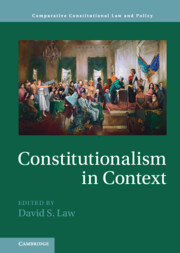
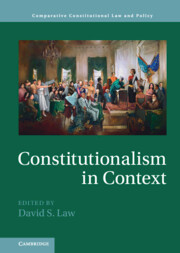
New Book edited by Professor David Law: Constitutionalism in Context (Cambridge University Press)

Constitutionalism in Context
Edited by David Law, Honorary Professor
Cambridge University Press
Published in February 2022
Description: With its emphasis on emerging and cutting-edge debates in the study of comparative constitutional law and politics, its suitability for both research and teaching use, and its distinguished and diverse cast of contributors, this handbook is a must-have for scholars and instructors alike. This versatile volume combines the depth and rigor of a scholarly reference work with features for teaching in law and social science courses. Its interdisciplinary case-study approach provides political and historical as well as legal context: each modular chapter offers an overview of a topic and a jurisdiction, followed by a case study that simultaneously contextualizes both. Its forward-looking and highly diverse selection of topics and jurisdictions fills gaps in the literature on the Global South as well as the West. A timely section on challenges to liberal constitutional democracy addresses pressing concerns about democratic backsliding and illiberal and/or authoritarian regimes.

Wednesday, July 7, 2021

Eric Ip & S.F. Lee on The Constitutional Determinants of Planetary Health (The Lancet Planetary Health)

"The Constitutional Determinants of Planetary Health"
Eric Ip & S.F. Lee
The Lancet Planetary Health, Volume 5, Issue 6
Published in June 2021
Abstract: We need to understand the constitutional determinants of planetary health. We define the constitutional determinants of planetary health as the constitutional structures within which human impacts on the Earth's natural systems affect human health. Supported by more rigorous evidence in relation to the effects of constitutional determinants of planetary health, we might be able to generate concrete advice on how constitutional institutions that are not conducive to planetary health can be suppressed, and how those that are favourable to planetary health can be reinforced.

Wednesday, November 11, 2020

New Volume of Hong Kong Journal of Law and Public Affairs on Militant Democracy and Constitutionalism

2020, Volume 2

MILITANT DEMOCRACY AND CONSTITUTIONALISM

The Government and Laws Committee, The University of Hong Kong (GLC) is pleased to officially unveil the Second Volume (2020) of the Hong Kong Journal of Law and Public Affairs (HKJLPA), the official annual journal of the GLC. The volume is titled “Militant Democracy and Constitutionalism”.

ABOUT THE VOLUME
The Second Volume 2020 of the Hong Kong Journal of Law and Public Affairs, published in Fall 2020, is entitled “Militant Democracy and Constitutionalism”.
     The end of Cold War has once endowed the world with optimism that the End of History has finally arrived. However, the rise of populist leaders with little regard to democratic norms, authoritarians which harness the constitutional toolbox to subvert democratic processes and an unprecedented invocation of emergency powers to combat the COVID-19 pandemic have all but blossomed into a siege against Constitutional Democracies on a global scale. This timely Volume, situated against the backdrop of global constitutional backsliding, features essays from leading political scientists and constitutional scholars. It discusses one of the possible countermeasures of democratic self-defence that has existed since 1937 – militant democracy and militant constitutionalism.
     In addition, this Second Volume is graced with a case commentary on Miller (No.2), two interviews with leading constitutional lawyers Professor Andrew J Harding and Dr Tonio Borg, and two author interviews conducted with Professor Joel ColĂ³n-RĂ­os and Dr Eric C Ip on their new books. It ends, as usual, with a review of the Government and Laws Committee's initiatives and publications over the past academic year.

OBTAINING A COPY

ABOUT HKJLPA
The Hong Kong Journal of Law and Public Affairs (HKJLPA) is the first English language studentedited journal in law and political science in East Asia, published by the Government and Laws Committee, The University of Hong Kong (GLC) since 2019, in restoration of the student-edited Hong Kong University Law Journal (1926-1927), founded by Professor George Keeton (1902-1989), the first Lecturer of Political Science and Jurisprudence and Reader of Law and Politics at HKU, and later Dean of Laws and Vice Provost at University College London (UCL).
     Supported by an International Editorial Advisory Board consisting of distinguished scholars, HKJLPA publishes articles in the English language from researchers, teachers, practitioners, and students all over the world. It accepts submissions in all areas broadly related to the intersection between law and politics, including but not limited to comparative constitutional law and politics, international law and relations, jurisprudence and political philosophy, and administrative law and public administration.
     As the GLC’s flagship publication backed by the HKU Government and Laws Programme, HKJLPA is committed to promoting a stronger understanding of cutting-edge issues that lie at the nexus of law and politics at the international and domestic levels, and to offering a robust platform for the exploration of ideas that will guide how societies are organised and governed.

Sunday, March 8, 2020

New Book: Hong Kong Constitutionalism: The British Legacy and the Chinese Future (Richard Cullen)

Routledge
Published on 17 February 2020
262 pp.
Description: Hong Kong is widely regarded as an exemplar of authoritarian jurisdictions with a positive history of adhering to Rule of Law–shaped governance systems. British Hong Kong provides a remarkable story of the effective development and consolidation of such a system, which has continued to apply since 1997, when it became the Hong Kong Special Administrative Region (HKSAR) within the People’s Republic of China (PRC).
     This book adopts a fresh approach in examining the evolution of Hong Kong’s political-legal experience. It establishes that these prominent governance achievements were built on particular British constitutional foundations forged over many centuries. The work shows how the analysis of the British theorist Albert Dicey and, in particular, “Diceyan Constitutionalism” was fundamental, within the pivotal context of “Chinese Familism”, in shaping the development of governance institutions and operational procedures within the new British Colony.
     It discusses how Hong Kong’s system of Authoritarian Legality has come to pass. Exploring the essence of that system, the study probes how thoroughly it has been stress-tested, not least in 2019, and how well it may be placed to cope with tests yet to come. It also analyzes Hong Kong–Beijing relations and the long-term prospects for the HKSAR within the PRC based on a balanced contemporary assessment of China’s exceptional One Party State.

Thursday, March 5, 2020

Cora Chan and Fiona de Londras on China's National Security in Hong Kong: A Challenge for Constitutionalism, Autonomy and the Rule of Law (new book chapter)

"Introduction: China's National Security in Hong Kong: A Challenge for Constitutionalism, Autonomy and the Rule of Law"
Cora Chan and Fiona de Londras
Introduction: For 30 years now, the Hong Kong people have persevered in holding an annual candlelight vigil on 4 June to commemorate the 1989 Tiananmen Square Massacre, urging the Chinese Government to admit it was wrong to perpetrate the massacre and to end one-party rule. Hong Kong is the only jurisdiction in China in which such a demonstration could openly take place. A former British colony and now a Special Administrative Region (SAR) of the People's Republic of China (PRC or China), since its return to Chinese sovereignty in 1997 Hong Kong has been governed under the framework of 'one country, two systems', which allows it to practice separate economic, legal and political systems from those on the mainland. The framework's aim is to preserve Hong Kong's distinctiveness vis-a-vis China, including its liberal rule of law tradition, which remains strong after more than two decades of Chinese rule. Yet, given China's intensifying national security advances and rising economic stature, real questions arise about how much longer, and by what means, this tradition can persist.
     In this book we aim to explore those questions, understanding them through the prism of the query suggested by its title - Does China's national security endanger Hong Kong's rule of law? - by investigating whether, and if so how, China's national security can be protected without jeopardizing the rule of law in Hong Kong. From the perspective of both China and Hong Kong this is a vitally important question, not least because it goes to the heart of whether 'one country, two systems' is a viable model for governing the constitutional relationship between them in the long run. Although the opening up of China's economy has rendered the economic differences between China and Hong Kong much less apparent than when that governing model was first conceived, their legal traditions remain highly divergent. For many Hong Kong people the biggest challenge in implementing 'one country, two systems' has been maintaining Hong Kong's vibrant common law system, with its respect for human rights and the separation of powers, within the envelope of China's Leninist legal system. A solution to that challenge would resolve the broader question of how to make this constitutional model work. This is of wider significance for China: from its perspective what is at stake is not just the ability to govern Hong Kong and continue utilizing the territory to facilitate its market reforms, but also the prospect of reunification with Taiwan, for which the 'one country, two systems' model was originally designed. What is at stake for the seven million inhabitants of Hong Kong is not just the ability to maintain a separate legal system, but the very identity of Hong Kong, which has long defined itself by being what China is not. For Hong Kong people, without the rule of law, the territory seems destined to become 'just another Chinese city'.
     When it comes to security, the relationship between China and Hong Kong, and the functioning of 'one country, two systems' are especially challenging; on the one hand, China fears that security risks to the overall state may foment and find operational space in Hong Kong and thus insists that the Hong Kong Government introduce what it considers 'appropriate' security-related laws; on the other, people in Hong Kong fear the imposition of such laws in a way that undermines their civil liberties, including liberties on the basis of which Beijing can be challenged, organised against and subjected to public criticism. Both concerns have purchase, both point towards the very real difficulties of reconciling two fundamentally different dispositions towards law and legality within one overall national legal system.